Elevate your local knowledge
Sign up for the iNFOnews newsletter today!
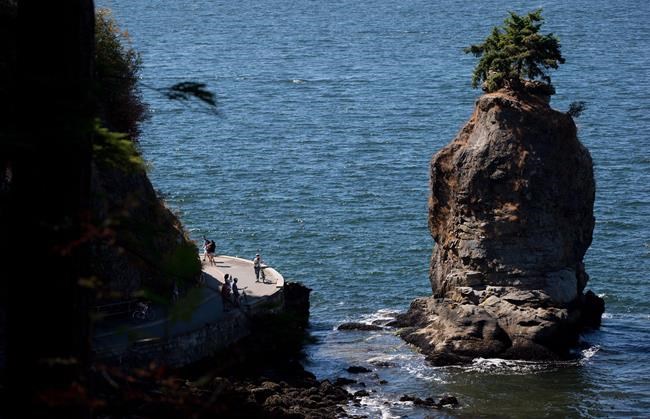
VANCOUVER – The Siwash Rock in Vancouver’s Stanley Park could be renamed if First Nations agree its name is disrespectful to Aboriginal Peoples.
The park board voted unanimously Wednesday night to work with Coast Salish Nations to determine if the distinctive rock should be renamed, saying it is taking a first step towards righting “acts of dispossession and disrespect.”
Commissioner Catherine Evans proposed the motion and said the Stanley Park intergovernmental working group, which includes representatives from the Squamish, Musqueam and Tsleil-Waututh First Nations, will consider the change.
Evans said the working group, formed about three years ago to oversee the master planning and stewardship of the park, is the right organization to deal with the issue but renaming the rock might not top its agenda because its members are extremely busy.
“Listening to (Squamish) Chief Ian Campbell, it seems that they are going to welcome the change. The challenge of course is there is more than one Indigenous language spoken among the three nations. We’ll see what happens,” Evans said.
The massive 18-metre basalt sea stack stands prominently on the park’s northwest shore near the entrance to Vancouver’s harbour.
The word siwash is a derogatory term for an Indigenous person and comes from Chinook jargon, which was the first method of communication between Europeans and Coast Salish peoples. Siwash is the Chinook interpretation of the French word sauvage, or savage.
The motion adopted by the board called the name an “ongoing symbol of disrespect.”
Evans said the name is an “historic wrong,” but it was only last spring when she learned of long-running efforts by the Squamish to seek a revision.
“Once you know, the innocence is lost,” she said.
“You can’t go on pretending that it’s not derogatory, just because you are not using it in a derogatory way.”
In First Nations culture the rock, estimated to be about 32 million years old, represents a man turned to stone to honour his purity and dedication to fatherhood.
News from © iNFOnews.ca, . All rights reserved.
This material may not be published, broadcast, rewritten or redistributed.

This site is protected by reCAPTCHA and the Google Privacy Policy and Terms of Service apply.
Want to share your thoughts, add context, or connect with others in your community?
You must be logged in to post a comment.