Elevate your local knowledge
Sign up for the iNFOnews newsletter today!
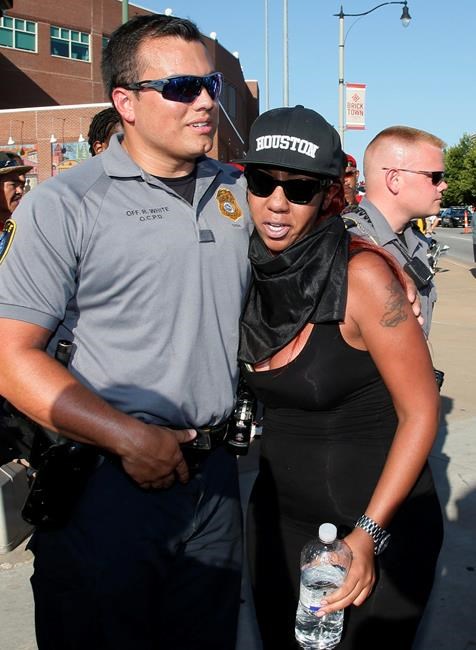
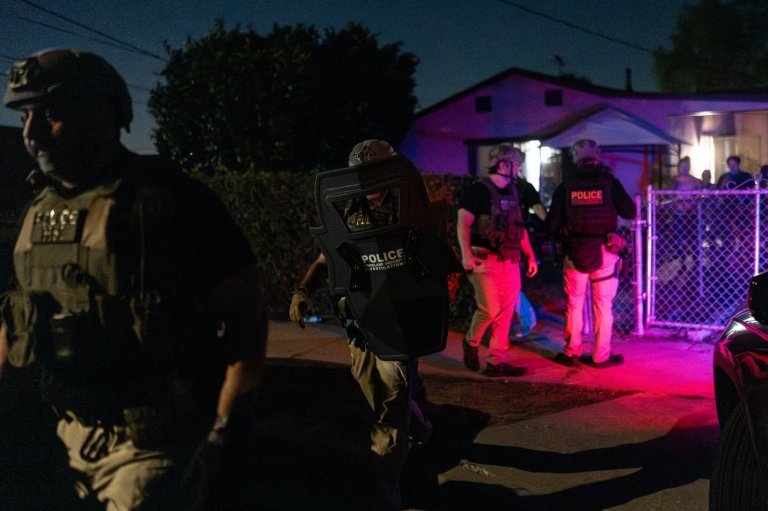
ATLANTA – The images offer a sharp contrast: In some places, police in SWAT gear wield batons or carry long guns as they patrol streets teeming with protesters. Elsewhere, officers are seen riding bicycles, mingling with demonstrators and even posing for selfies.
In this era of protest, which is the best way to protect both public safety and constitutional rights? And what happens when police themselves are the very target of the protest?
The public recently saw both approaches when demonstrators gathered to speak out against two fatal shootings by police. Protesters in Baton Rouge, Louisiana, where a man was pinned to the ground and shot to death outside a convenience store, were confronted by officers in riot gear. At a similar event in Dallas, police wore regular uniforms and moved easily among the demonstrators.
Adam Bates, a policy analyst who specializes in civil liberties at the Cato Institute’s Project on Criminal Justice, said the police response to protesters goes to “the core, fundamental constitutional values of our society, the right to protest and to dissent.”
“So there’s a very high interest and a very high value in protecting those rights,” he said. And there can be “a chilling effect on those rights when you have this faceless kind of law enforcement that threatens to escalate situations where things can get out of hand.”
Aggressive police tactics at protests are nothing new. They conjure up images from the civil rights or Vietnam War eras, the 1968 Democratic National Convention in Chicago or the Rodney King riots in Los Angeles in 1992.
Now the debate has been renewed as smartphones have made it possible for virtually anyone to record encounters with police and post those videos online. At the same time, many local law enforcement agencies have been able to buy leftover military equipment from the federal government.
Law enforcement experts say much of the outcome of any protest depends on what happens beforehand. Discussions between police and protest organizers are key: Are demonstrators aiming for a peaceful protest and can both sides work together to plot out a good route? Or are protesters bent on a more violent display? Is there a middle ground that allows the protest message to get out and still keep the peace?
Terrence Cunningham, chief of police in the Boston suburb of Wellesley and president of the International Association of Chiefs of Police, called it a “balancing act” that requires the police department to be in touch with its community and in touch with demonstrators.
Cunningham said law enforcement understands that the nature of most protests is to be disruptive to amplify the message. But he warns protesters that they could risk turning people against a movement if their day-to-day lives, such as driving along a highway, are affected.
Those conversations and the effort to work with protesters, he said, are a stark difference from the law enforcement practices of the 1960s and 1970s.
“It just wasn’t a tactic back then,” he said.
Darrel Stephens, executive director of the Major Cities Chiefs Association, who got his start in law enforcement during the tumultuous 1960s, said police are mindful of how it looks when their response seems threatening, which is how it played out in Ferguson, Missouri, where demonstrators protesting the killing of Michael Brown by a white police officer were met with law enforcement teams using military equipment.
The equipment that included armoured vehicles and body armour raised more questions: Does the military display provoke violence or prevent it? Does showing up in street uniforms help keep people calm or make police more vulnerable to attack?
“The optics are incredibly important,” Stephens said. Ferguson “didn’t look good. That’s where a lot of concern came about militarization. The optics were key in a lot of the outrage we saw in the country.”
News from © The Associated Press, . All rights reserved.
This material may not be published, broadcast, rewritten or redistributed.

This site is protected by reCAPTCHA and the Google Privacy Policy and Terms of Service apply.
Want to share your thoughts, add context, or connect with others in your community?
You must be logged in to post a comment.