Elevate your local knowledge
Sign up for the iNFOnews newsletter today!
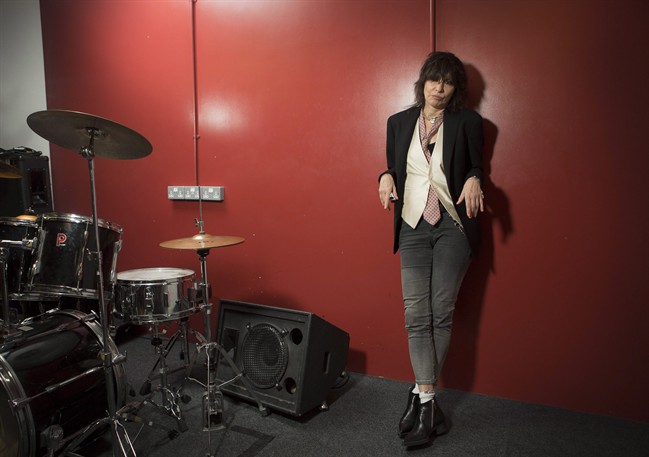
TORONTO – As one might expect, Chrissie Hynde’s new memoir, “Reckless: My Life as a Pretender,” pulls exactly none of its brass-knuckle punches.
Hynde recently had a long conversation with The Canadian Press about the new book and the tales of drugs, death and regret within.
CP: Growing up in Ohio, you had these terrifying interactions with biker gangs as a teenager but didn’t seem fazed. How do you explain that?
Hynde: Ignorance. Being naive.
The Mafia was selling hard drugs to the kids on the street but not directly — you didn’t see guys wearing business suits selling heroin on street corners. Bikers — we thought they were hippies, but they were peddling drugs.
It was just being naive and thinking they looked awesome. Bikers, it’s still the best look going, as far as I’m concerned. Although they’re fat now, so it kind of wrecks that look.
———
CP: You write that drugs only cause suffering. When did your views begin to change?
Hynde: By the time I was 30 it was becoming pretty obvious.
Tobacco, that’s the real sneaky, insidious drug. I smoked for years. And it only leads to disease and death. So I would call that misery.
I held out to the bitter end, you know. And then you’d start noticing all your friends were dropping like flies. It’s all related. All those drugs, they all depend on each other.
———
CP: When you were a teen, you and a friend were hit on by Rod Stewart and Ron Wood while they toured with Jeff Beck. Have you brought it up with them since?
Hynde: I don’t see Rod Stewart so often — I don’t think I’ve told him about that, although I have met him over the years. But Jeff Beck’s become a real good friend of mine, and Ronnie too. Ronnie is a good friend of everyone’s.
And both of them have on a number of occasions said: “Chrissie, tell the story, tell the story!” They love their women to know that they didn’t (expletive) every woman they met.
———
CP: You write that you couldn’t have written this book if your parents were alive. Which parts would have worried you?
Hynde: All of it. Talking about sex. Swearing. Talking about getting loaded. Drugs.
It’s insane too because they were so proud of me, as long as they didn’t have to know too much. They were proud of me because I got famous, but if we went to the Summit Mall, my mother would walk 10 feet behind me because I looked like a hippie.
———
CP: How do you feel about revealing all this stuff?
Hynde: I’ve made records (and) you feel really exposed because it’s your voice and it’s your words. I personally don’t like it. I don’t like being exposed and I don’t like being in public unless I’m actually onstage with the band.
The book’s not out yet. Ask me in a month. When I haven’t left the house for two weeks.
———
CP: You compared fame to a high-security prison. Do you still feel that way?

Hynde: Some people make it like that. They go out with an entourage. To me, it looks like their security guards are prison officials.
I get on the bus. I travel alone. I do whatever I want. I never think about it. I go to restaurants alone. I go everywhere alone — too much, to be honest.
But the truth is, a lot of the people who get famous, they’re not that smart. They’re really good at making money and making themselves famous, and then it ends there.
———
CP: Do you regret the past?
Hynde: Yeah. I feel total regret. Or I’d say 70 per cent is regret.
I’m sorry that I was such a (expletive)-up.
Anyone who’s stupid enough to be addicted to cigarettes and smoke them for 50 years, of course they regret it. They destroyed their health. If you can’t regret what’s just obvious stupidity, then I don’t know what to say.
I know there’s that thing of “I don’t regret anything because it led me to where I am,” and that’s one way of putting it. But I had to bury a lot of my friends along the way. I regret taking drugs with them. Not everyone survives that stuff.
But then arguably most people wouldn’t have gotten a rock ‘n’ roll band if they weren’t wasted, because they’d be too shy. Most people in bands aren’t very confident. They’re just drop-outs, the ones who didn’t fit in very well, so they needed to get wasted to have the balls to get on a stage.
I’m not unique that way at all.
———
CP: You acknowledge depression in the book. How much did that contribute to your drinking and drugs?
Hynde: Obviously if you have a tendency to depression, what you’re trying to do is change your consciousness all the time and jolt yourself out of it.
A glass of wine will absolutely snap you out of it — and a bottle of wine will throw you into it. They’re quick fixes.
I have to make a real conscientious effort not to be depressed. But I know for a fact, having tried it all, all those drugs, they’re depressants.
But if you try to tell someone who’s severely depressed to stop smoking because it’s making them depressed, they’ll probably just go hang themselves.
———
CP: Are you curious about the reaction any specific person will have to your book?
There’s certainly people who probably don’t want to be in the book, and other people who are very surprised they’re going to be in it so much.
But (expletive) ’em, you know? If you don’t want to be in my book, don’t be in my life.
———
Answers have been edited and condensed.
Follow @CP_Patch on Twitter.
News from © The Canadian Press, . All rights reserved.
This material may not be published, broadcast, rewritten or redistributed.

This site is protected by reCAPTCHA and the Google Privacy Policy and Terms of Service apply.
Want to share your thoughts, add context, or connect with others in your community?
You must be logged in to post a comment.