Elevate your local knowledge
Sign up for the iNFOnews newsletter today!
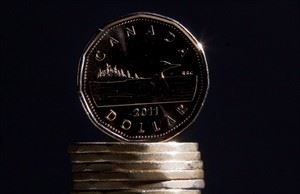
TORONTO – The Canadian dollar drifted lower to another seven-month low Wednesday morning.
The loonie was down 0.26 of a cent to 98.57 cents US.
The dollar has fallen about two US cents since the start of the year centred on fears of massive U.S. government spending cuts, the housing market and oil prices.
There are worries about the looming sequester in the U.S. That is a huge package of across the board spending cuts worth US$85 billion that are set to take effect at the end of the month unless lawmakers can agree on other cuts that would be more selective.
It would cut a big chunk out of American economic growth, a worrisome prospect for a struggling economy.
The housing sector has also come under scrutiny with the International Monetary Fund saying that it is overvalued by a good 10 per cent.
The price gap between global benchmark Brent crude and Western Canadian Select, which is the crude produced by Western Canada’s oilsands, has also become a concern. Recently, that price gap widened as much as $65 a barrel as pipeline bottlenecks have prevented growing oilsands production from getting to the most lucrative markets. That gap is now down to about $45 amid expectations it will fall even more.
There is also suspense over the future of the Keystone XL pipeline, which would carry bitumen from the Alberta oilsands to U.S. refineries in the Gulf of Mexico.

Meanwhile, Italy is weighing on currency markets. An election this weekend could result in a split parliament, making it difficult for a coalition government to push through unpopular economic reforms.
And the British pound tumbled after minutes to the last rate-setting meeting of the Bank of England showed Governor Mervyn King and two others backed another monetary stimulus. The pound was trading 0.8 per cent lower on the day at US$1.5313.
Commodity prices were mixed with the March crude contract on the New York Mercantile Exchange up 11 cents to US$96.77 a barrel.
March copper declined one cent to US$3.64 a pound while April bullion fell $10.20 to US$1,594 an ounce.
On the economic front, U.S. housing starts for January came in lower than expected. They came in at an annual rate of 890,000, down from December’s read of 954,000 and below expectations of 922,000.
Building permits rose 1.8 per cent from November at an annualized rate of 920,000 during January, up from 909,000 in December.
Traders will also pore over the minutes from the Federal Reserve’s latest interest rate meeting for an indication that the central bank may want to wind up its latest quantitative easing effort by the end of the year.
News from © The Canadian Press, . All rights reserved.
This material may not be published, broadcast, rewritten or redistributed.

This site is protected by reCAPTCHA and the Google Privacy Policy and Terms of Service apply.
Want to share your thoughts, add context, or connect with others in your community?
You must be logged in to post a comment.