Elevate your local knowledge
Sign up for the iNFOnews newsletter today!
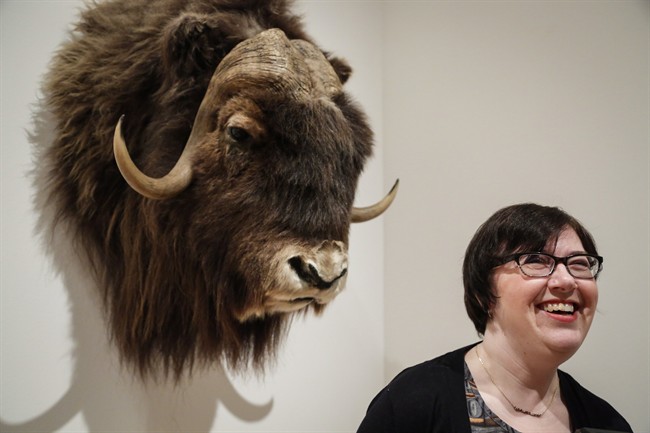
CALGARY – Canada’s initial efforts to assert its Arctic sovereignty at the end of the Second World War is documented in two new exhibits at The Military Museums in Calgary.
One of them, “The Cold Before the War,” features photos and itemsfrom the collection of the University of Calgary’s Arctic Institute of North America
“Through the Second World War we realized we weren’t really that great in fighting in northern countries. There was a huge, growing fear that the Soviets were going to come over the North, and if they were going to invade or attack the United States, it would be through Canada,” said Lindsey Sharman, curator of the university’s Founders’ Gallery at the museum.
“This was the largest expedition out into Canada’s North that the military had ever done and really laid the groundwork for contemporary operations that we still have in the North.”
Operation Muskox included 11 giant-cabbed snowmobiles carrying 48 men over 5,000 kilometres on an 81-day journey. It started in Churchill, Man., headed north through Baker Lake in what is now Nunavut and up to Cambridge Bay on Victoria Island.
It then headed back south, snaking through various territorial communities, and ending in Edmonton.
The rigours of the operation helped calm fears of a Soviet invasion as the military realized the difficulties of any operation in the North.
“Because it was so difficult, they concluded that no one had the technology and no one in their right mind would try and be able to come over the North,” Sharman said.
The second exhibition, “Mapping a Cold War,” was inspired by Ottawa artist Leslie Reid’s father who flew mapping missions in the Arctic with the Royal Canadian Air Force during the Cold War.

Reid’s paintings, video and photo mosaics go beyond the mission because they helped her revisit the personal connection she had with her father, Squadron Leader John (Jack) Reid, who died when she was just 19.
Reid was a fighter pilot in the Second World War, but like many pilots stayed in the Air Force and was sent north to take aerial photos for maps used for military installations and industrial development.
His daughter’s work documenting his journey helped her understand a relationship with him that she described as checkered.
“I did ‘find’ my father in many, many different ways,” she said.
Canadian Rangers in Whitehorse, Yukon, spoke of honouring her father and “it was a good thing to hear,” Reid said.
“The amazing thing is I became his equal. I was the one who was the artist and photographer going over similar routes and in a way doing similar things.
“I grew up napping on a polar bear skin my father brought back. It had a bullet hole in the head which I will never forget.”
The exhibits open on Friday.
Follow @BillGraveland on Twitter
News from © The Canadian Press, . All rights reserved.
This material may not be published, broadcast, rewritten or redistributed.

This site is protected by reCAPTCHA and the Google Privacy Policy and Terms of Service apply.
Want to share your thoughts, add context, or connect with others in your community?
You must be logged in to post a comment.