Elevate your local knowledge
Sign up for the iNFOnews newsletter today!
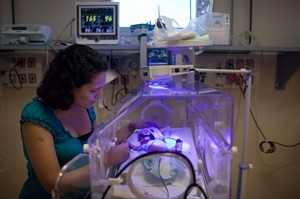
TORONTO – A new Canadian study suggests children born extremely pre-term have a substantial likelihood of developing moderate to severe neurodevelopmental impairments.
The research actually pools the results of a number of studies looking at what life is like for the youngest surviving preemies when they reach four-to-eight years of age.
The children in the studies were born between 22 and 25 weeks of gestational age; it is rare for infants to survive if they are born before 22 weeks.
Lead author Dr. Gregory Moore of the Children’s Hospital of Eastern Ontario says he and his colleagues did the study in order to have better information to give parents who want to know what their child might experience.
Results varied depending on the gestation week of the child’s birth, with the highest rates of impairment in children born at 22 and 23 weeks.
At 22 weeks, 43 per cent of children had moderate to severe impairment and 31 per cent had severe impairment.
Severe impairments could include profoundly low IQs, no useful vision, no ability to move without assistance or no capacity to hear, Moore says.
Moderate to severe impairments are variations on those conditions — higher IQs, some vision, some ability to hear with hearing aids, some ability to move about, perhaps with a walker or leg braces.
Dr. Steven Miller, head of neurology at Toronto’s Hospital for Sick Children, calls the work “an important contribution to our knowledge” about rates of neurodevelopmental issues facing the smallest of preemies.
He notes, however, that his research suggests many children born at young gestational ages develop well, without significant neurodevelopmental problems.
“There is obviously a large group of babies that are born very young who do beautifully, and don’t have moderate to severe impairments,” Miller says
“And so when you look at the 24- and 25-weekers, the question we’re now asking more often is: how do we predict who’s going to do well? And if parents knew that their babies were going to do well, would that help them care for their families during a very stressful intensive care stay?”
News from © The Canadian Press, . All rights reserved.
This material may not be published, broadcast, rewritten or redistributed.

This site is protected by reCAPTCHA and the Google Privacy Policy and Terms of Service apply.
Want to share your thoughts, add context, or connect with others in your community?
You must be logged in to post a comment.