Elevate your local knowledge
Sign up for the iNFOnews newsletter today!
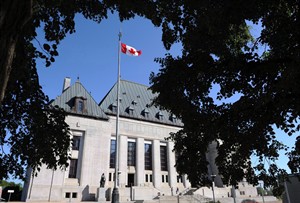
OTTAWA – The Supreme Court of Canada has agreed to hear a long-running dispute over clear-cutting on a First Nation’s traditional territory in northwestern Ontario.
The Grassy Narrows First Nation has challenged Ontario’s right to permit industrial logging on its traditional lands, saying it infringed on their hunting and trapping rights under a treaty they signed in 1873.
Earlier this year, the Court of Appeal for Ontario ruled that the province doesn’t need the federal government’s approval to “take up” the lands — a decision that overturned a lower-court ruling.
The First Nation has spent years in court fighting the province’s decision to issue a licence to Resolute Forest Products Canada Inc. (TSX:RFP) — then known as Abitibi-Consolidated Inc. — for clear-cut operations in parts of the Keewatin portion of Treaty 3 territory.

The company pulled out of the Whiskey Jack Forest north of Kenora in 2008, saying it couldn’t wait four more years for the province and the First Nation to agree on logging practices.
Observers said the lower-court ruling put the validity of forestry and mining licences in jeopardy, and at least one mining company hailed March’s appeal court decision as a positive one for them.
As usual, the Supreme Court did not give reasons for granting leave to appeal.
News from © The Canadian Press, . All rights reserved.
This material may not be published, broadcast, rewritten or redistributed.

This site is protected by reCAPTCHA and the Google Privacy Policy and Terms of Service apply.
Want to share your thoughts, add context, or connect with others in your community?
You must be logged in to post a comment.