Elevate your local knowledge
Sign up for the iNFOnews newsletter today!
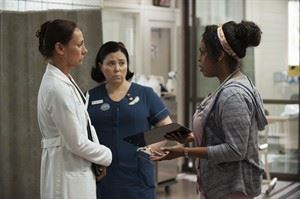
TORONTO – There’s a simple reason British comedies are often remade when brought over to U.S. television, says comic actress Alex Borstein, who helms HBO’s version of the dark U.K. series “Getting On.”
When it comes to laughs, the two audiences simply speak a different language.
“British humour can be really small and really subtle consistently the whole time and I think American audiences need things to be a little bit larger sometimes,” Borstein says of distinct differences that require U.K. hits like “The Office” to be “translated” into U.S. versions.
“We kind of do things a little bit bigger and a little bit breezier. We’re noisy Americans, right? That’s what happens.”
The “Family Guy” actress stars in the most recent import to be overhauled for North American viewers.
As in the British original, “Getting On” centres on the beleaguered staff and residents of a women’s extended-care unit, but this time the tales are set at a hospital in Long Beach, Ca.
Borstein plays the constantly flustered veteran nurse Dawn, Laurie Metcalf of “Roseanne” fame plays her tightly wound boss Dr. Jenna James, while Niecy Nash is a no-nonsense new hire named DiDi who is continually bewildered by the rundown, disorganized unit.
The first episode’s story hews faithfully to that of the British version, but Borstein says the remake is distinct in several other ways.
She avoided watching too much of the U.K. series to avoid getting “bogged down in trying to emulate their brilliant performances.”
“We’re all bringing different things to it, you know, none of us have studied the British show, the British characters. We’re huge fans of it … but I can’t try to be them or try to be their character,” the former “MADtv” player says in a recent interview from Pasadena, Ca.
“(Showrunners) Mark (Olsen) and Will (Scheffer) I think were so smart — they just cast very differently. They cast what rang true to them and the faces and personality that they saw dealing with their mothers in a lot of these facilities, these old-age homes. They wanted it to feel very real.”
She notes that Olsen and Scheffer, who co-created “Big Love,” both lost mothers who were in facilities like the one portrayed in “Getting On.” And it’s something that all of us, in one way or another, will likely have to deal with at some point, she says.
“Everyone kind of fools themselves that, ‘Oh, that’s not going to be me,’ or, ‘I’m not going to have to deal with that,’ but all of our mommies are going to die and we’re all going to hold their hand or not hold their hand and make these decisions,” she says.
Despite the heavy subject matter, it actually isn’t hard to find the humour in it all, adds Borstein.
She recalls her grandmother’s experiences at two different long-term care facilities as “dark and ridiculous,” but also very comical.
“Her teeth went missing at one point, you know, she had false teeth that were put by the side of her bed at night and they were missing and it was hilarious,” she says.
“Ultimately (we) found them — they had been switched to somebody else’s room, which then was repulsive because that meant somebody else was putting them in their mouth. But some of these things you just have to laugh at — you can’t cry all the time in heavy or trying situations.”
Borstein calls her character Dawn a “lovely little mess,” even though she probably fancies herself as very efficient and put-together.
“She’s just a disaster. I think she shows up with a pressed uniform but if you look in her car there is probably still, like, empty Jamba Juice cups everywhere and McDonald’s wrappers on the floor and cat hair — she doesn’t even own a cat.”
Borstein added her own touches to the character through wardrobe and prop elements, including juvenile headbands and fuzzy topped pens.
“She’s not doing it to be ironic, like a Wiilliamsburg hipster, she thinks that this little pen with the fluffy sparkly thing on the end of it will brighten her day and the patients’ and it does, you know,” she says.
“She’s stunted. I think she never really got past age 14 in terms of her emotional abilities to have any relationships, even just a friendship — I don’t think she knows how to have a friend. She doesn’t really know how to communicate with people, she confuses physical relationships for love and she’s just desperate to not die alone, I think from working so much with these (elderly residents).”
“Getting On” premieres Sunday on HBO Canada.
News from © The Canadian Press, . All rights reserved.
This material may not be published, broadcast, rewritten or redistributed.

This site is protected by reCAPTCHA and the Google Privacy Policy and Terms of Service apply.
Want to share your thoughts, add context, or connect with others in your community?
You must be logged in to post a comment.