Elevate your local knowledge
Sign up for the iNFOnews newsletter today!
Elevate your local knowledge
Sign up for the iNFOnews newsletter today!
Select Region
Selecting your primary region ensures you get the stories that matter to you first.
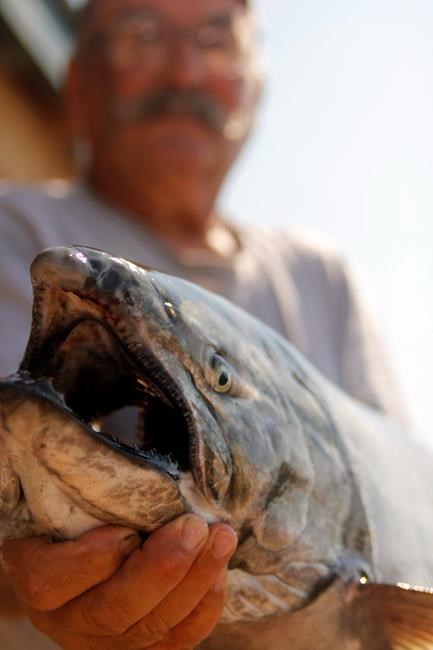
BISMARCK, N.D. – Differing rates of recovery for rainbow smelt in two Missouri River reservoirs in the Dakotas since the devastating 2011 flood have resulted in booming salmon egg collections in Lake Sakakawea this year but sagging collections in Lake Oahe.
The collections are important because the eggs are raised into young fish in hatcheries and then stocked into the fisheries, maintaining a healthy population of the popular sport fish that isn’t native to the region and doesn’t reproduce naturally.
Collections in Lake Sakakawea this year totalled about 2 million eggs — a four-fold increase over 2015, according to Dave Fryda, Missouri River system supervisor for the North Dakota Game and Fish Department.
That’s enough eggs to stock about 400,000 young fish in the lake next year. Officials also collected enough to give about 450,000 eggs to South Dakota, where collections in Lake Oahe this year totalled only 388,000, roughly half the long-term average.
The donated eggs “should help us get very close to the number of fish we intend to stock next year … around 320,000 total,” said Will Sayler, fisheries program administrator for South Dakota Game, Fish and Parks.
The difference in the collections in the two lakes is largely tied to the amount of smelt, a favourite food of Chinook salmon. More smelt means more salmon from which to collect eggs. Severe flooding along the Missouri River five years ago caused by heavy spring snowmelt and rains flushed millions of smelt through the Sakakawea and Oahe dams.
“When prey fish populations crash, they don’t come back at the same rate,” Sayler said.
In 2014, near-perfect spring water levels and temperatures along with favourable weather on Lake Sakakawea provided pristine conditions for smelt, according to North Dakota Fisheries Chief Greg Power.
“We had a phenomenal year class (of smelt) in 2014, one of the best ever,” he said. “Smelt numbers in Oahe aren’t near what they are in Sakakawea right now.”
Sharing of salmon eggs by wildlife agencies in the Dakotas and Montana is nothing new. Eggs can’t be brought in from other areas of the country because of the risk of disease.
“It’s a nice deal — give and take,” Power said. “We can exchange between the three states pretty easily.”
Montana didn’t need any eggs from North Dakota this year because collections at the Fort Peck reservoir on the Missouri were at a record level due mainly to a rebounding lake herring population, according to Heath Headley, fisheries biologist with Montana Fish, Wildlife and Parks.
Power thinks salmon egg collections in Lake Sakakawea will remain prosperous in coming years, as well.
“Salmon anglers are going to have big smiles on their faces the next year or two,” he said.
___
Follow Blake Nicholson on Twitter at: http://twitter.com/NicholsonBlake
News from © The Associated Press, . All rights reserved.
This material may not be published, broadcast, rewritten or redistributed.

This site is protected by reCAPTCHA and the Google Privacy Policy and Terms of Service apply.
Want to share your thoughts, add context, or connect with others in your community?
You must be logged in to post a comment.