Elevate your local knowledge
Sign up for the iNFOnews newsletter today!
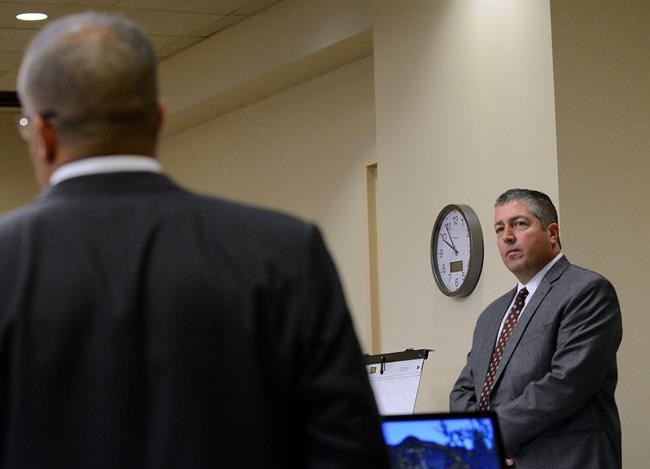
ALBUQUERQUE, N.M. – Albuquerque police botched a standoff two years ago that led to the death of a mentally ill homeless camper, missing the opportunity to calm a volatile situation and shooting the man who had two pocket knives but posed no threat, a police expert said Tuesday at the trial of two former officers charged with murder.
Hundreds of protesters decried James Boyd’s 2014 death as yet another questionable shooting by a police force that had killed more than 20 suspects from 2010 to 2014. Under investigation by the U.S. Justice Department for more than a year over allegations of excessive force, police faced a scathing federal report a month after Boyd’s death describing a “culture of aggression” and faulting officers for using unreasonable force with the mentally ill.
Police shootings have dropped since federal and city officials settled on reforms to the agency. But the series of court-mandated changes, including a use-of-force policy that adds new reporting measures for officers and their supervisors, are still fresh.
Defence lawyers for now-retired Detective Keith Sandy and former Officer Dominique Perez, who are charged with second-degree murder in Boyd’s death, maintain their clients opened fire because Boyd had pulled two knives and was threatening the life of a K-9 handler nearby.
Jeffrey Noble, a former police sergeant and attorney who testified as an expert witness for the prosecution, said each violated their training when they shot Boyd because he didn’t pose an immediate threat to other officers.
The supervisors on the scene also missed multiple chances to reassess their plan to take Boyd into custody, even after the situation spiraled into chaos, Noble said.
“It’s a solid line,” he said. “Without having an immediate threat of a deadly attack, use of force is not justified.”
The Police Department is in its first year of reforms. So far, there have been policy changes for special tactical teams, such as the SWAT unit where Perez was assigned, and the dismantling of the Repeat Offenders Project with which Sandy worked.
In a report this summer, the court-appointed monitor tasked with tracking the reforms said the SWAT unit has become one of the strongest teams within the department. Officers are being trained regularly on how to resolve crisis situations with the least amount of physical force necessary, resulting in fewer deaths and injuries involving SWAT officers, the monitor said.
The number of shootings by Albuquerque police that resulted in death or injury dropped from eight in 2013 to five in 2015. While complete figures from 2016 weren’t immediately available, police data show the number of times officers used firearms dropped to 10 times in 2015, down from 15 times in 2013.
It’s a change from the time when Boyd died. Police Chief Gorden Eden took the stand Monday and was peppered with questions about his department’s use-of-force policies in 2014, making for two days of testimony largely focused on the highly criticized policies at the time of Boyd’s death.
Police helmet camera video appeared to show Boyd preparing to surrender after an hourslong standoff when officers deployed a flash-bang grenade near him. That’s when he pulled out two knives and officers opened fire.
After he drew the knives, the officers called for reinforcements. By the time the standoff ended, nearly 20 officers had been called to the scene, including K-9 units, SWAT officers and crisis intervention specialists.
The video led to a wave of protests in Albuquerque amid growing tensions over local shootings by police, with the unrest preceding a broader national debate on use of force by law enforcement. That debate has largely focused on race but also raised questions about deadly conflicts with people suffering from mental illness.
Jurors in the trial must decide whether Perez and Sandy justifiably perceived that Boyd posed a life-threatening danger to officers.
“Without question, the evidence in this case will show Boyd posed a threat,” said attorney Luis Robles, who represents Perez.
News from © The Associated Press, . All rights reserved.
This material may not be published, broadcast, rewritten or redistributed.

This site is protected by reCAPTCHA and the Google Privacy Policy and Terms of Service apply.
Want to share your thoughts, add context, or connect with others in your community?
You must be logged in to post a comment.