Elevate your local knowledge
Sign up for the iNFOnews newsletter today!
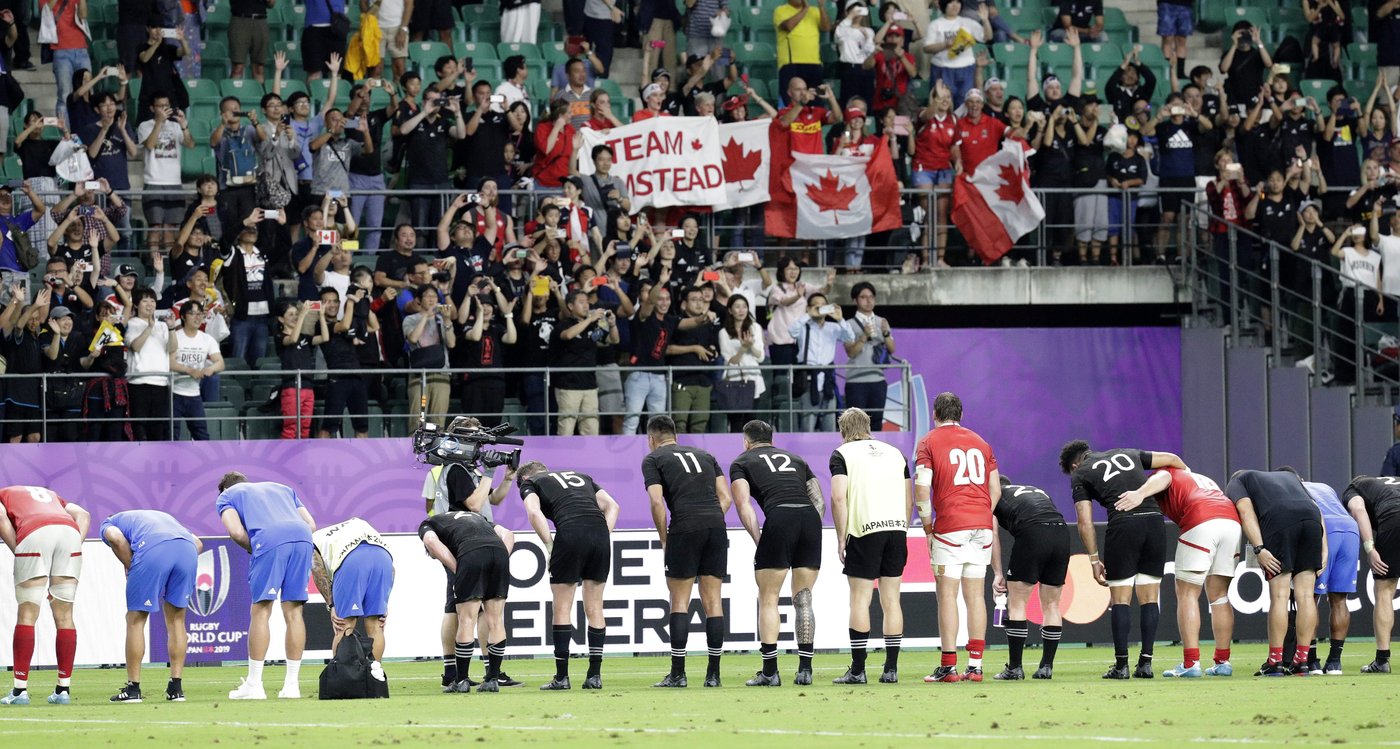
Flanker Lucas Rumball clearly remembers Canada’s last Rugby World Cup draw, which included marquee matchups with New Zealand and South Africa as well as dates with Italy and Namibia at the 2019 tournament in Japan.
“Mixed feelings is probably a good way to describe it,” Rumball recalled.
The good news was they were playing the All Blacks and Springboks, rugby royalty that second-tier nations like Canada usually don’t get to face. The bad news was they were playing the All Blacks and Springboks.
“Those are games you want to be a part of,” said Rumball, the current Canadian captain. “You want to say you played against the best. Sometimes you get lucky enough to do it. Sometimes, unfortunately it’s not the case.”
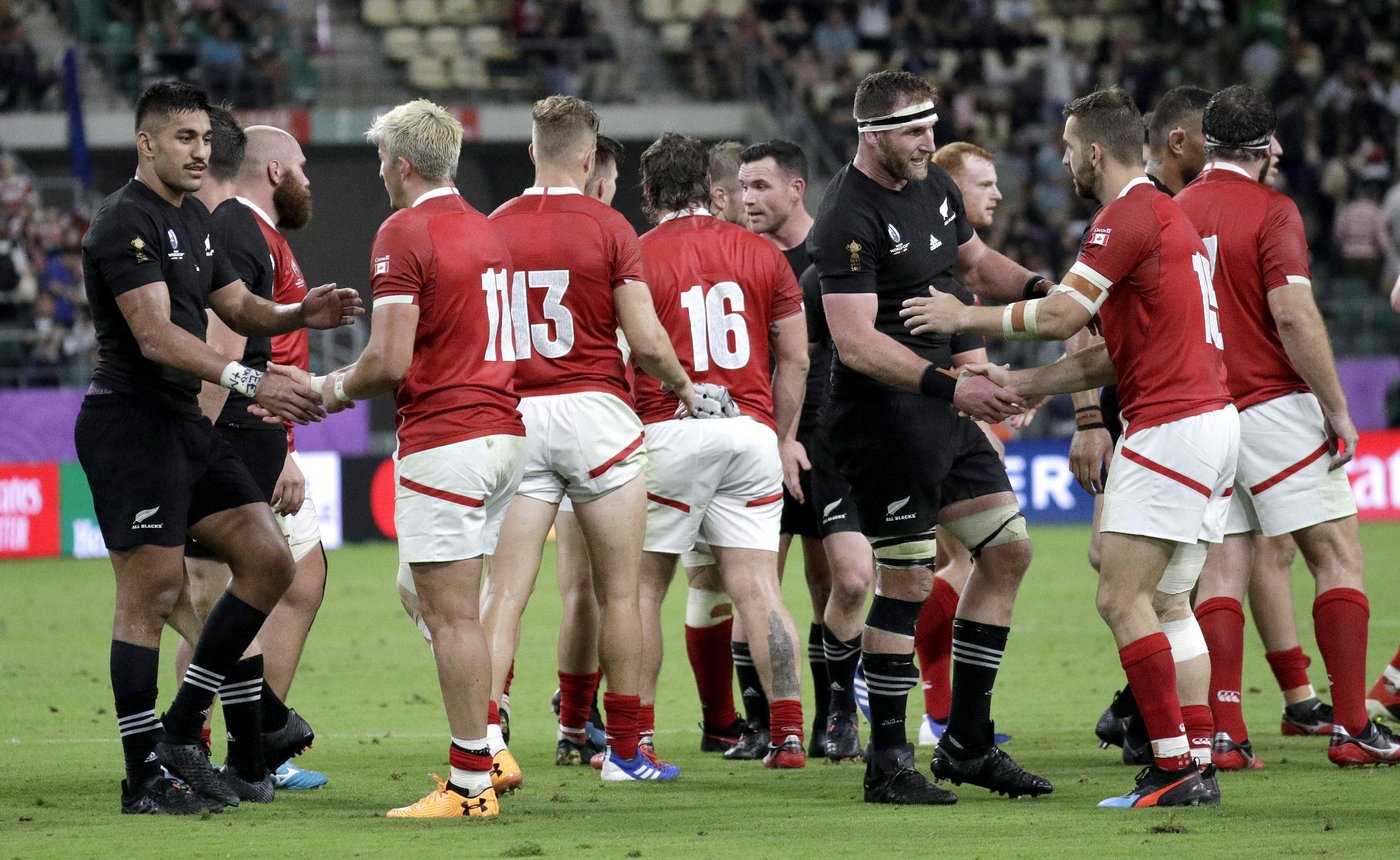
Canada, then ranked 22nd in the world, opened with a 48-7 loss to No. 14 Italy then ran into two buzzsaws, beaten 63-0 by No. 1 New Zealand and 66-7 by No. 5 South Africa. The final Pool B game, against No. 22 Namibia in Kamaishi, was called off due to typhoon Hagibis.
The Canadian men, who missed out on the 2013 World Cup for the first time after losing a two-game qualifying series to the U.S. (59-50 on aggregate) and Chile (54-46 on aggregate), find out their path at the 2027 tournament in Australia on Wednesday when the draw is held in Sydney.
The 2027 tournament has been expanded to 24 teams from 20. The draw will divide the teams into six pools with the top two from each plus the four-best third-place finishers moving on to the knockout rounds, starting with the new round of 16.
The teams have been divided into four pots by rankings for the benefit of the draw. Canada, the lowest-ranked team at No. 25 in the field, is in the fourth pot.
A worst-case scenario would see Canada draw into Pool A with No. 1 New Zealand, No. 7 Australia and No. 13 Georgia (which beat Canada 38-17 on Nov. 17 in Batumi). The most ‘benign’ draw according to the rankings would land Canada with No. 6 Argentina, No. 12 Japan and No. 18 Tonga.
Canada lost to both Japan (57-15) and Tonga (35-24) this summer in Pacific Nations Cup play.
Canada coach Stephen Meehan, who officially took over the team in April, has not bothered with the draw permutations. He’ll deal with what they get.
“As we’ve experienced this year there’s plenty of good test-playing nations,” he said from England. “So there’s going to be challenges, exciting challenges.”
“Regardless of where you end up, I don’t know if there’s going to be an easy pool,” he added. “It’s full of really good teams, some brilliant individuals and some contrasting styles of play.”
Meehan, an Australian, has coached all over the world but never worked a World Cup.
“This will be new for me,” he said. “It was one of the attractive aspects of coming to Canada. Obviously we had to qualify, which we did.”
The field includes 12 teams that qualified automatically by virtue of finishing in the top three of their pools at the 2023 tournament. They are France, New Zealand, Italy, Ireland, South Africa, Scotland, Wales, Fiji, Australia, England, Argentina and Japan.
The 12 remaining entries booked their ticket through various regional tournaments, with Canada qualifying via the Pacific Nations Cup. The other teams that went that route are Georgia, Spain, Romania, Portugal, Tonga, the U.S., Uruguay, Chile, Samoa, Zimbabwe and Hong Kong.
The Canadian men hope to snap an 11-game winless run (0-9-2) at the tournament since a 25-20 victory over Tonga in 2011. Canada was ranked 14th at the time, compared to No.12 for the Pacific Islanders.
“Winning at the World Cup, winning at that tournament, I think, is a real big notch in a team’s history,” said Rumball. “So to be able to get that done, which we haven’t done in a while, would be fantastic. It would be, I think, Goal No.1 for us.”
In 2015, the Canadians were beaten by Ireland (50-7), Italy (23-18), France (41-18) and Romania (17-15).
Canada’s all-time World Cup record is 7-23-3 with the other wins coming in 2003 (24-7 over Tonga), 1999 (72-11 over Namibia), 1995 (34-3 over Romania), 1991 (13-3 over Fiji and 19-11 over Romania) and 1987 (37-4 over Tonga).
The two wins in 1991 earned Canada a trip to the quarterfinals where it lost 29-13 to the All Blacks.
Meehan, however, is looking forward rather than backwards.
“Regardless of who ends up in your pool, you’ve got to have that belief that you can go out and win games,” he said.
The teams that finish first in Pools A, B, C and D will face one of the third-place sides in the round of 16 but could run into another pool winner in the quarterfinals. In contrast, the Pool E and F winners will face runners-up in other groups until the semifinal.
The ranking will be decided by competition points, with points difference and then try difference as tiebreakers if needed to determine which teams make it out of the pool stage.
The 2027 World Cup is scheduled to run Oct. 1 to Nov. 13 in Adelaide, Brisbane, Melbourne, Newcastle, Perth, Sydney and Townsville. The host Wallabies will feature in the tournament opener.
Rugby World Cup Draw Bands (with current world ranking)
Band 1: No. 1 South Africa, No. 2 England, No. 3 New Zealand, No. 4 Ireland, No. 5 France, No. 6 Argentina.
Band 2: No. 7 Australia, No. 8 Fiji, No. 9 Scotland, No. 10 Italy, No. 11 Wales, No. 12 Japan.
Band 3: No. 13 Georgia, No. 14 Uruguay, No. 15 Spain, No. 16 U.S., No. 17 Chile, No. 18 Tonga.
Band 4: No. 19 Samoa, No. 20 Portugal, No. 22 Romania, No. 23 Hong Kong, No. 24 Zimbabwe, No. 25 Canada.
—
This report by The Canadian Press was first published Dec. 2, 2025
News from © The Canadian Press, . All rights reserved.
This material may not be published, broadcast, rewritten or redistributed.

This site is protected by reCAPTCHA and the Google Privacy Policy and Terms of Service apply.
Want to share your thoughts, add context, or connect with others in your community?
You must be logged in to post a comment.