Elevate your local knowledge
Sign up for the iNFOnews newsletter today!
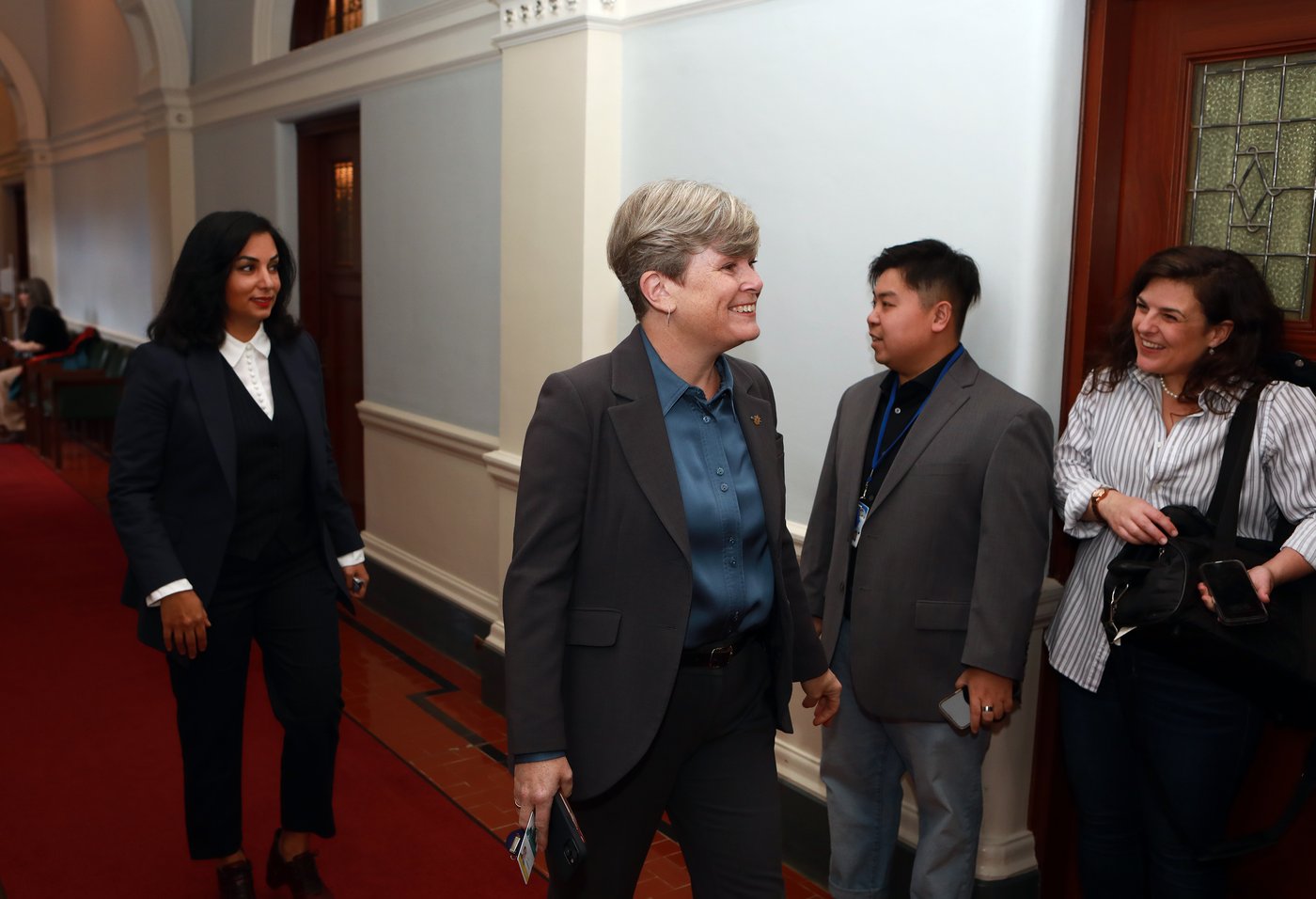
VICTORIA — Rules are being tightened for British Columbia’s overdose-prevention safer supply program to require a witness when a user takes their drugs in an effort to stop the pills from being sold on the streets.
The government says all patients that are part of the prescribed alternatives program must now take their medication under the supervision of health professionals, such as pharmacists or nurses, effective Dec. 30.
Health Minister Josie Osborne said the change returns B.C. to the witnessed-dosing model, which existed before the COVID-19 pandemic.
She said the program save lives.
“This is about public policy and making decisions that are in the best interest of patients, and doing everything we can, to separate people with substance use disorders from an illicit, a toxic, a poisonous drug supply, but at the same time taking action to make sure that we mitigate and minimize the risk of diversion into the wrong hands,” Osborne said.
Osborne’s announcement coincided with the release of monthly figures from the BC Coroners Service. Its preliminary data shows that 150 people died in October from “drug toxicity.”
The announcement on changes to the safer supply program follows a leak of documents in February that said about 60 pharmacies were involved in the illegal diversion of drugs from the safe supply program.
The leak came from Independent MLA Elenore Sturko, a persistent critic of NDP government’s drug policy.
In response, the government immediately required new users of the program to take their drugs under supervision, and Osborne said then, that government would eventually require supervision for all users.
Asked why it took more than nine months to complete the transition, Osborne said the government wanted to ensure a “safe transition,” after getting guidance from clinicians and pharmacists.
“That does take some time to do it thoroughly, to do it carefully,” Osborne said. “But we know that care providers and prescribers have already been working with their patients,” she said
Osborne wouldn’t say where the investigation was into the pharmacies that are alleged to have diverted the medication.
“But I can say that we are taking enforcement actions, and that we’ll have more to say to this as those investigations continue.”
The safe supply program currently serves about 2,200 people, down from more than 5,000 in March 2023.
The government said changes include “limited exemptions to witnessed dosing” for patients in “exceptional circumstances” such as living in communities with limited resources.
Osborne said one such situation might involve those living in rural communities, where pharmacies might be not open seven days a week. Other situations might involve people who work unusual hours, she said.
Osborne said these exceptions will be closely monitored.
“Techniques or tools like urine analysis will be used to make sure that people are adhering to that medication regime,” she said.
“This is about providing a balance between helping people through the treatment and recovery that they need, while working actively to make sure that these prescribed medications stay in the hands of the people for whom they are intended, and that they’re not getting into other hands.”
Asked whether she foresees a future without the safe supply program, Osborne paused for several moments before answering.
“We’d all love to see a world where we didn’t have a toxic drug supply out there, and that people were not experiencing the issues … with addiction and substance use disorders,” she said. “For now, we know that prescribed alternatives work.”
This report by The Canadian Press was first published Dec. 2, 2025.
News from © The Canadian Press, . All rights reserved.
This material may not be published, broadcast, rewritten or redistributed.

This site is protected by reCAPTCHA and the Google Privacy Policy and Terms of Service apply.
Want to share your thoughts, add context, or connect with others in your community?
You must be logged in to post a comment.