Elevate your local knowledge
Sign up for the iNFOnews newsletter today!
Elevate your local knowledge
Sign up for the iNFOnews newsletter today!
Select Region
Selecting your primary region ensures you get the stories that matter to you first.
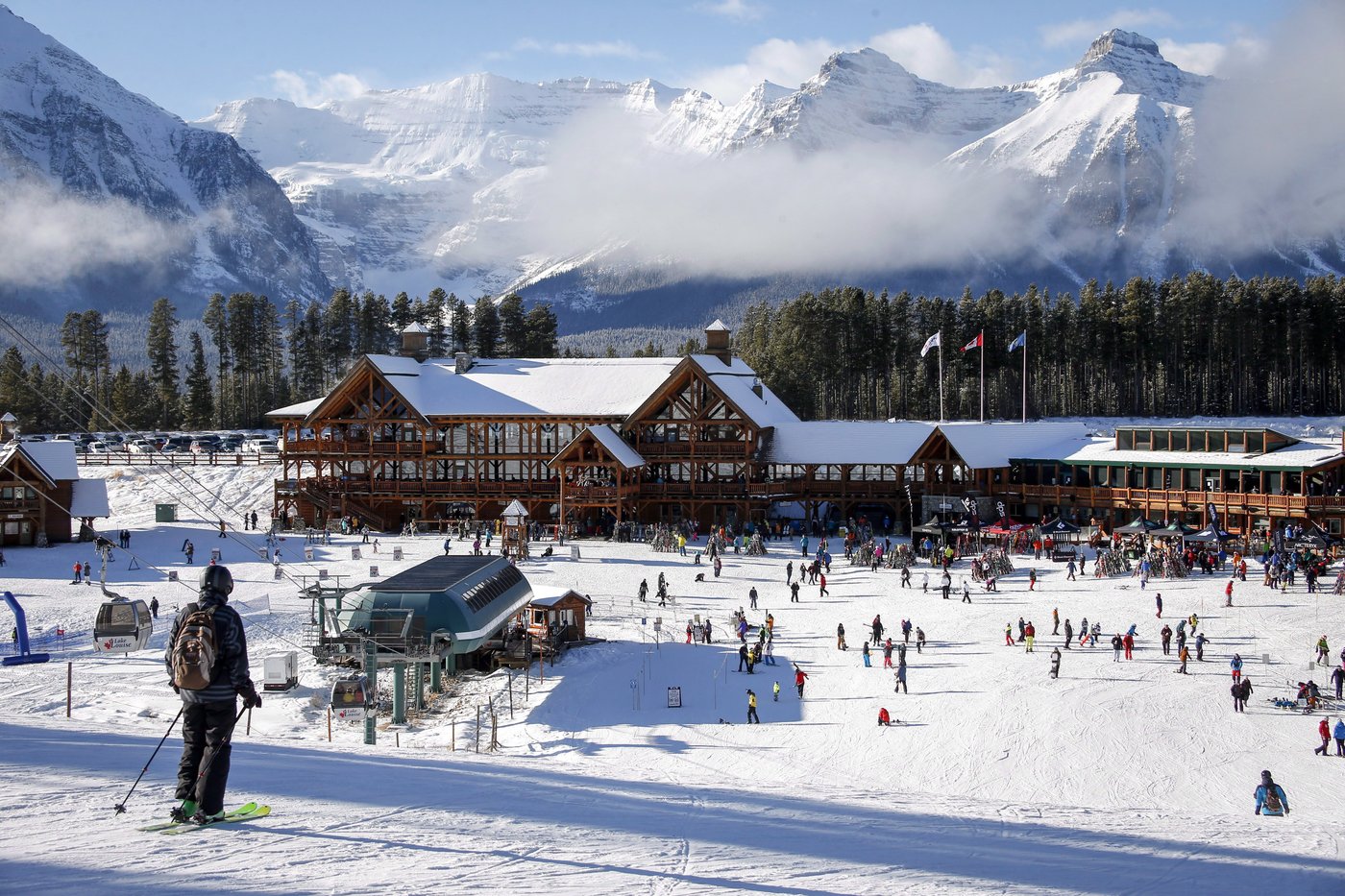
MONTREAL — Kendra Scurfield sees white from base to peak.
“It is full-on winter wonderland down here,” said the Banff Sunshine Village vice-president, speaking from the ski resort’s main lodge late last month.
“On my way to the mountain there were a few young 20-year-olds skiing down the street to get to the bus stop.”
Amid an onslaught of early snow, the Rockies resort enjoyed its earliest seasonal opening in more than four decades, firing up its lifts and groomers on Nov. 2. Whistler Blackcomb in B.C., Lake Louise in Alberta and Mont Tremblant and Saint Sauveur in Quebec have all opened their gates as well.
Ski resort operators are gearing up for a snowy year on the slopes, with weather and consumer demand forecasts bright in the face of a warming planet and cost-of-living concerns.
Blasts of frigid Arctic air could send the mercury plunging in December and herald the arrival of a more “traditional Canadian winter,” according to Doug Gillham, a meteorologist at the Weather Network, which released its seasonal outlook last week.
Most of Canada is expected to see near- or colder-than-normal temperatures, and near- or above-normal precipitation and snow, stated the network’s forecast for December, January and February.
In Quebec’s Eastern Townships, Mont Sutton has already accumulated more than 60 centimetres of snow. “It’s really exceptional,” said spokeswoman Lydia Lyonnais.
Season pass sales are up 10 per cent from the same time last year, while equipment rentals rose 39 per cent, she said.
Across regions, demand seems as sturdy as a backwoods snowboard.
“There’s still a strong appetite,” said Canadian Ski Council CEO Paul Pinchbeck. “So we’re feeling really good.”
The domestic market grows one to two per cent a year — “not hugely,” but well compared to many markets, he said.
Part of the bigger uptick in bookings this year comes as Canadians continue to spurn the U.S. amid the tariff war and a steep exchange rate (the loonie is worth about 71 cents US).
“We have seen people that might usually go to the States opting to come to Canada or stay in Canada,” said Scurfield, whose family has owned Sunshine Village since 1981.
Meanwhile, the volume of skiers from down south has not dipped, while those from overseas — Australia, Germany and the U.K., especially — have come in higher numbers, according to the ski council. The same upswing happened after U.S. President Donald Trump was elected to his first term in 2016, Pinchbeck added.
However, the rising cost of living means that price hikes over the past five years could deter some skiers, and edge others out of the pastime entirely.
A single-day lift ticket at Whistler Blackcomb can top $300. It costs about $200 when purchased onsite at Panorama Mountain Resort in the high season. In Quebec’s Charlevoix region, le Massif charges up to $170. A season pass can easily top $1,000.
“For sure it’s a pricey sport,” said Catherine Lacasse, a spokeswoman for Mont Tremblant in Quebec’s Laurentian Mountains.
Cheaper rates on tickets, season passes and accommodations are available in the autumn, or sometimes by paying the day before.
Then there’s the broader perception of skiing as the domain of certain demographics.
“In the past we’ve been quite rightly portrayed as a largely male, largely Caucasian sport,” said Pinchbeck.
“I’m glad to say that’s changing” — especially at resorts closer to big cities. Roughly a quarter of Ontario skiers come from “diverse backgrounds,” he said.
In general, older generations tended to furnish more dedicated skiers, with younger shredders hitting the hill fewer times per year, he said.
“People have more to do,” Pinchbeck said. “Generational tastes are changing …. We need a few extra millennials for every boomer or gen Xer that leaves.”
That’s also because baby boomers and generation Xers shell out more per visit than their less affluent children, added Scurfield.
To stoke loyalty and lock in predictable income, ski resorts have turned increasingly to season and multi-resort passes. Some hills draw roughly half of their revenue from season passes, Pinchbeck said. But another path to profitability lies off-hill — and in the off-season.
“The biggest strategies that I have seen deployed over the last 15 to 20 years have been the rise of multi-season ski areas,” he said.
In Collingwood, Ont., Blue Mountain Resort has transformed its offerings from mainly skiing and golfing into a vast array of restaurants, bars, clothing retailers, a mountaintop skating loop, a treetop high-ropes course and a “mountain-coaster,” all anchored by a Swiss-style shopping village.
“Not everybody wants to ski eight hours a day,” said Tara Lovell, a manager at Blue Mountain.
“If you’re trying it for the first time, you aren’t likely to spend all day out there and you’ll want to have an experience you’d want to return to by enjoying après-(ski), or going to the hot tub after using muscles you may never have used before.”
It’s not all fun and snowflakes. Mountains equipped with snow guns — Blue Mountain has nearly 1,000 — remain at the mercy of the Mother Nature.
Revelstoke said in an email last week it was “pressing pause” on its planned Nov. 29 opening due to meagre early-season snowfall.
“That’s the tricky thing with skiing. You are so dependent on the weather. You never really know when and how it’s going to fall,” said Lyonnais.
“You just hope for the best.”
This report by The Canadian Press was first published Dec. 3, 2025.
News from © The Canadian Press, . All rights reserved.
This material may not be published, broadcast, rewritten or redistributed.

This site is protected by reCAPTCHA and the Google Privacy Policy and Terms of Service apply.
Want to share your thoughts, add context, or connect with others in your community?
You must be logged in to post a comment.