Elevate your local knowledge
Sign up for the iNFOnews newsletter today!
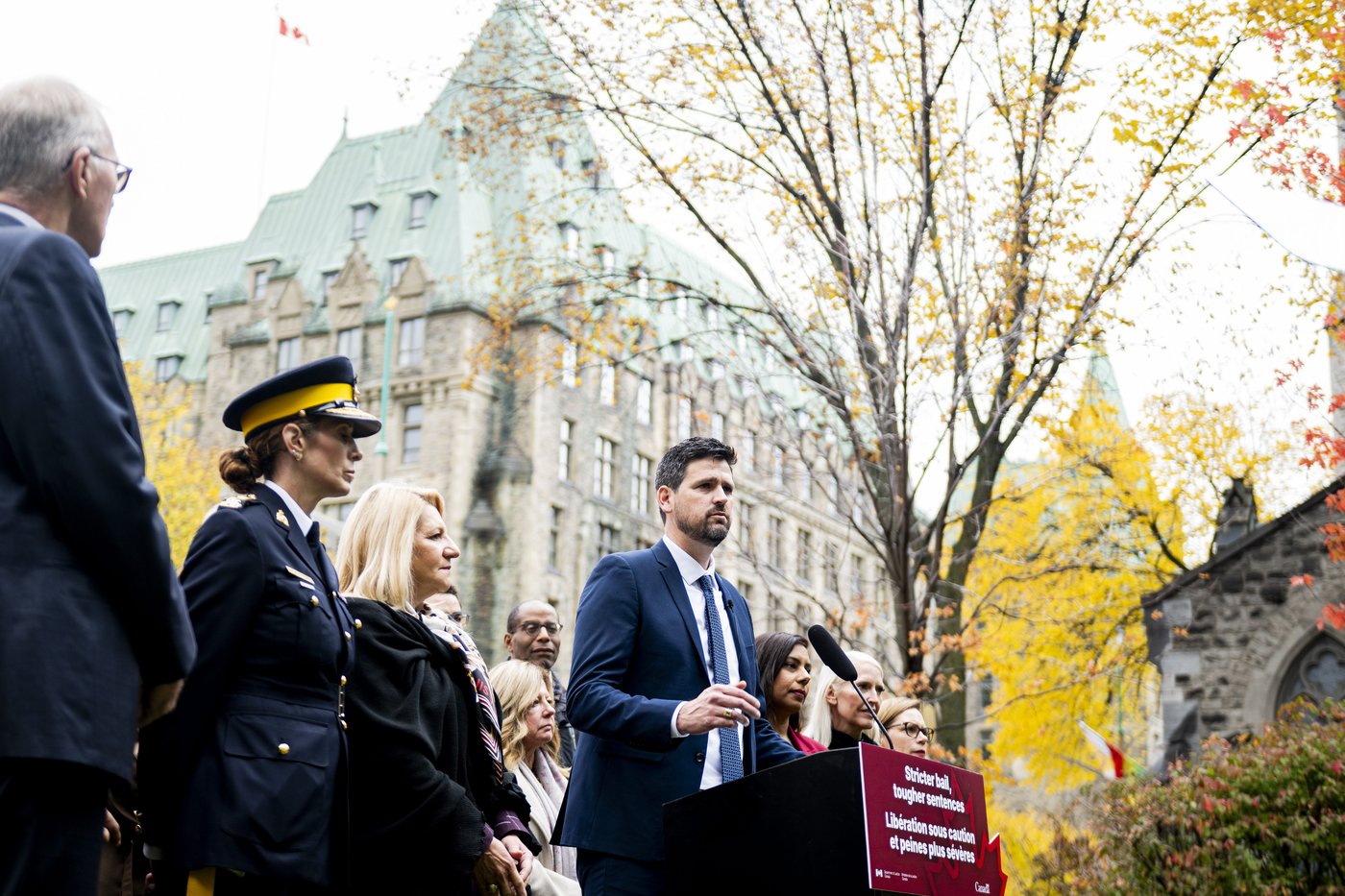
OTTAWA — A coalition that includes civil liberties, community and labour groups called on the Liberal government Wednesday to withdraw its hate crime bill.
Tim McSorley of the International Civil Liberties Monitoring Group said a “closer examination of the details of the bill raises significant concerns around threats to free expression, freedom of assembly, and the ability for the public to engage in protest and dissent.”
McSorley made the comments at a press conference on Parliament Hill, alongside representatives from the Public Service Alliance of Canada, the Canadian Muslim Public Affairs Council, and Independent Jewish Voices.
They say Bill C-9 gives police too much power and could criminalize protest. Other coalition media events were planned for Wednesday in Mississauga and London, Ont., and in Vancouver and Edmonton.
Justice Minister Sean Fraser introduced the bill earlier this year following months of concerns about rising tensions in Canadian communities over public protests — many of them prompted by hostilities in the Middle East since Oct. 7, 2023.
It made good on a promise Prime Minister Mark Carney made during the spring election to introduce laws criminalizing the intentional obstruction or intimidation of people at places of worship, schools and community centres.
Several Canadian municipalities have taken steps recently to establish “bubble zones” that restrict protest activity near such places as religious institutions, schools and child care centres.
Statistics Canada reported a sharp rise in police-reported hate crimes in 2023, with 4,777 incidents reported, compared with 3,612 in 2022.
C-9 seeks to amend the Criminal Code to define “hatred” in criminal law for the first time, codifying a definition made in rulings by the Supreme Court of Canada. The definition says hatred involves “detestation” or “vilification.”
It also would create a new offence under the Criminal Code of intimidating someone to make them afraid to access a religious or cultural institution, and a new offence of intentionally obstructing someone trying to lawfully access those places.
It would make it a criminal offence to wilfully promote hate through the use of hate symbols — a designation that would apply to two Nazi symbols, symbols of designated terrorist entities, or symbols that closely resemble them.
McSorley said his group is concerned about that provision.
“For example, would Arabic writing on a sign that a police officer believes is similar enough to writing found on imagery used by a listed terrorist entity be enough to arrest an individual and ask questions later?” he said.
In a press release, the coalition said the bill introduces “vague and subjective criteria that leave protesters vulnerable to charges of ‘intimidation,’ ‘obstruction,’ or ‘hatred’ — offences that carry penalties of up to 10 years in prison.”
They said this means “a peaceful protester could be criminalized simply because someone trying to access a certain type of building claims to feel afraid.”
The bill is currently in front of the House of Commons justice committee, which has started the clause-by-clause process where amendments can be made to the bill.
The Liberals are expected to support a Bloc Québécois motion to remove a religious exemption on hate speech from the Criminal Code.
While the prospect has triggered political controversy in recent days, it’s not clear whether the exemption has ever been used in Canada. Though some members of the coalition spoke against the proposed amendment at the press conference, none of them could cite a case in which the religious exemption played a role.
In support of the amendment, the Bloc has been pointing to the case of Montreal Imam Adil Charkaoui, who in 2023 asked God to “take care” of “Zionist aggressors,” according to a translation obtained at the time by La Presse Canadienne.
When Quebec’s Crown prosecution office declined to lay charges in the case, it did not cite the religious exemption. It said in a statement in May 2024 it couldn’t prove beyond a reasonable doubt the statement incited hatred against an identifiable group.
This report by The Canadian Press was first published Dec. 3, 2025.
News from © The Canadian Press, . All rights reserved.
This material may not be published, broadcast, rewritten or redistributed.

This site is protected by reCAPTCHA and the Google Privacy Policy and Terms of Service apply.
Want to share your thoughts, add context, or connect with others in your community?
You must be logged in to post a comment.