Elevate your local knowledge
Sign up for the iNFOnews newsletter today!
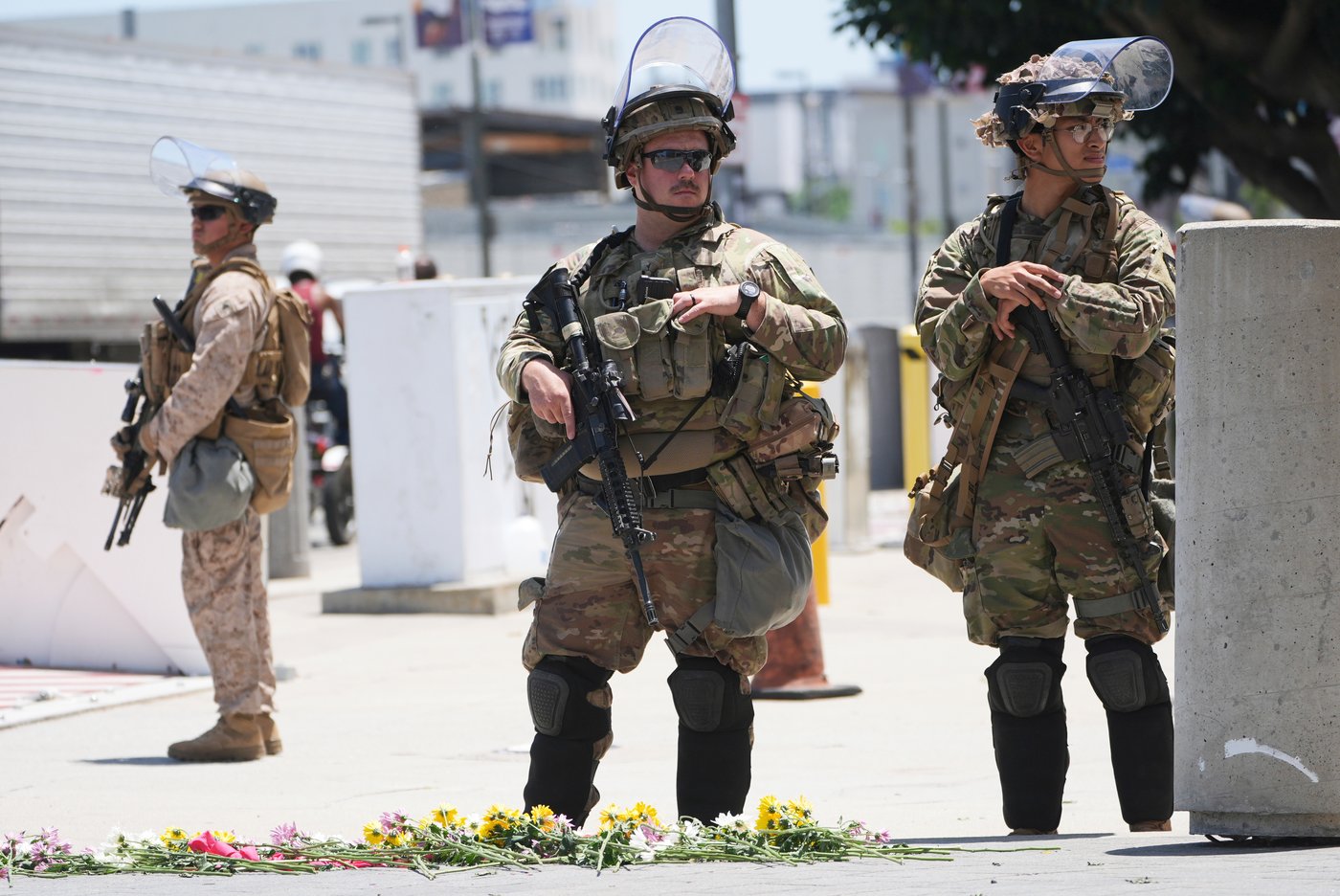
SAN FRANCISCO (AP) — A federal judge on Friday sharply questioned the Trump administration’s authority and need to maintain command of California National Guard troops it first deployed to Los Angeles in June following violent protests.
At a hearing in San Francisco, U.S. District Judge Charles Breyer suggested conditions in Los Angeles had changed since the initial deployment, and he questioned whether the administration could control state Guard troops “forever” under its interpretation of federal law.
“No crisis lasts forever,” he said. ”I think experience teaches us that crises come and crises go. That’s the way it works.”
He pressed an attorney for the government for any evidence that state authorities were either unable or unwilling to help keep federal personnel and property in the area safe and noted President Donald Trump had access to tens of thousands of active duty troops in California.
California officials have asked Breyer to issue a preliminary injunction returning control of remaining California National Guard troops in Los Angeles to the state. Breyer did not immediately rule. He has previously found the administration’s deployment of the California National Guard illegal.
“The National Guard is not the president’s traveling private army to deploy where he wants, when he wants, for as long as he wants, for any reason he wants, or no reason at all,” California Attorney General Rob Bonta said after the hearing.
Trump initially called up more than 4,000 California National Guard troops in response to the protests over his stepped-up enforcement of immigration laws, but that number had dropped to several hundred by late October, with only a 100 or so troops remaining in the Los Angeles area.
The Republican president, however, has also tried to use California Guard members in Portland, Oregon, and Chicago, as part of his effort to send the military into Democratic-run cities despite fierce resistance from mayors and governors.
Justice Department Attorney Eric Hamilton said federal law gives the president the power to extend control of state Guard troops as long as he deems that necessary.
The remaining troops in Los Angeles were allowing immigration agents to continue their mission and protecting federal property, he said, noting someone threw two incendiary devices into a federal building on Monday.
The court did not have the authority to review how the president manages a Guard mission that is in progress, but even if it could, it had to consider the violence this summer, Hamilton said.
“We cannot turn a blind eye to what happened in Los Angeles in June of this year,” he said.
Trump’s call up of the California National Guard was the first time in decades that a state’s national guard was activated without a request from its governor and marked a significant escalation in the administration’s efforts to carry out its mass deportation policy. They were stationed outside a federal detention center downtown where protesters gathered, and later sent on the streets to protect immigration officers as they made arrests.
California sued, and Breyer issued a temporary restraining order that required the administration to return control of the Guard troops to California. An appeals court panel, however, put that decision on hold. Breyer was nominated to the bench by President Bill Clinton, a Democrat.
California argued that the president was using Guard members in violation of a law limiting the use of the military in domestic affairs.
The administration said courts could not second-guess the president’s decision that violence during the protests made it impossible for him to execute U.S. laws with regular forces and reflected a rebellion, or danger of rebellion.
In September, Breyer ruled after a trial that the deployment violated the law. Other judges have blocked the administration from deploying National Guard troops to Portland, Oregon, and Chicago.
___
Thanawala reported from Atlanta.
News from © The Associated Press, . All rights reserved.
This material may not be published, broadcast, rewritten or redistributed.

This site is protected by reCAPTCHA and the Google Privacy Policy and Terms of Service apply.
Want to share your thoughts, add context, or connect with others in your community?
You must be logged in to post a comment.