Elevate your local knowledge
Sign up for the iNFOnews newsletter today!
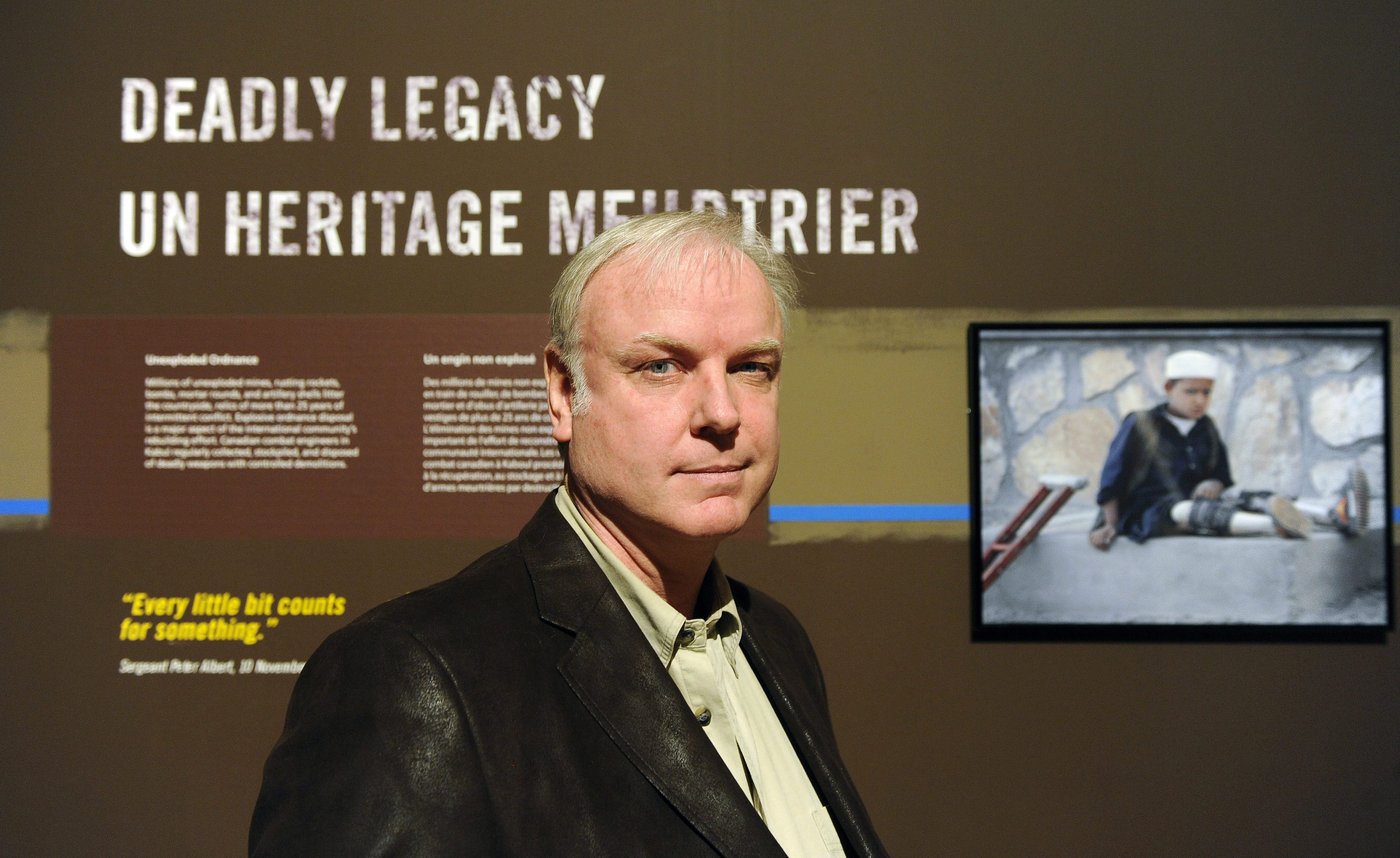
OTTAWA — Journalist Stephen Thorne, who movingly chronicled some of the most difficult episodes in recent Canadian history, died Friday after being ill with prostate cancer. He was 66.
Thorne spent much of his career at The Canadian Press and later worked as a freelance writer, photographer and communications consultant before joining Legion Magazine.
He toiled for CP for almost three decades, covering everything from major crime and federal politics to offshore fishing disputes and professional baseball.
But he was most drawn to events that tested the human spirit.
Thorne served as the eyes and ears of the public on stories including the 1992 Westray coal-mine explosion, the 1998 Swissair Flight 111 disaster and the Canadian military’s foray into Afghanistan following the 2001 terrorist attacks on the United States.
His incisive writing style let the facts, punctuated by telling details, propel the story’s narrative.
Thorne was also an accomplished photographer who captured moments of tense drama, unspeakable sorrow and joyful camaraderie.
He garnered many accolades for his journalism. Among other honours, Thorne received National Newspaper Awards for spot news and international reporting, the Ross Munro Media Award for defence reporting and four RTNDA national radio awards.
Former CP editor-in-chief Scott White said he once told Thorne he was the best breaking news reporter he ever worked with.
Thorne was often competing with many other news outlets chasing the same spot story.
“But he told it differently and better,” White said. “The guy was a beautiful writer.”
Thorne was the lone reporter with 3rd Battalion of Princess Patricia’s Canadian Light Infantry during its assault on the Whale’s Back in eastern Afghanistan in March 2002, Canada’s first wartime combat operation in half a century.
In words and photos, he also portrayed the rhythm of the daily lives of Canadian soldiers and Afghans in the war zone.
White spoke to Thorne frequently by phone during his time in Afghanistan.
“He was completely in his element — pissing off the brass, telling good, human stories, breaking some stories,” White recalled.
Thorne was raised in Halifax, where he attended Queen Elizabeth High School before studying political science at Acadia University in Wolfville, N.S.
He worked at the Halifax Chronicle Herald as a reporter and photographer in the early 1980s, and joined CP in 1984.
“I interviewed political leaders, Nobel laureates, grieving families, wounded soldiers, disaster survivors, artists, heroes, villains, celebrities, entertainers and sports icons,” Thorne wrote on his website.
“I have walked the windswept sands of Sable Island, chased the dancing northern lights in Canada’s High Arctic, and ascended the lofty peaks of the Rocky Mountains — and the Hindu Kush.”
Former CP journalist Dean Beeby, who supervised Thorne in Halifax and Ottawa, described him as a dogged and independent-minded reporter who grabbed a story and wouldn’t let go.
“He had that very rare combination of somebody who chased a story hard, and when he had it, he was able to sit down and write it so that you felt like you were there,” Beeby said.
“His charm gave him an ability to get people to talk to him. People felt at ease around him, and he they would open up to him.”
Beeby remembered Thorne using those abilities to elicit exclusive details from the rescue workers who clambered through the wrecked Westray mine in search of survivors and bodies.
Six years later, Thorne talked his way on to a small fishing boat to survey the aftermath of the Swissair crash off Peggy’s Cove, N.S.
“On the windswept sea 10 kilometres southwest of this postcard place, the acrid smell of jet fuel is almost overpowering; the blunt, visceral reality of death is all about, washed clean by the constantly rolling ocean,” he wrote.
“And always there are the reminders.
Purses. Suitcases. A shaving kit. Documents with names and Swiss addresses.”
White remembers Thorne’s dispatch well.
“That is the only story I ever edited that made me cry at CP,” White said before pausing. “It still breaks me up when I think about it.”
Thorne wrote of that day years later in a piece for Legion Magazine about his father, who was a Canadian Air Force doctor in Europe during the Second World War.
Thorne was driving back to the CP office when he saw his dad crossing the street. He pulled over, opened the passenger-side window and told him he had spent the day on the water at the crash site.
“I didn’t need to tell him what we found there. He knew. He nodded, pursed his lips and studied my face: ‘I know, son,’ he said. ‘I know where you’ve been.’ There was a silence and then I headed off.
“It was probably the most poignant moment we’d ever had. I returned to the newsroom and wrote the words: ‘The lives of the 229 passengers and crew who died aboard Swissair Flight 111 float by in 100,000 tiny pieces.’
“My life would never be the same again.”
Thorne delivered an incredible story, Beeby said. “But I think it stayed with him and haunted him.”
White acknowledges that decades ago media outlets, including CP, were not as aware as they are now of the mental toll that covering grim tragedies can take on a journalist.
Thorne spent much of his later career telling the stories of those who went to war.
He mounted several photographic exhibitions across North America, including one on Afghanistan that featured his stories and pictures as well as video from documentary filmmaker Garth Pritchard.
Another exhibition featured images of wounded soldiers.
Thorne served for a time as editor of The CWCA Newsletter, the Canadian War Correspondents Association journal.
In 2018, he joined Legion Magazine, focusing on military history as a staff writer, photographer and copy editor.
Thorne also wove his own experiences and the tales of veterans into his book “On War: Exploring Why and How We Fight.”
Valour in the Presence of the Enemy, a non-profit organization dedicated to honouring and supporting Canadian soldiers, published a salute to Thorne on social media after learning of his illness.
“He didn’t just report our stories — he carried them with him, protected them, and made damn sure they were told right. His tireless work at Legion Magazine has preserved countless stories that might have been forgotten,” the message said.
“He’s given voice to the fallen, honour to the veterans, and visibility to causes that desperately needed a champion.”
In a Facebook post published posthumously, Thorne said he weathered life with all its complexity, beauty and unexpected turns.
“I loved deeply, laughed loudly, and did things in the only way I knew how — my own,” he wrote.
“My journey continues. I am on to new adventures.”
This report by The Canadian Press was first published Dec. 7, 2025.
News from © The Canadian Press, . All rights reserved.
This material may not be published, broadcast, rewritten or redistributed.

This site is protected by reCAPTCHA and the Google Privacy Policy and Terms of Service apply.
Want to share your thoughts, add context, or connect with others in your community?
You must be logged in to post a comment.