Elevate your local knowledge
Sign up for the iNFOnews newsletter today!
Elevate your local knowledge
Sign up for the iNFOnews newsletter today!
Select Region
Selecting your primary region ensures you get the stories that matter to you first.
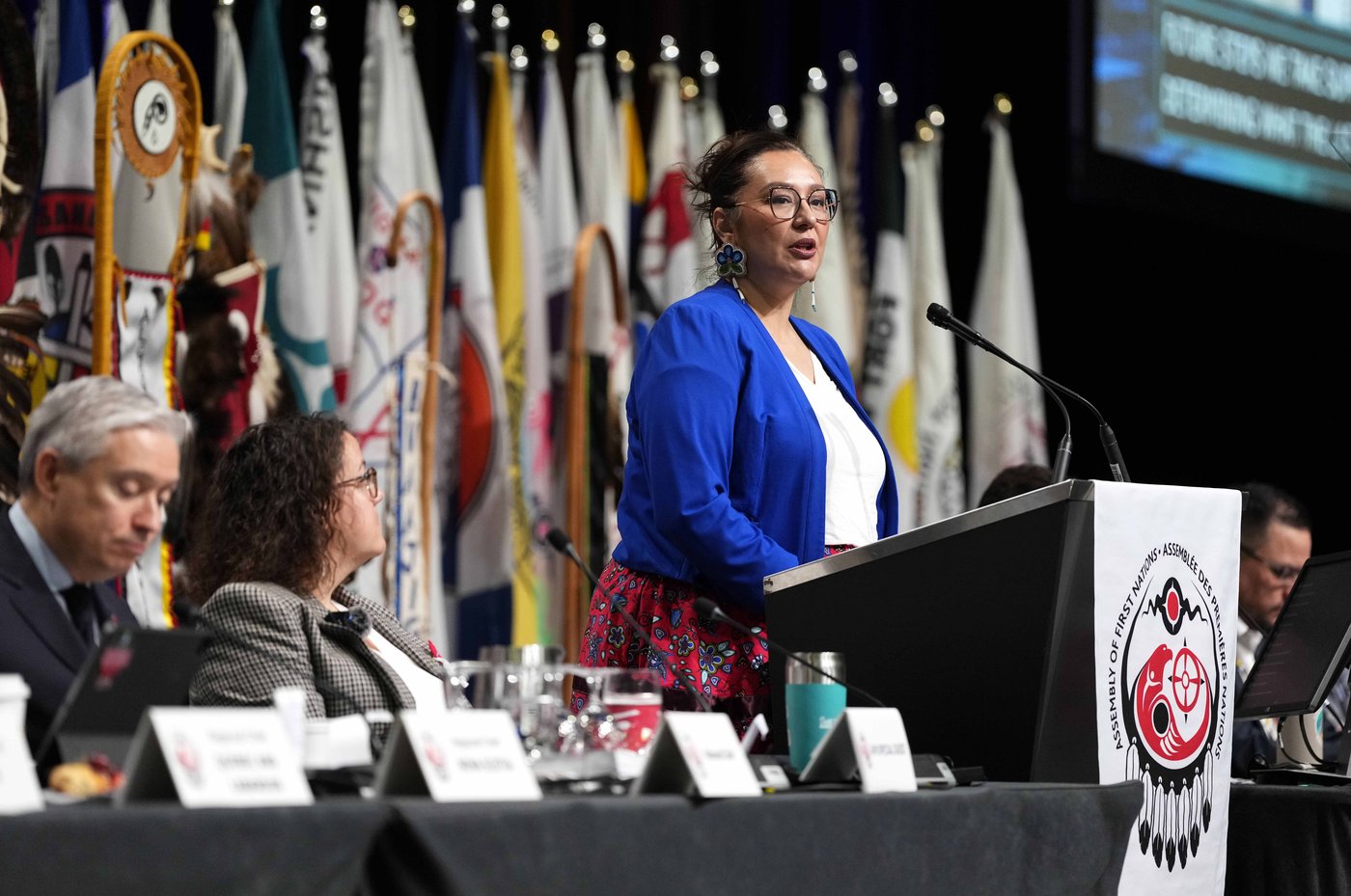
OTTAWA — Indigenous Services Minister Mandy Gull-Masty says the Assembly of First Nations sent a strong signal to her government to end the second-generation cutoff in the Indian Act, but her government won’t make that change without broad consultations with leaders.
At a special assembly in Ottawa last week, First Nations chiefs voted to support Senate amendments to a government bill that would expand eligibility under the Indian Act by eliminating the second-generation cutoff — which prevents individuals from registering for status under the law if they have a parent and a grandparent who did not have status.
The resolution, which passed by consensus during the Assembly of First Nations gathering in Ottawa, also calls on Ottawa to commit to increased funding to offset the cost to their communities of absorbing new members.
The AFN works as an advocacy body for 600 First Nations chiefs who attend biannual meetings to discuss issues and pass resolutions directing the executive committee on how to lobby governments.
It is not a rights-holding institution — and while every chief has the opportunity to attend its gatherings, some choose not to.
Chiefs in Alberta, for example, do not have a regional representative on the AFN executive committee, though some chiefs from that province participate in AFN-led events.
Jaime Battiste, a Mi’kmaw Liberal MP, previously told The Canadian Press the government would need to get buy-in for Indian Act changes from First Nations through the AFN.
Several resolutions from previous AFN gatherings have also called for the removal of the second-generation cutoff.
Gull-Masty, who spoke to chiefs about the second-generation cutoff the day before the vote, told The Canadian Press Monday she has a “legal and constitutional obligation” to consult with chiefs and ask them to suggest alternatives.
She said she is “still thinking through” the resolution and conversations she had on the issue with chiefs during the three-day AFN gathering.
Bill S-2, introduced in the Senate with support from the Liberal government, was drafted to eliminate some gender inequities in the Indian Act and allow about 6,000 people to become eligible for First Nations status.
Senators amended the legislation to remove the second-generation cutoff, which came from a 1985 amendment to the Indian Act.
That cutoff, say some chiefs, could leave their communities with no federally recognized members in the next generation — essentially eliminating their rights as a distinct people.
Gull Bay First Nation Chief Wilfred King, speaking in support of the resolution at the AFN gathering, said the people who would become eligible for status once the second-generation cutoff is ended are not unknown to their communities.
“We’re talking about people that are connected to our community. We’re talking about people that are directly related to members of chief and council, members of the community,” he said.
“These are not strangers. These are our people.”
Gull-Masty told chiefs Wednesday she doesn’t think the Senate should be changing the legislation without the House of Commons’ involvement and before consultations with First Nations.
She said as a Cree woman administering legislation that gives the federal government control over the lives of First Nations peoples, she understands the concerns chiefs have with the law in its current form.
Sen. Paul Prosper, who helped amend the legislation in the Senate’s Indigenous Peoples committee, told the assembled chiefs earlier in the day the witnesses his colleagues heard from were almost unanimous on the need to repeal the second-generation cutoff.
He said some politicians see changes to status eligibility as more of a financial concern than anything else, since per-capita funding in First Nations would need to increase if more members are recognized by the federal government.
This report by The Canadian Press was first published Dec. 8, 2025.
News from © The Canadian Press, . All rights reserved.
This material may not be published, broadcast, rewritten or redistributed.

This site is protected by reCAPTCHA and the Google Privacy Policy and Terms of Service apply.
Want to share your thoughts, add context, or connect with others in your community?
You must be logged in to post a comment.