Elevate your local knowledge
Sign up for the iNFOnews newsletter today!
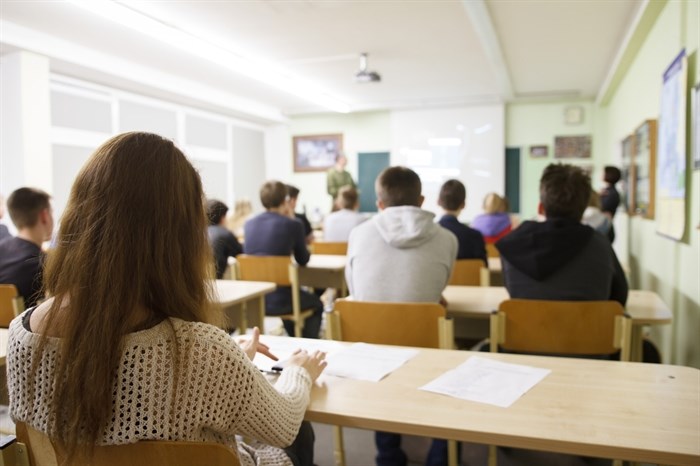
A Kamloops mother spent years unsuccessfully pleading with teachers and principals to have her daughter assessed for learning disabilities, but her suspicions were confirmed only after graduation by a psychologist.
The results showed Heather Morrison’s daughter graduated with elementary-level comprehension in reading and math.
“It’s absolutely devastating because she was failed. In part, as a parent, you feel like a failure as well” Morrison told iNFOnews.ca. “Maybe I could have tried harder. Maybe there were things I could have done differently to have her assessed because I knew her the best, and I knew that’s what she needed.”
Now 18 years old and a first-year university student, Morrison’s daughter fell behind other students from the beginning and showed signs of dyslexia. Repeated requests to teachers and principals at Kamloops schools didn’t even land her daughter on a waiting list to see a school psychologist.
She didn’t know at the time whether she could have gone over their heads and headed to district administration.
“I think it could’ve been an option, but because I was made to feel like I was obnoxious, like I didn’t know what I was talking about or just overly protective of my child … that sort of stopped me from going to a higher level because I already felt shame,” she said. “And I thought, sometimes, maybe I wasn’t right about this.”
Morrison spoke to iNFOnews.ca to bring awareness to what she sees as a failure at the Kamloops-Thompson school district to fairly meet her daughter’s educational needs, adding that her daughter preferred not to be named or interviewed.
As a single mother, Morrison said she expected the school district take on the assessment to ensure her daughter would get the support she needs. The signs seemed clear from kindergarten she was far behind other students, continuing to grade 12.
Despite Morrison flagging her struggles for school staff, along with the knowledge that her father had dyslexia, school staff did not pursue an a psychological or educational assessment, she said.
Morrison recalled when her daughter was in the third grade and she came home crying multiple times. Distressed about feeling the other students were smarter, she wanted to do her homework in the hallway so they wouldn’t see.
The teacher emailed Morrison that year saying she takes too many bathroom breaks and too many water breaks, and she’s not paying attention in class. Morrison said her daughter was hiding and it was an “escape route” from a classroom where she didn’t understand the material.
Meanwhile, her daughter passed each grade with high marks. Teachers knew her as a kind but quiet student who often kept to herself in class, according to Morrison.
“The teachers could see her trying and they just let it slide. They gave her good grades even though she didn’t deserve them,” Morrison said. “I would see an assignment she completed, which I would have failed her for, and she’d get a ‘B’ on it.”
Her daughter was writing numbers and letters backwards through elementary school and struggled to comprehend what she was reading. Morrison said she started to “memorize” words by how they looked, but she wasn’t understanding the meaning or concepts.
“She was very sweet, quiet and unassuming. She didn’t have behaviours. Those kids with behaviours are the ones who get the attention and support because it’s disrupting the class, while she can hide in the background and not be noticed,” she said.
Repeated requests to teachers and elementary school principals were downplayed, even from teachers who were supportive.
“I had multiple meetings with her principal. He actually called her a lazy reader, and that really pissed me off,” she said.
Once she moved to high school, Morrison stopped asking for school assessments and instead sent teachers proactive emails at the start of each semester, explaining her daughter’s difficulties.
Morrison said she was told to consider a private cognitive assessment since the school wouldn’t do it, but at $5,000 the cost was too high for the single mother.
“In grade 12, I pushed again because university was coming. I spoke to her counselor and said this has been long enough. I need her name brought up and she needs an assessment done, because she won’t be able to do university,” she said. “She’d been pushed through, basically under the radar, for that long… but she needed to have accommodations in university.”
Hopes for an assessment before graduation were swept away as the school counsellor didn’t find it necessary, which was another disappointment for Morrison, who is a social worker and has experience frequently advocating for patients in the healthcare system.
“If a parent came to me with something like that, as a social worker, I wouldn’t stop until that was dealt with. That’s our job,” she said. “So, that was very disappointing.”
She was privately assessed after graduation. While the results weren’t surprising for Morrison, they were devastating.
“You feel like you’ve failed your child, and now where she is, failing university, she’s going to have to go back to the beginning and learn how to learn again,” she said. “She’s going to have to take other programs to learn how to learn with dyslexia, so that’s what her college funding will go toward. Every penny that was saved will go to learning how to read and comprehend information.”
She said her daughter still doesn’t know the specifics of the assessment, but it was necessary to get her accommodations in university. She’s not passing her classes, but Morrison said her spirits are higher now with more appropriate supports.
“She’s probably one of the most upbeat, happy humans I’ve ever met in my life,” Morrison said of her daughter. “She’s become very social now that the pressure is off, I think.”
Afterward, Morrison wrote a letter for school district officials to explain her anger over how, in her view, the school system failed her daughter. It was sent to the School District 73 administration office and to the interim superintendent.
The school district denied her an interview and instead responded with a written statement, saying it is “committed to fostering inclusive, accessible learning environments” for all of its students.
According to the district, schools identify and screen students and those who need additional supports “may receive individualized assistance” through a variety of programs, adding that the district is “continuously developing” its practices to address students’ needs.
Citing privacy policies, the district would not comment on Morrison’s daughter or the letter Morrison sent to the district.
District parent advisory council president Bonnie McBride said Morrison’s account is a “great example of school exclusions” for students with learning disabilities.
“They’ll push it off as much as they can. You’re highly encouraged to work it out on your own, but in our community there are very few resources to get a private assessment, and you should never have to,” she said.
McBride said she has worked with lots of families in the Kamloops-Thompson school district whose kids have disabilities or need accessibility supports, claiming they are being excluded from school programs. That could be students encouraged to stay home on field trip days, it could be exclusions from the classroom due to behavioural issues, or a student could be falling repeatedly falling behind academically without support.
For example, McBride heard from a parent whose student was recently turned away by a secretary when attempting to register. The secretary said the school didn’t have the ability to work with an autistic student.
Last year, McBride said she worked with families facing different forms of exclusion from 18 of the district’s 43 schools.
As for academic needs and potential learning disabilities, the district is required to accommodate for students.
“As soon as an issue is identified, the school district has an obligation to make sure they are meeting the needs of that child,” McBride said.
That doesn’t mean the district has to provide a medical diagnosis, but it would help.
“What is says is as soon as a child is identified as needing additional supports, the district has an obligation to provide them. You can only provide them if you know what they are,” she said.
School exclusions are also the topic of an ongoing BC Ombudsperson investigation and impending report. It’s examining how BC school districts are accommodating, or failing to accommodate, students with disabilities.
Until the report is released, it’s difficult to know how the Kamloops-Thompson school district compares to others in the province, but McBride suspect’s it’s “behind” others in meeting accessibility needs.
“We couldn’t possibly know how we’re doing compared to other districts because when given the opportunity to report publicly, our district chose to keep their report in-camera,” she said.
The BC Ombudsperson’s Office did not respond to an iNFOnews.ca inquiry about the upcoming report, but McBride said she expects it by spring 2026.
News from © iNFOnews.ca, . All rights reserved.
This material may not be published, broadcast, rewritten or redistributed.

This site is protected by reCAPTCHA and the Google Privacy Policy and Terms of Service apply.
Want to share your thoughts, add context, or connect with others in your community?
You must be logged in to post a comment.