Elevate your local knowledge
Sign up for the iNFOnews newsletter today!
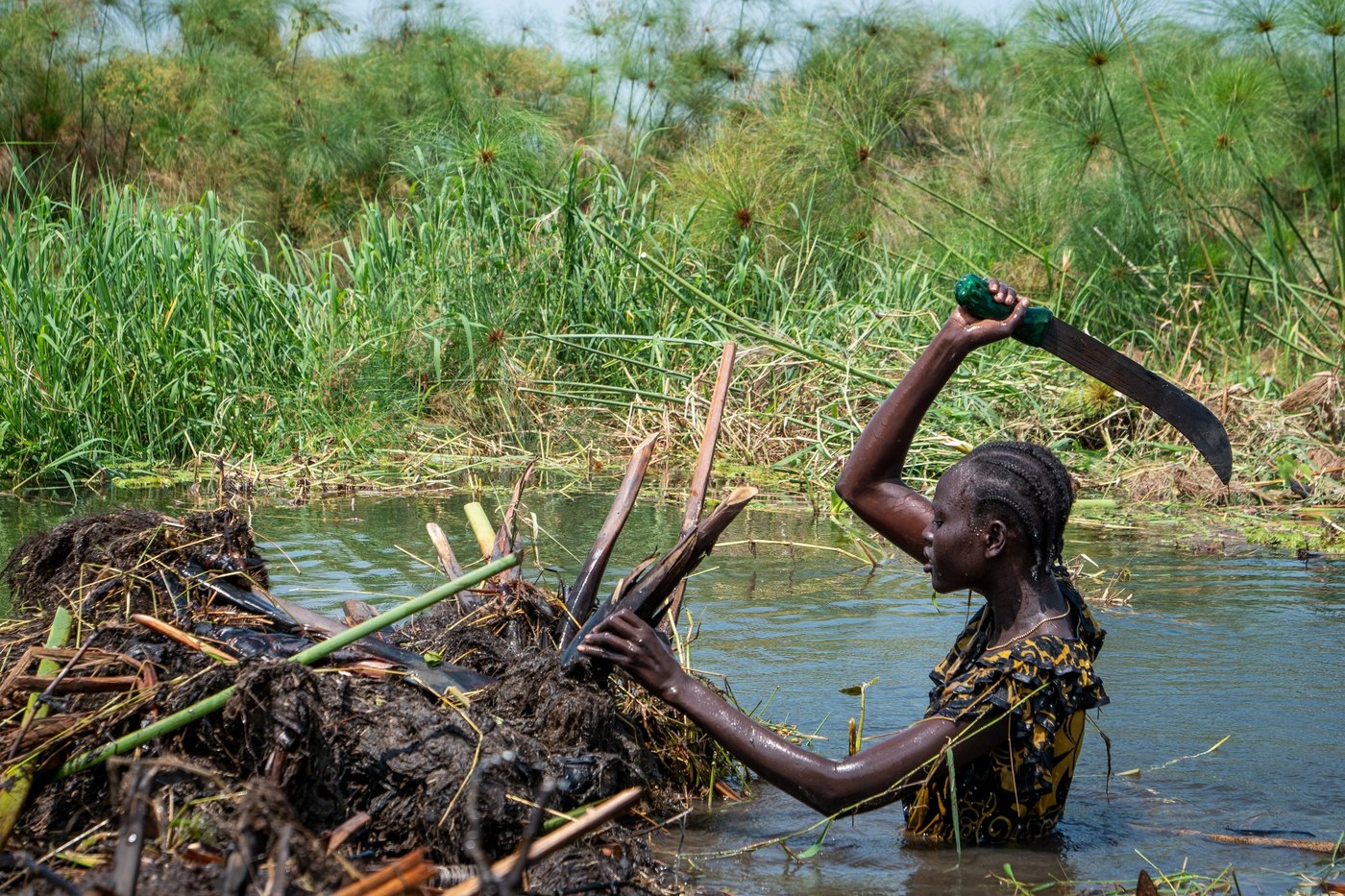
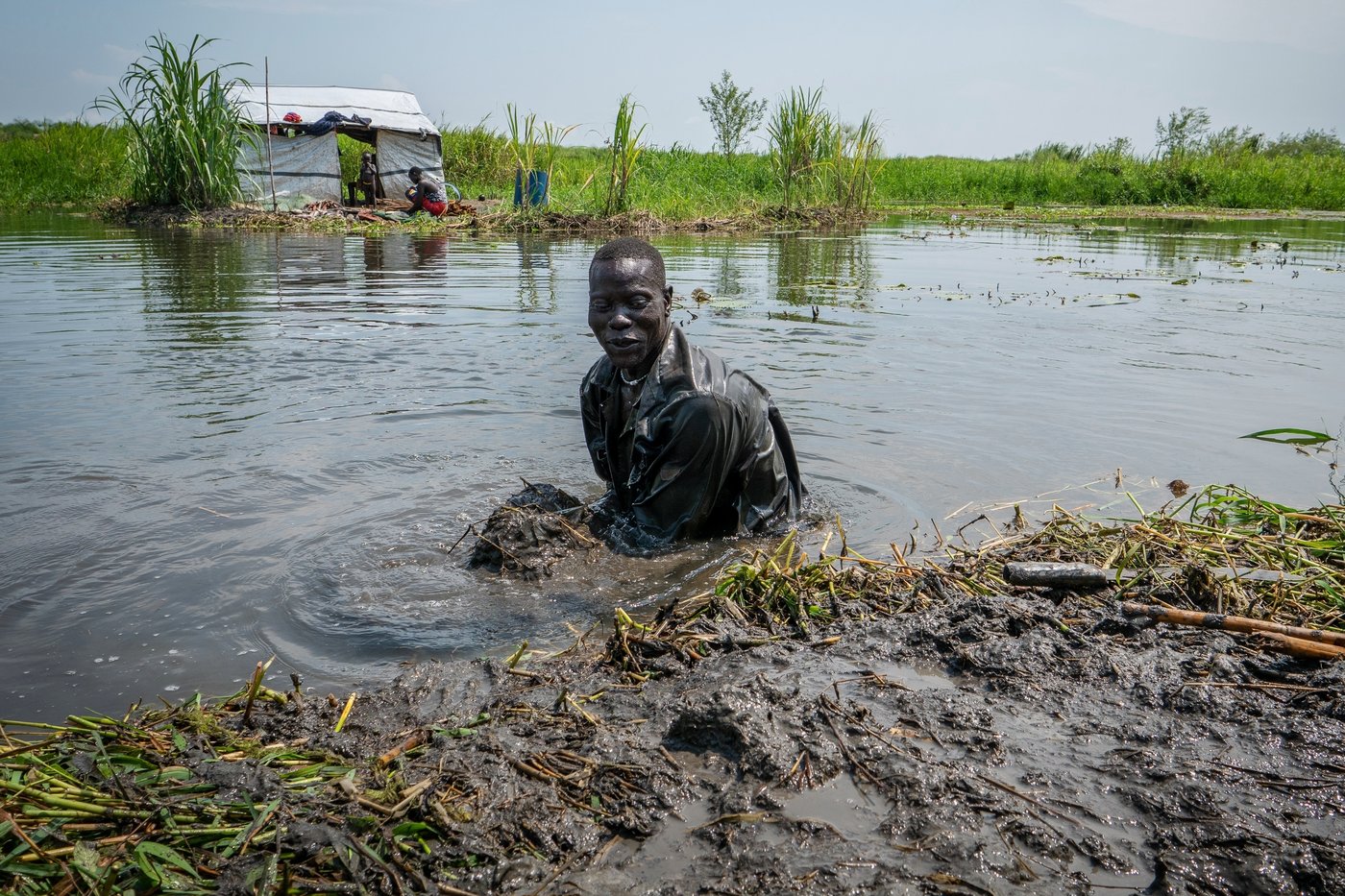
AKUAK, South Sudan (AP) — Standing in waist-deep water, Ayen Deng Duot uses a machete to break up the thick roots of a papyrus plant and throws the pieces onto a spongy mix of plants and clay soil. This human-made shore, once compacted and sun-dried, will expand the island where the South Sudanese mother of six stays with her family.
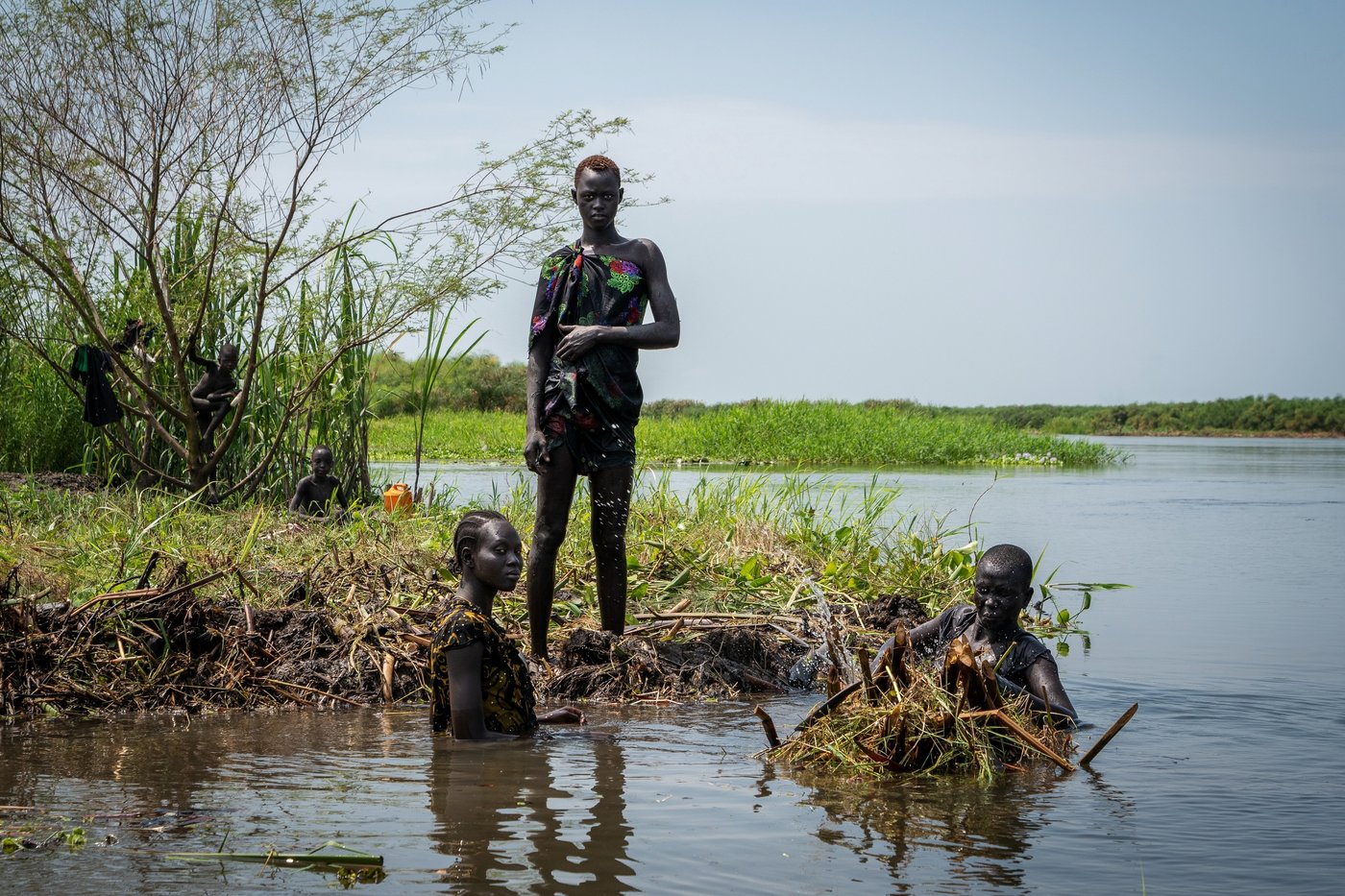
The Akuak community of about 2,000 people has been using this technique of layering plants and mud to build islands for generations in this swampy area along the Nile River, according to their chief. Increased flooding driven by climate change in recent years has made the islands harder to maintain, with community members spending hours each day dredging up material by hand to keep water from encroaching. South Sudan is experiencing catastrophic flooding for the sixth year in a row.
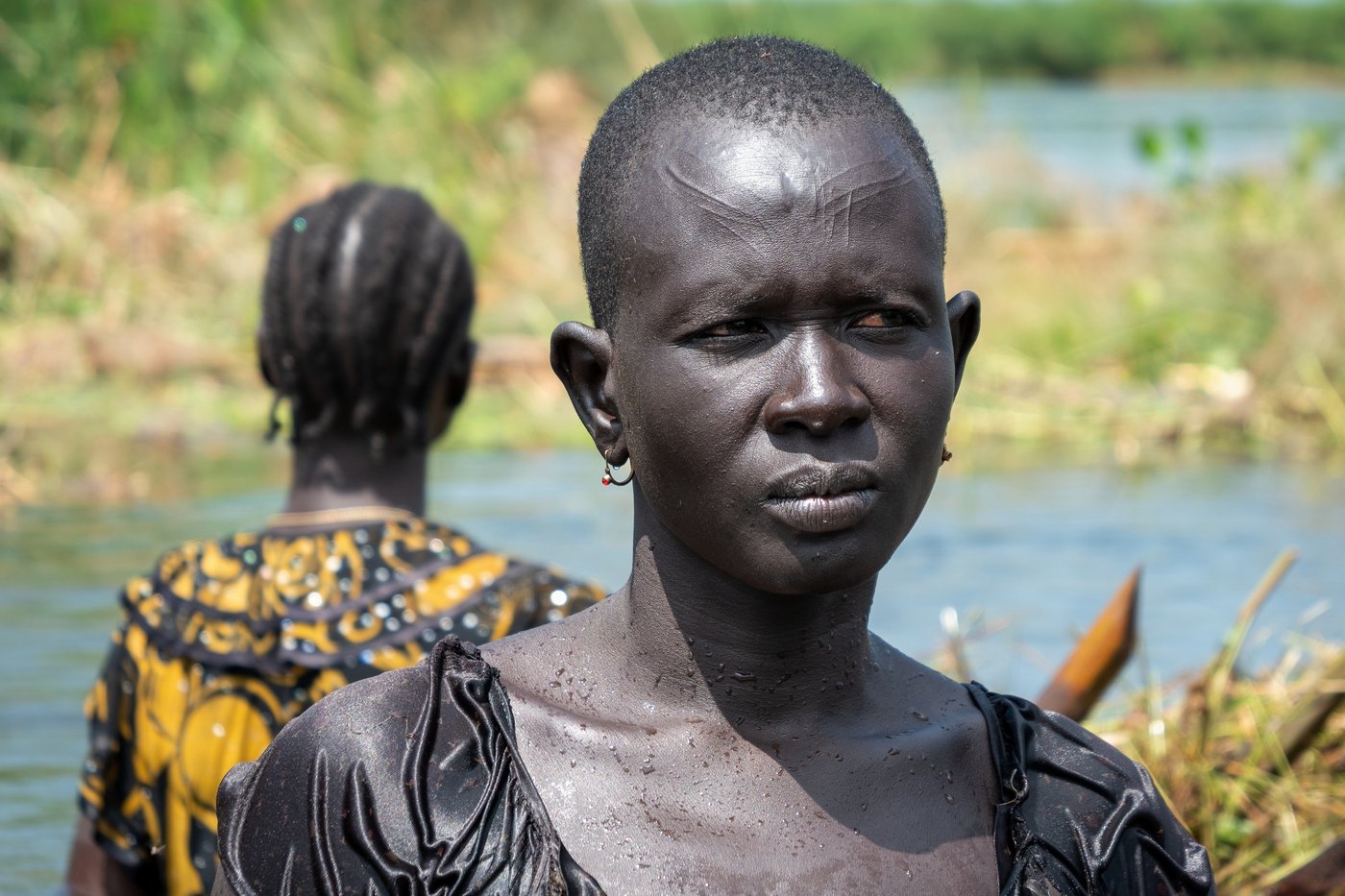
“We have to do this work every day, so that water does not chase us away,” Duot says as she pauses from her task. “We have no choice; we need to protect our homes, because we have nowhere else to go.”
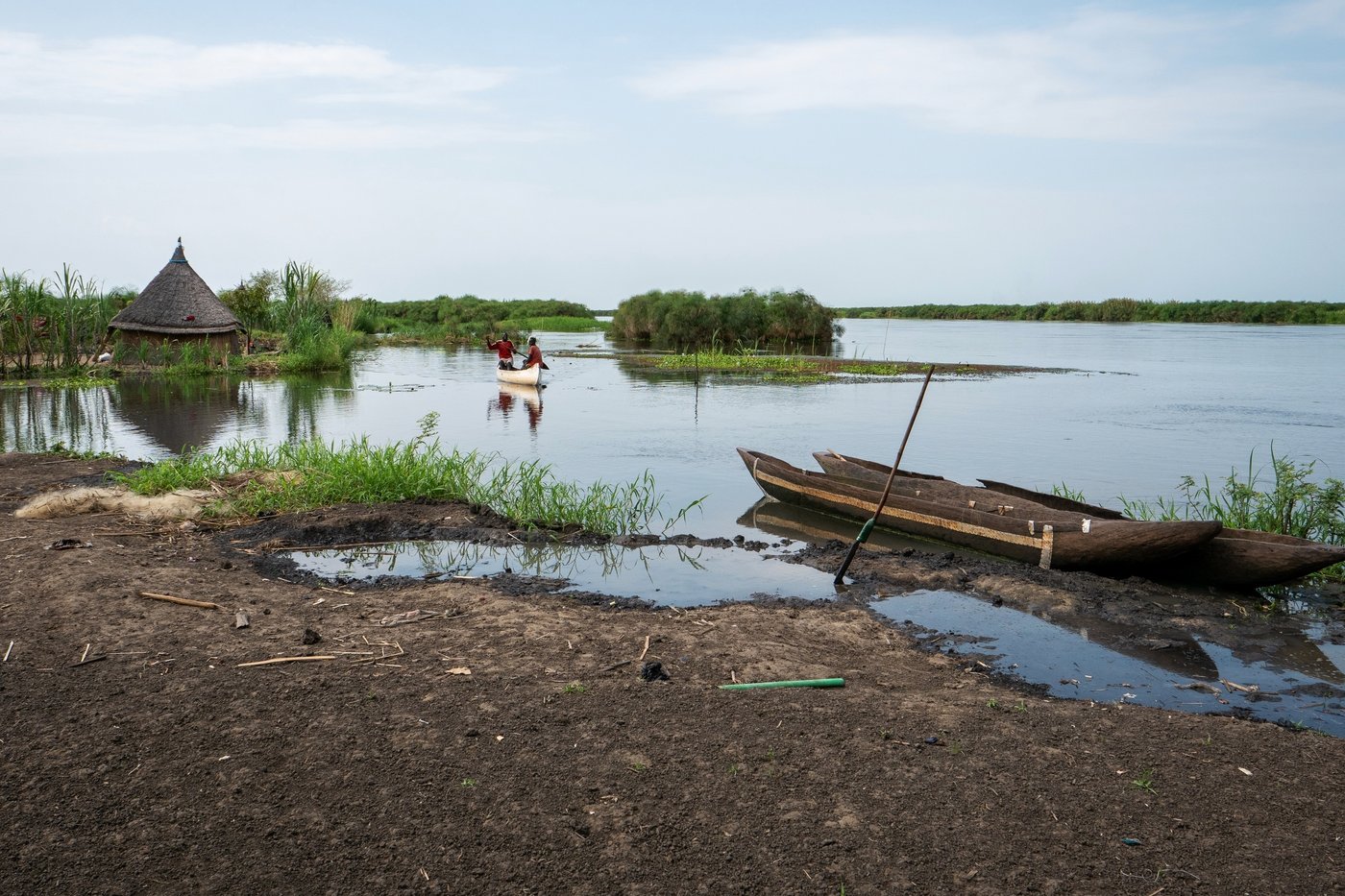
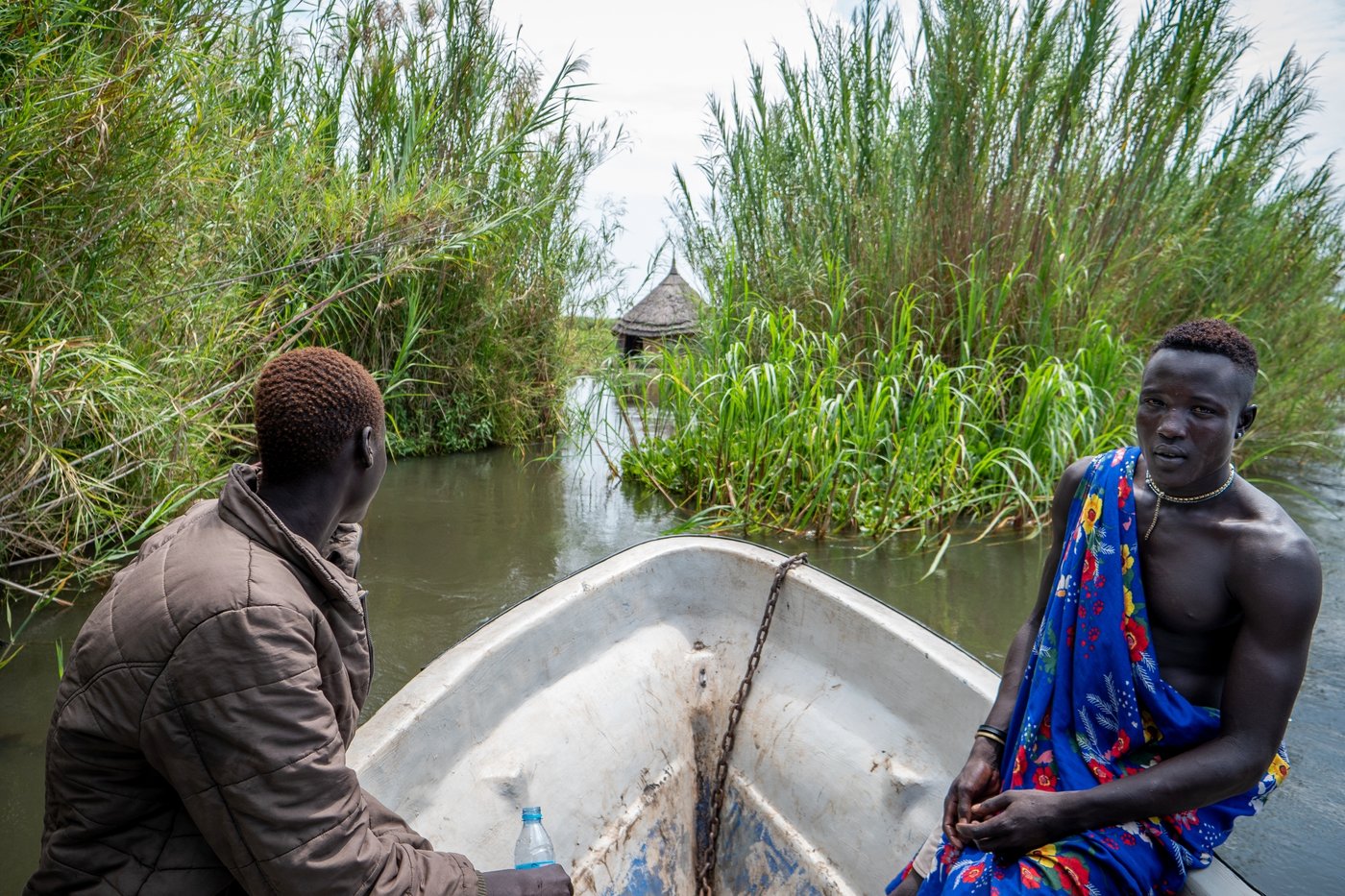
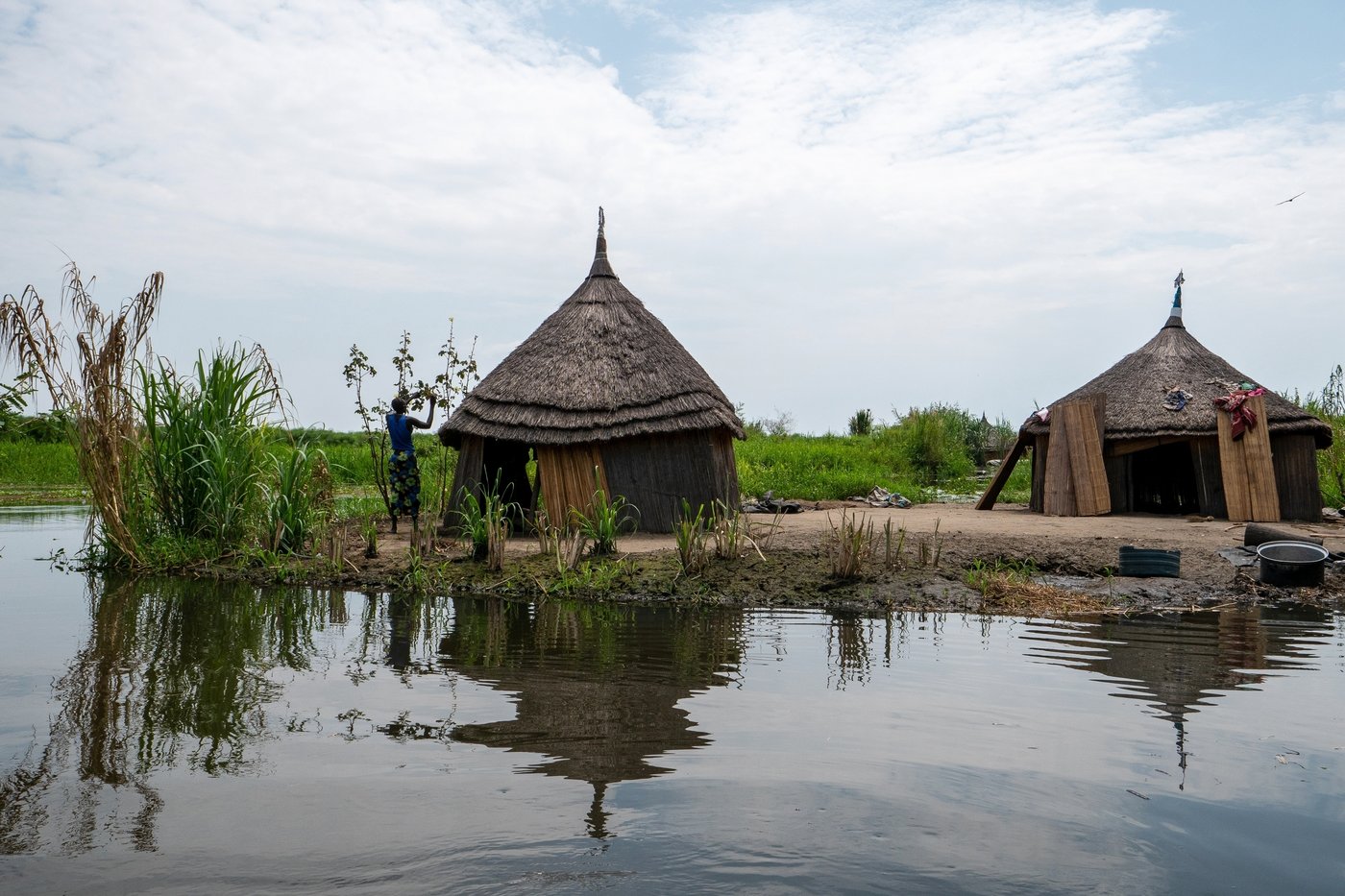
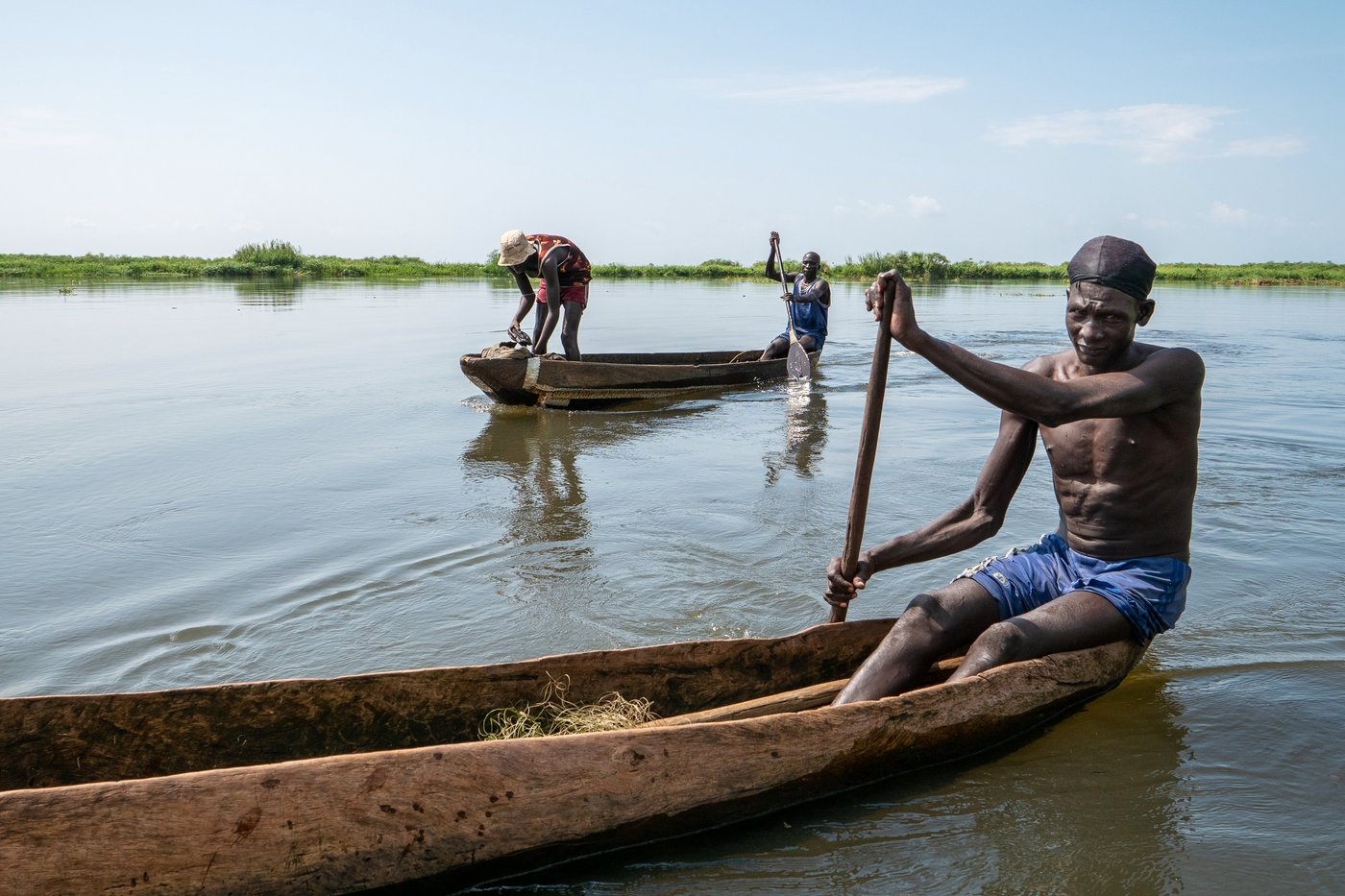
The Akuak, a clan of fishers within the Dinka ethnic group, live in an expanse of water, grass and papyrus where neighbors need canoes to visit each other. Everything is flat and quiet. On each atoll, traditional South Sudanese grass-thatched huts known as tukuls can be seen through the vegetation.
South Sudan is considered one of the countries most vulnerable to climate change. This year alone, over 375,000 people were displaced by flooding in the East African nation according to the United Nations Office for the Coordination of Humanitarian Affairs. The country also remains politically unstable after years of conflict.
The Norwegian Foreign Policy Institute notes in a March 2025 paper that seasonal flooding has gotten worse and less predictable in South Sudan.
“Whereas floodwaters have historically receded during the November–January dry season, years of consecutive and record-breaking flooding have permanently changed the landscape,” the researchers write.
Commitment to the land
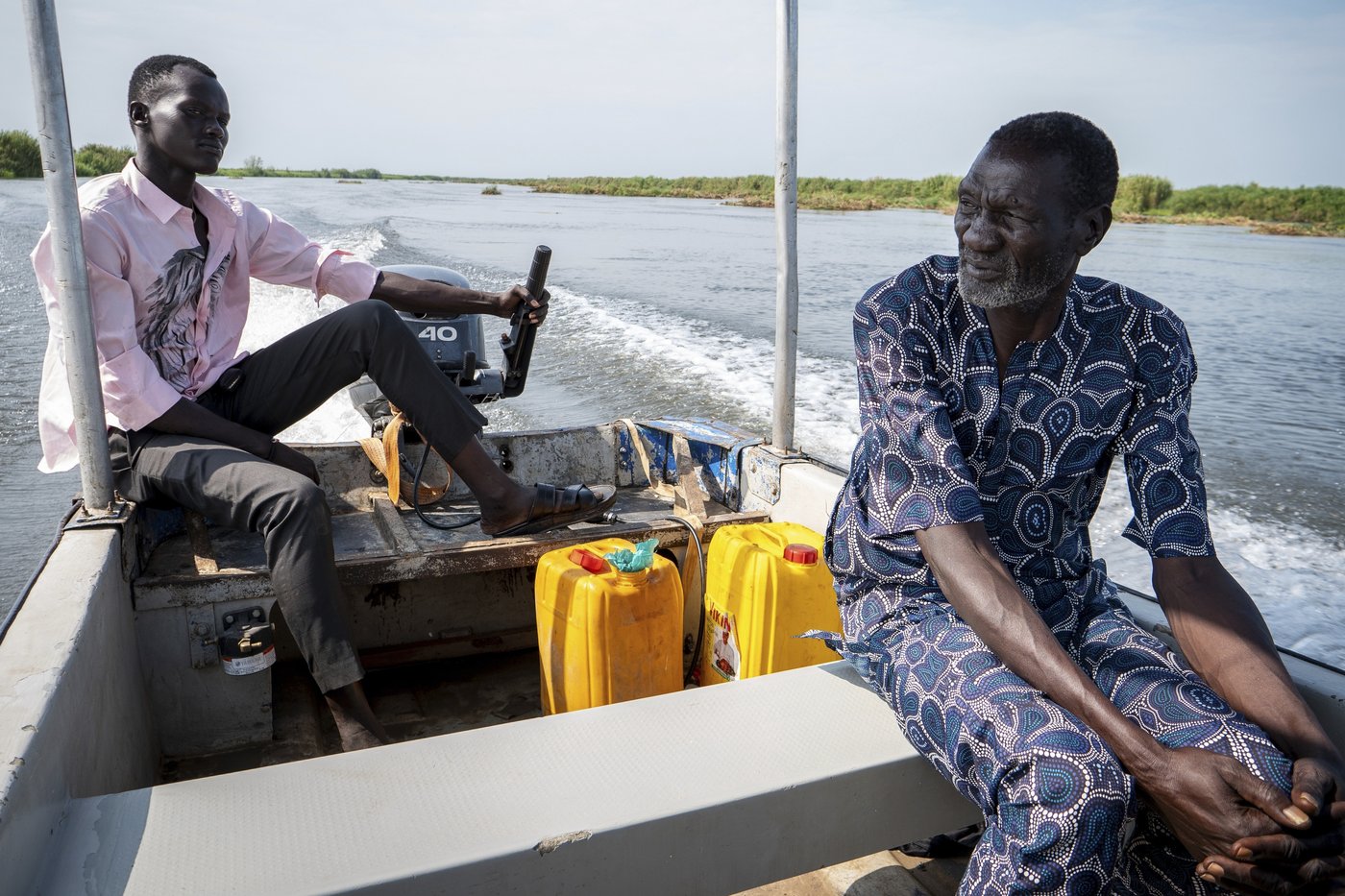
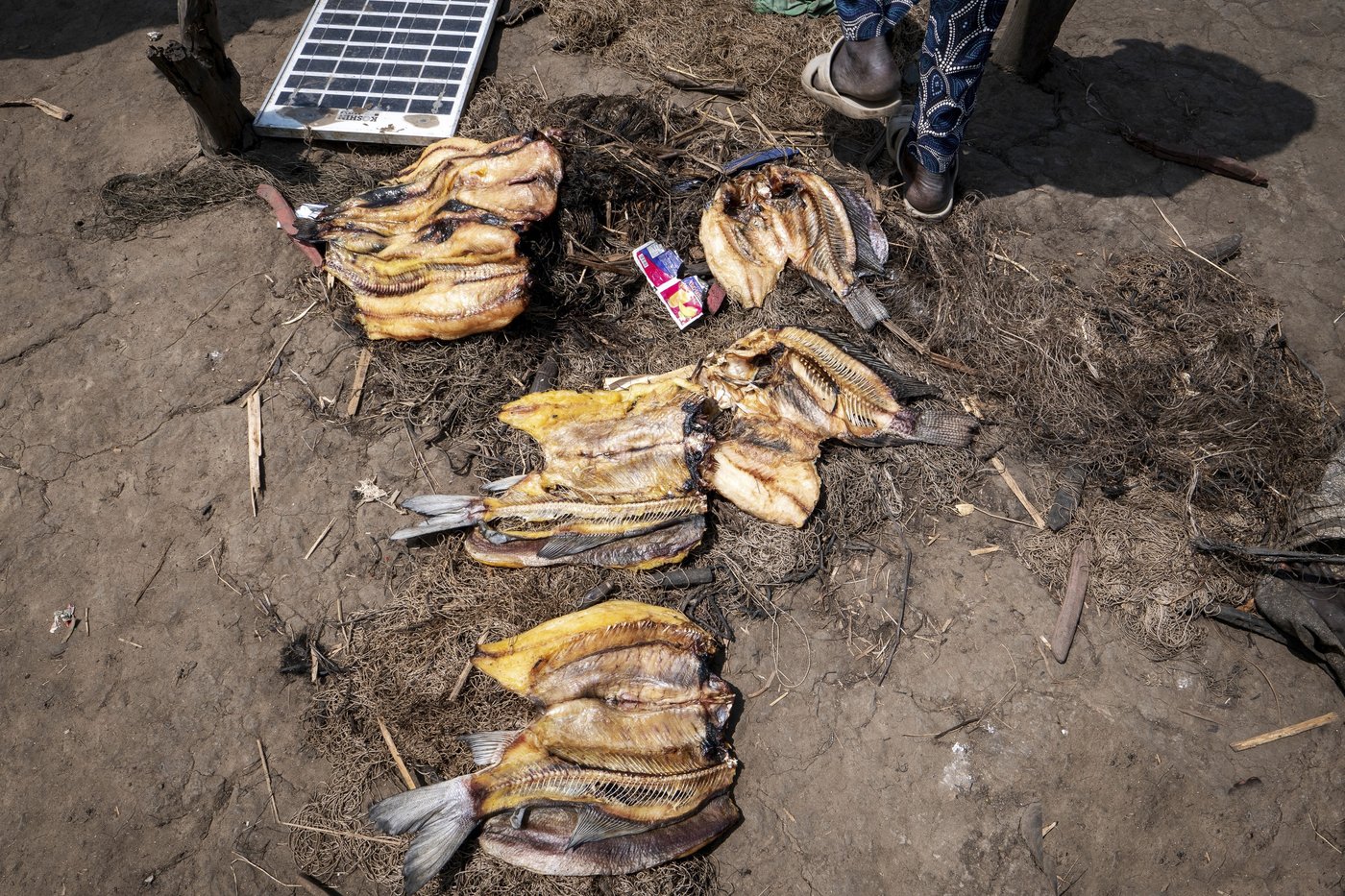
The Akuak families support themselves through fishing. They only go to town to sell their fish or in case of medical emergencies. Bor, the state capital, is 25 kilometers (15.5 miles) to the south, a five-hour rowing journey.
They have stayed even when many others have moved to cities because of the flooding.
“This is the land of our ancestors. We have been living here for thousands of generations, so we have learned how to resist the water and how to stay in this environment. We will never abandon our land,” says Matuor Mabior Ajith, an Akuak fisherman. “We do hope the water can recede so that we can recover some dry land and grow crops again.”
The Akuak once kept cattle like other Dinka communities, but they stopped in the late 1980s and turned to fishing due to rising water levels, according to their traditional leader, chief Makech Kuol Kuany.
“This life has forced all of us to become fishermen,” he says. “We are poorer now than before! Because we used to rely on three things: farms, cows and fish. But now, we only have fish. Fishing nets and canoes have become our lifeline.”
Kuany, 59, remains optimistic that water levels could eventually recede, similar to flooding that hit the region in the 1960s and lasted for almost a decade. But recent years have been trying. He estimates that 2,000 of the Akuak remain in the area.
The tiring work of layering
The fight against water is constant. Anyeth Manyang, 45, works on expanding his island’s shore. He takes a deep breath, dives and comes out with a big load of mud from the bottom of the swamp. He throws it on top of grass he had previously cut, spread and leveled.
Layer after layer, the island’s ground is taking shape.
“I learned this work from childhood, with my father and my mother, who also taught me how to fish” he says. “It’s a very tiresome work, because we do it with our bare hands, we have to go cut grass and papyrus around the swamp, then get the mud, and so on. At night, one’s body will be in pain”
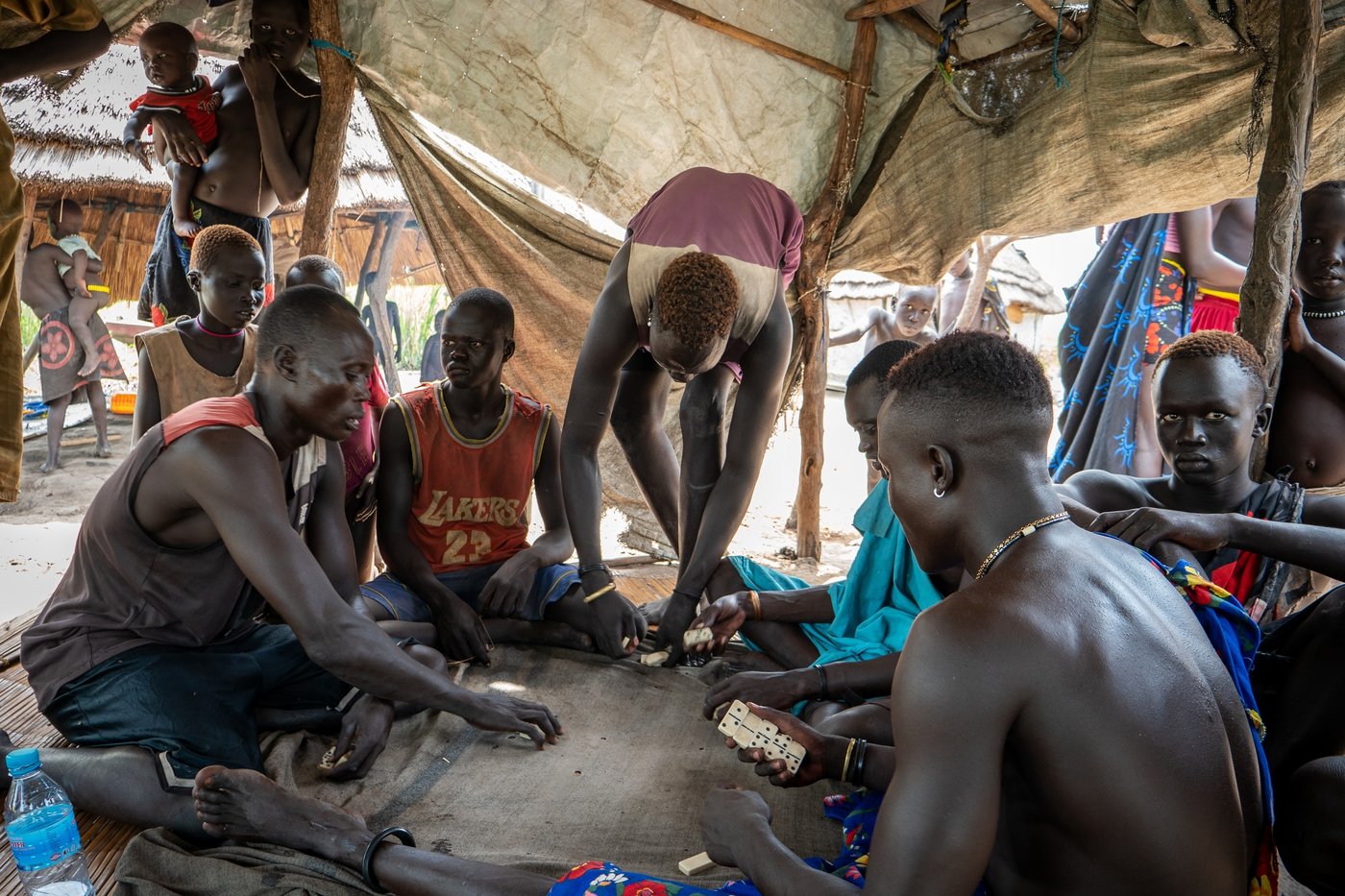
His island is perhaps 50 square meters (538 square feet) large. Small children run from the tukul to the shelter where a group of men play dominoes. A few cereal crops grow around the island’s edge.
Kuany and Ajith point to a small puddle on the ground.
“This is because the soil is not compacted well, and there are gaps through which the water can come up,” Ajith says. “It will have to be fixed quickly, by adding soil and grass on top of it.”
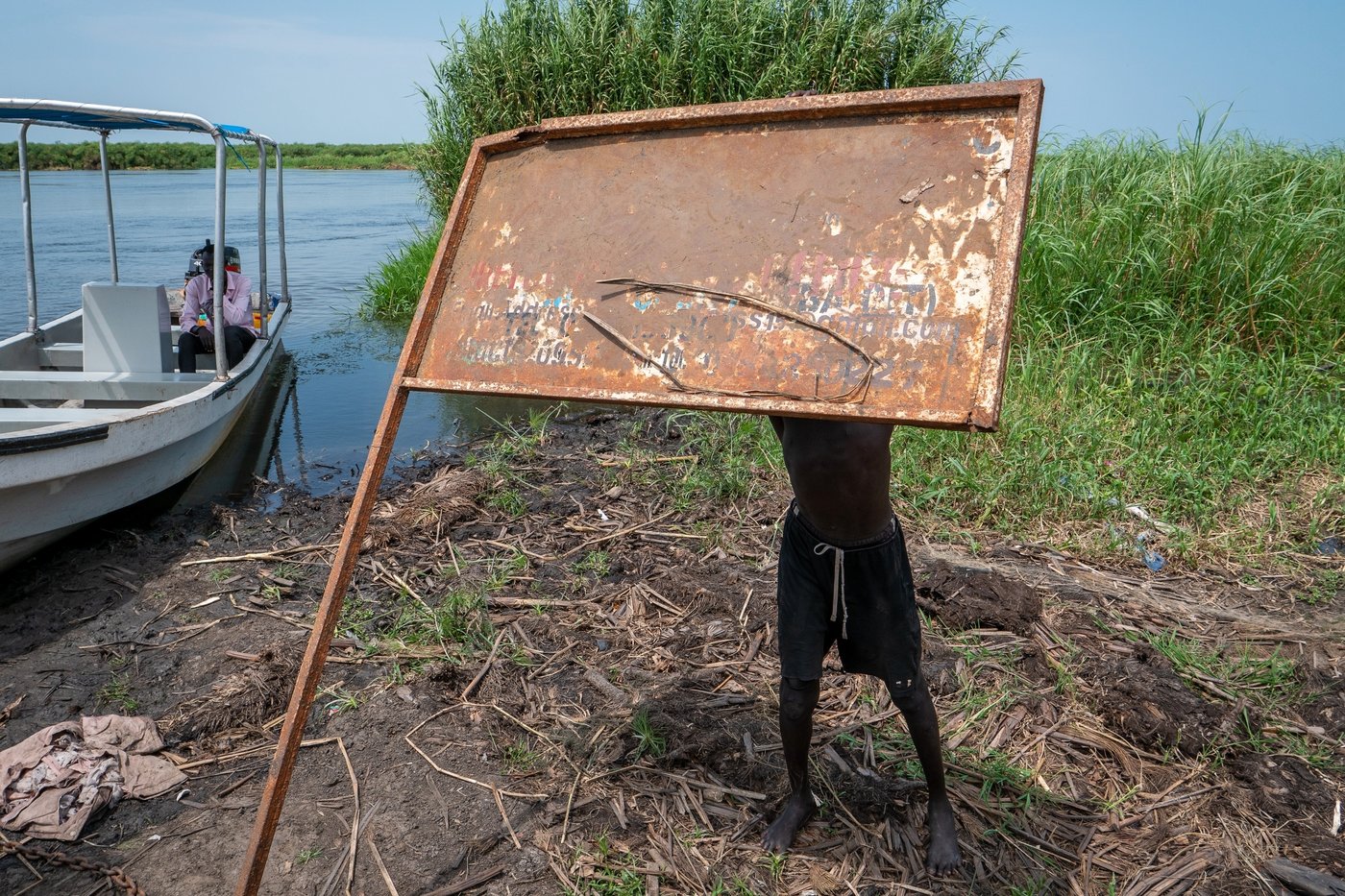
On another larger island, the community has built a church, where old women cook fish that they offer visitors. Philip Jok Thon, 18, points to a rusted, unreadable signpost lying near the shoreline. “This was for our school” he says. The first school ever opened in the community in 2018 was shut down less than two years later because of the floods.
“We need our school back because we want to study. We want to learn about the world,” Thon says.
He wishes he could move to Bor, but that seems “very difficult, because we cannot manage life in town” he says.
Duot, the mother of six, prefers to keep her children on the island even without school because they would lack support and options in a city like Bor.
“If our children go there, they may become child laborers or gang members. It’s better for them to stay here, and for us to work hard for them, until we die here” she says, before pulling a large root of papyrus and hitting it with her machete.
___
The Associated Press’ climate and environmental coverage receives financial support from multiple private foundations. For global health and development coverage in Africa, the AP receives financial support from the Gates Foundation. AP is solely responsible for all content. Find AP’s standards for working with philanthropies, a list of supporters and funded coverage areas at AP.org.
News from © The Associated Press, . All rights reserved.
This material may not be published, broadcast, rewritten or redistributed.

This site is protected by reCAPTCHA and the Google Privacy Policy and Terms of Service apply.
Want to share your thoughts, add context, or connect with others in your community?
You must be logged in to post a comment.