Elevate your local knowledge
Sign up for the iNFOnews newsletter today!
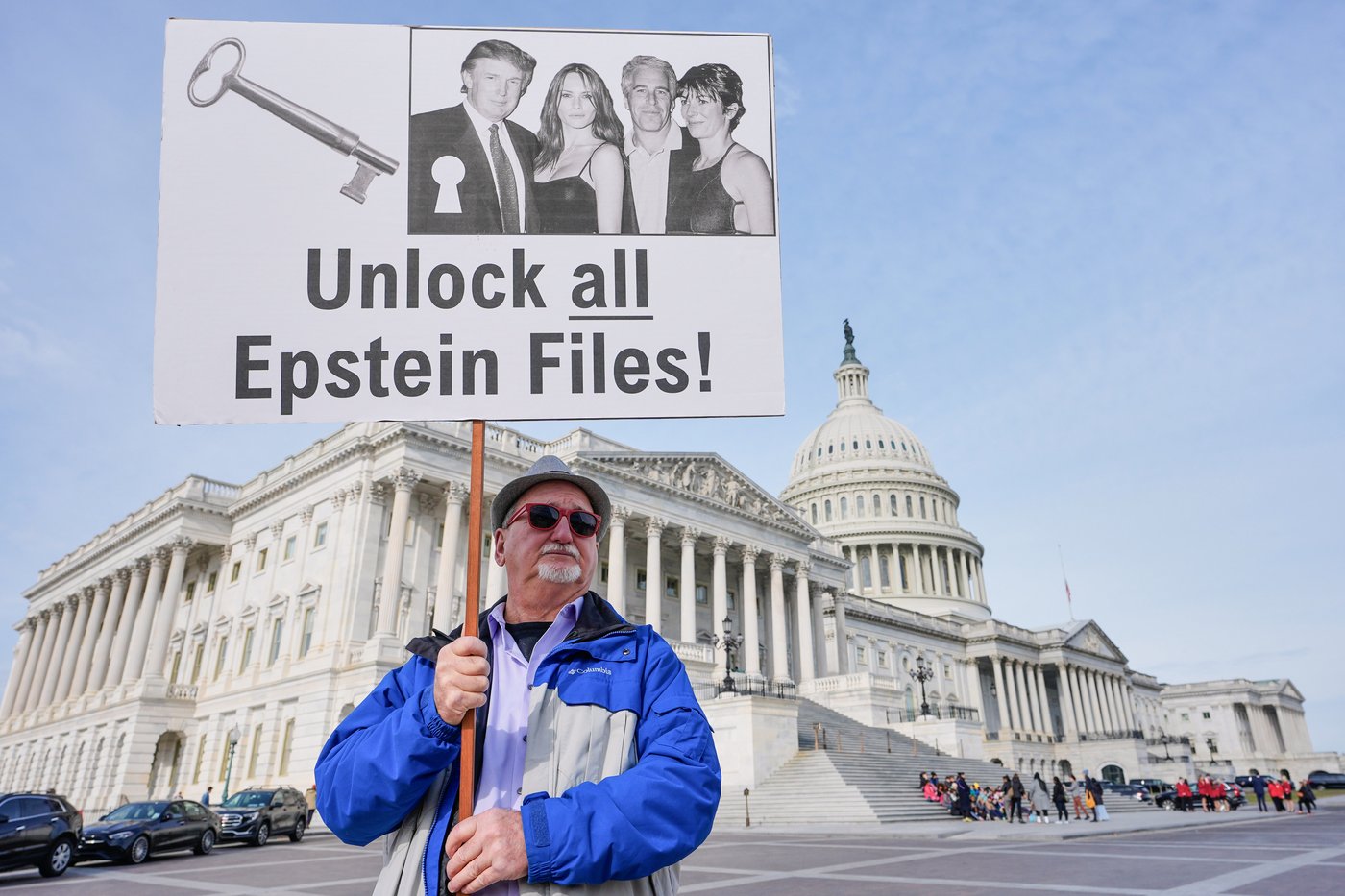
The Department of Justice on Friday released some of its records related to its investigations of Jeffrey Epstein. The convicted sex offender and wealthy financier known for his connections to some of the world’s most powerful people, including President Donald Trump, who long sought to keep the files sealed.
Among the thousands of records released are photos, call logs, grand jury testimony and interview transcripts. Many of the documents have been redacted and at least some have already been in the public domain. DOJ authorities acknowledged in a letter to Congress obtained by The Associated Press that the complete files were not released and the department expected to disclose more by the end of the year.
The White House said the release of the files, mandated by a law passed by Congress, shows how the Trump administration is the “most transparent in history.”
Here’s the latest:
There are few photos of Trump in this release
The released files include a small number of photos of Trump which appear to have been in the public domain for decades, including two in which the president and Epstein are posing with now-first lady Melania Trump.
The photo was taken in February 2000 at an event at Trump’s Palm Beach club, Mar-a-Lago, before the pair’s friendship ruptured.
Lawmakers say the DOJ must set out timeline for full release
Democratic Rep. Ro Khanna of California said the release so far has been “disappointing.”
Khanna, who worked in Congress with Republican Rep. Thomas Massie of Kentucky on legislation to force the release the files, said they will explore “all options” to ensure compliance with the law.
If Justice Department officials need more time to review, he said, they need to publicly explain their timeline for release.
How the DOJ described its redaction process
The Justice Department discussed in detail how it is making decisions on what files to withhold and what files to release. That review protocol was outlined in a six-page letter that Blanche sent to Capitol Hill and was obtained by the AP.
It redacted material that included personally identifiable information about victims, that depicted child sexual abuse materials, that could jeopardize ongoing investigations, or showed images of death, physical abuse or injury.
Material was also withheld if it included classified national security information, and a “limited amount of information” was withheld if it involved certain privileges, such as attorney-client privilege.
In contrast, DOJ attorneys said all unclassified information involving Jeffrey Epstein — including details of criminal investigations and of his detention — and Ghislaine Maxwell could be released.
Other information that could be released, according to DOJ: Flight logs or travel records for aircraft or vehicles used by Epstein, internal DOJ communications on investigations into Epstein and his associates, and details of any immunity deals.
More than 200 DOJ lawyers worked on Epstein file release
The team that reviewed and prepared the documents for public release included more than 200 Justice Department lawyers, according to a DOJ letter sent to Congress.
In that letter, obtained by the Associated Press, Blanche said 187 lawyers from DOJ’s national security division reviewed all the files to determine what should be released.
Then, 25 attorneys, deemed a “quality control team,” worked to ensure that information that personally identified victims was redacted. Those lawyers came from the DOJ’s Office of Privacy and Civil Liberties and the Office of Information Policy. Lawyers from the Southern District of New York also reviewed the material to confirm that personal information was appropriately redacted.
What Democratic lawmakers could do to force complete release of Epstein files
Democrats in Congress say they are reviewing all their legal options as they assess the Department of Justice’s release of the Epstein files, which they say is not a full release of documents.
Lawmakers could go to court to force the Justice Department to comply with the law passed earlier this year forcing the release, but that would almost certainly be a lengthy process that plays out while the Justice Department releases more files.
Separately, the House Oversight Committee has issued a subpoena for the Epstein files. That could give Congress another avenue to force the release of more information to the committee, but it would require Democrats to convince Republicans to join them in contempt of Congress proceedings. It would be highly unusual for GOP lawmakers to take such a move against a Republican administration.
Democratic senator vows to use ‘all avenues and legal tools’ for full release of documents
Democratic Sen. Jeff Merkley of Oregon expressed frustration that the Trump administration had not taken steps to “appropriately redact the Epstein Files to prepare them for release” of their own accord over the last year.
“Instead of meeting the legally required deadline today to release all of the files, they have chosen to illegally disregard the law I led the fight in the Senate to pass,” Merkley said. “By failing to comply, the Administration is openly denying ‘equal justice under the law’ to all of Jeffrey Epstein’s victims.”
Merkley continued: “I’ll keep fighting to release all the Epstein Files and am exploring all avenues and legal tools to get justice for the victims and transparency for the American people.”
Justice Department acknowledges production is incomplete
In a letter to Congress obtained by The Associated Press, Deputy Attorney General Todd Blanche wrote that the Justice Department was continuing to review files in its possession and expected additional disclosures by the end of the year.
The Justice Department also said it was withholding some documents under exemptions allowed in the law and was redacting names of victims.
Blanche wrote that the department will “continue to add to the public website materials that are responsive under the Act and the Department will inform Congress when that review and production are complete by the end of this year.”
Several photos of former President Clinton are in the documents released by the Justice Department
Some show Clinton on a private plane, including one with a woman whose face was redacted from the photo sitting on his lap. Another photo shows him in a pool with Maxwell and a person whose face also was redacted.
Another photo shows Clinton in a hot tub with a woman whose face was redacted.
The files do not say when the photos were taken.
Clinton has never been accused of wrongdoing in connection with Epstein, and the mere inclusion of someone’s name or images in files from the investigation does not imply otherwise.
Clinton minimized his relationship with Epstein, acknowledging that he traveled on Epstein’s private jet but saying through a spokesperson that he had no knowledge of the late financier’s crimes.
White House responds to DOJ’s release of Epstein files
The White House said the release of the Jeffrey Epstein files, which began Friday afternoon, shows how the administration is the “most transparent in history.”
“By releasing thousands of pages of documents, cooperating with the House Oversight Committee’s subpoena request, and President Trump recently calling for further investigations into Epstein’s Democrat friends, the Trump Administration has done more for the victims than Democrats ever have,” said a White House spokeswoman, Abigail Jackson.
Jackson pointed to other Democrats who have had ties to Epstein, such as Delegate Stacey Plaskett, who had received text messages from Epstein during a 2019 House hearing with Michael Cohen, Trump’s former fixer.
DOJ tells public to flag any identifying information that should’ve been hidden
The Justice Department said “all reasonable efforts have been made to review and redact personal information pertaining to victims, other private individuals, and protect sensitive materials from disclosure.”
However, in a notice posted with the files, the department warned that some may have been missed as it rushed to get records online. Because of the volume of information involved, the release “may nevertheless contain information that inadvertently includes non-public personally identifiable information or other sensitive content, to include matters of a sexual nature,” the notice said.
The department asked members of the public to notify it promptly of any information that should not have been posted “so we can take steps to correct the problem as soon as possible.
”The law mandating the release, the Epstein Files Transparency Act, requires the Justice Department to make such redactions.
AP reporters are reviewing the files
Compiling accurate and thorough information takes time. A team of AP reporters is working to confirm information released by the Justice Department regarding Jeffrey Epstein.
These standards guide our reporting process:
__ We generally do not identify those who say they have been sexually assaulted or subjected to extreme abuse
__ We must make significant efforts to reach anyone who may be portrayed in a negative way in our content
__ We will not knowingly introduce rumor or false information into material
__ We abhor inaccuracies, carelessness, bias or distortions
__ We always strive to identify all the sources of our information
What’s inside the released files
Among the thousands of records released by the Justice Department are photos, call logs, grand jury testimony and interview transcripts. Many of the documents have been redacted and at least some have already been in the public domain.
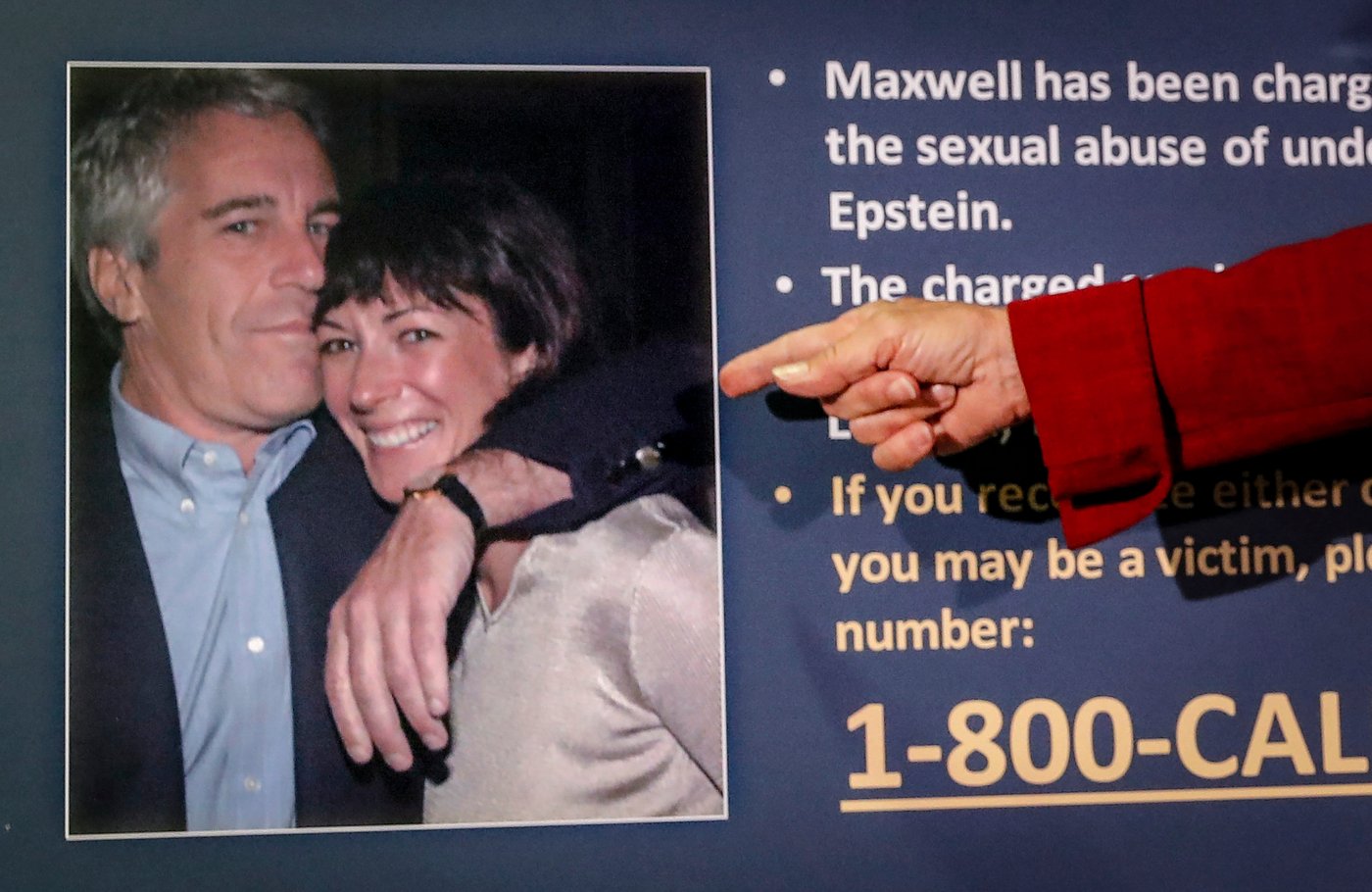
Some of the photos and transcripts feature Epstein and his longtime confidant, British socialite Ghislaine Maxwell.
Maxwell was charged with recruiting underage girls for Epstein to abuse. She was convicted in late 2021 and is serving a 20-year-prison sentence.
The files also included video clips from inside the Metropolitan Correctional Center in New York City from the day Epstein died by suicide in his jail cell. The video clips had already been released previously by the Justice Department and officials have said for years they showed no one else entering the area around Epstein’s cell before he was found dead.
Files appear online after a waiting room-like queue
High interest led the Justice Department to regulate access to its Epstein files website for a time.
The webpage went live Friday afternoon with a waiting room-type queue akin to what concertgoers sometimes see when they go online to purchase tickets.
Visitors were greeted with the message: “You are in line for Department of Justice web content. When it is your turn, you will have 10 minutes to enter the website.”
The webpage then refreshed to reveal a landing page with various categories of documents, including court records and other disclosures.
Rubio finishes sweeping marathon news conference at State Department
The secretary of state has finished a sweeping news conference that ran more than two hours and offered a firm defense of Trump agenda from Russian aggression and Venezuelan oil tankers to curtailing legal immigration routes into the U.S.
Rubio said the U.S. is seeking a fair deal between Russia and Ukraine. Building on the Trump administration’s new national security strategy document, Rubio emphasized “security and stability” in the western hemisphere as top U.S. priority.
He defended an aggressive stance toward Venezuela but stopped short of answering whether toppling Nicolas Maduro is a priority.
Rubio emphasized that progress in Israel and Gaza is a long-term proposition.
He acknowledged the backsliding on U.S-mediated deals between Thailand and Cambodia in southeast Asia and Democratic Republic of Congo and Rwanda in Africa.
Rubio defended administration roll backs of legal immigration processes but said freezing certain visas and asylum programs is part of necessary reviews.
U.N. secretary-general urges de-escalation of U.S.-Venezuela crisis
“The situation is obviously very tense,” Antonio Guterres told reporters at U.N. headquarters in New York on Friday. “That is why we have been consistently appealing for de-escalation, for dialogue, and for international law to be fully respected.”
Venezuelan President Nicolas Maduro called Guterres on Wednesday and the U.N. deputy spokesman, Farhan Haq, told reporters then that the secretary-general reaffirmed the need to de-escalate and for all U.N. member nations to respect international law, particularly the U.N. Charter.
The Charter requires all 193 U.N. member nations – including the United States and Venezuela – to refrain from the use of force against all other nations and settle all disputes peacefully.
Cambodia-Thailand and DRC-Rwanda deals should be held together, Rubio says
Rubio acknowledged the backsliding on U.S.-mediated deals involving Cambodia and Thailand in southeast Asia and the Democratic Republic of Congo and Rwanda in Africa.
Trump has included both conflicts in a list of wars he insists he has ended. Fighting continues.
Rubio said the U.S. role now is to bring Cambodia and Thailand “back to the table.” Both sides, he said, are not keeping the agreement they signed and “claim grievances against one another.”
In Africa, Rubio says administration officials remain engaged and “have asked our friends on the Hill, both Republicans and Democrats, to also engage in conversations of their own with these leaders” to emphasize a bipartisan U.S. interest in peace.
Rubio shows off Spanish in extended State Department news conference
Rubio fielded and answered several questions in Spanish, including multiple inquiries on how the U.S. is approaching Venezuela.
At one point, he prompted laughter as he joked to the reporters questioning him in English: “I don’t want you guys to think I’m always picking the Spanish ones.”
The 54-year-old secretary of state is a Miami native but his parents immigrated from Cuba in 1956, not long before Fidel Castro seized control of the island.
Rubio is the first Latino secretary of state. His predecessors from Democratic administrations, Antony Blinken and John Kerry, spoke fluent French and often fielded questions in that language. Kerry also was conversational in German and used that language on diplomatic tours.
Federal judge weighs Trump’s claim he is immune from civil litigation over Capitol attack
Attorneys for Trump urged a federal judge on Friday to rule that Trump is entitled to presidential immunity from civil claims that he instigated a mob’s attack on the U.S. Capitol to stop Congress from certifying the results of the 2020 election.
U.S. District Judge Amit Mehta didn’t rule from the bench after hearing arguments from Trump attorneys and lawyers for Democratic members of Congress who sued the Republican president and allies over the Jan. 6. 2021, attack.
Trump spoke to a crowd of his supporters at the “Stop the Steal” rally near the White House before the mob’s attack disrupted the joint session of Congress for certifying Democratic President Joe Biden’s electoral victory.
Trump’s attorneys argue that his conduct leading up to Jan. 6 and on the day of the riot were official acts protected by presidential immunity.
“The entire point of immunity is to give the president clarity to speak in the moment as the commander-in-chief,” Trump attorney Joshua Halpern told the judge.
The lawmakers’ lawyers argue Trump can’t prove he was acting entirely in his official capacity rather than as an office-seeking private individual.
Rubio passes the 70-minute mark with reporters
Rubio has been talking to reporters for more than an hour — an unusually long back-and-forth compared to some of his predecessors.
It has the feel of a presidential primetime news conference at the White House, another practice that has become more rare through recent administrations
Asked about Venezuela, Rubio says congressional approval would be a good thing
Rubio has defended Trump’s prerogatives on Venezuela but allowed that Congress has a role in military action.
The secretary of state said “multiple administrations, including this one, have sought congressional approval and or certainly congressional notification of actions taken. Why? Because American action is always strongest when it has the buy in and the participation of a broad set of actors.”
He clarified, though, that the administration believes “nothing has happened that requires us to notify Congress or get congressional approval or cross the threshold into war.” He added, “We have very strong legal opinions.”
Rubio’s response came to a question about White House chief of staff Susie Wiles telling Vanity Fair magazine that ground troop involvement would require congressional ratification.
Rubio: No peace deal for narcotraffickers
The secretary of state said that while the Trump administration aims to solve military conflicts around the world, there is no negotiating with drug cartels or international criminal organizations.
Speaking with reporters, Rubio said that while the U.S. is working to resolve several conflicts around the world, confronting drug traffickers is a different challenge that requires a different response.
Rubio’s comments came amid attacks on alleged drug vessels in the Caribbean and eastern Pacific as well as an escalating conflict with Venezuela, whose leaders Trump says have worked to facilitate the trafficking of drugs into the U.S.
“We’re not going to reach a peace deal with narcotrafficking bands,” Rubio said. “We can’t reach a peace deal with MS-13. We can’t reach a peace deal with Tren de Argua.”
Top Democrats on House Oversight and Judiciary committees threaten legal action after DOJ says not all Epstein files will be released by deadline
Reps. Robert Garcia of California and Jamie Raskin of Maryland said in a joint statement that Trump and the Justice Department “are now violating federal law.”
They released the statement after a DOJ official said the department would only release a partial tranche of files related Epstein by a legally mandated deadline.
“We are now examining all legal options in the face of this violation of federal law. The survivors of this nightmare deserve justice, the co-conspirators must be held accountable, and the American people deserve complete transparency from DOJ,” the statement continued.
Congress passed Trump signed a law that requires the Justice Department to publish “all unclassified records, documents, communications, and investigative materials in DOJ’s possession that relate to the investigation and prosecution of Jeffrey Epstein” with a deadline by midnight tonight.
Deputy Attorney General Todd Blanche said during a Friday Fox News interview that the department would release “several hundred thousand” documents today, “and then over the next couple weeks, I expect several hundred thousand more.”
Rubio dismisses critiques from his Democratic former colleagues in the Senate
Rubio gave an intense defense of his job performance when asked about criticism from Senate Democrats who once served with him on Capitol Hill.
“When I was a senator, I represented the state of Florida,” he said. “Today, I am the secretary of state for Donald J. Trump, the president of the United States, and my job is to implement the president’s foreign policy — provide advice, provide counsel, provide ideas, provide for opportunities and ways in which his foreign policy can be implemented.”
He said the notion that he’s an independent actor “ridiculous” and “stupid really.”
Rubio added that the current political environment makes it easy for Democrats to criticize Trump. There’s not political upside, he said, for a Democrat “saying what a great guy Marco Rubio is.”
Senate Democrats voted unanimously for Rubio’s confirmation but several have expressed regrets and criticized his role in administering Trump’s policies, notably curtailing visas and other legal immigration avenues.
Nonprofits sue Trump administration over grant cancellations related to DEI
A coalition of nonprofit organizations has filed a lawsuit challenging cancellation of conservation grants issued by the Interior Department.
Officials canceled 79 grant agreements, totaling nearly $14 million, to restore species, recover ecosystems and manage watersheds and other natural resources. Groups affected include the nonprofit Institute for Applied Ecology, Institute for Bird Populations and Mid Klamath Watershed Council.
The September cancellations came the same day as posts on social media and in The Daily Caller, an online conservative publication, that cited “diversity, equity and inclusion values” espoused by the affected groups as justification for canceling the grants.
The lawsuit says the timing “makes clear that the grants were cancelled as part of an unlawful political viewpoint purge.” The Interior Department did not immediately respond to a request for comment.
Rubio: Humanitarian ceasefire a priority in Sudan
Rubio says the U.S. is working with regional powers to try to secure a humanitarian ceasefire in Sudan in time for the new year.
Speaking to reporters Friday, Rubio said negotiators have engaged with representatives from Egypt, the United Arab Emirates and Saudi Arabia. Of particular concern, he said, is the shipment of weapons from other countries to the paramilitary Rapid Support Forces for use in its war against the Sudanese military.
“Our No. 1 priority … is this humanitarian truce and achieving that as soon as possible,” Rubio said. “We think the new year and holidays are a great opportunity for both sides to agree to that.”
Japan’s ties with China have soured over Prime Minister Sanae Takaichi’s remarks
Takaichi said Japan could intervene militarily if China should attack the self-governed island of Taiwan.
Rubio said “I believe that we feel very strongly that we can continue with our strong firm partnership and alliance with Japan, and do so in a way that continues to allow us to find productive ways to work together, with Chinese, the Chinese Communist Party and the Chinese government.”
China considers Taiwan to be part of Chinese territory and vows to take it, by force if necessary, to achieve what it considers reunification, even though Beijing has never ruled the island. The U.S. is an ally of Japan and maintains strategic ambiguity over Taiwan — that is, the U.S. has been purposefully ambiguous on whether it would send troops to Taiwan should there be an armed conflict in the Taiwan Strait.
Rubio said nothing that would clarify this ambiguity.
Rubio says the US must and can work together with both China and Japan
He told reporters Friday that the U.S. must find a way to work with the world’s second largest economy and its government, while also reaffirming the U.S. alliance with Japan.
“China is going to be, is and will continue to be a rich and powerful country and a factor in geopolitics. We have to have relations with them. We have to deal with them. We have to find the things we are able to work together on,” Rubio said.
Rubio does not directly answer question about ‘regime change’ in Venezuela
Rubio has plenty to say about Maduro as a major problem for the region, but he sidestepped a direct question about whether the U.S. wants “regime change in 2026” in Venezuela.
“We have a regime that’s illegitimate, that cooperates with Iran, that cooperates with Hezbollah, that cooperates with narco trafficking and narco terrorist organizations,” Rubio says, “including not just protecting their shipments and allowing them to operate with impunity, but also allows some of them to control territory.”
Rubio says “that’s what the President’s been focused on” with his aggressive actions toward Venezuela, including boat strikes on alleged drug runners and seizing an oil tanker.
What Rubio didn’t say: whether U.S. policy would or could prioritize Maduro’s removal.
Trump says the unemployment rate rose because he fired government workers
The president said in a post on his social media network that the unemployment rate ticked up because “because we are reducing the Government Workforce by numbers that have never been seen before.”
The Labor Department reported this week that federal government job losses did play a role, but losses in the transportation and warehousing sectors did as well.
Trump in his post got the unemployment rate wrong: It rose last month to 4.6%, the highest since 2021. Trump in post said that it was 4.5%.
Trump said he could lower the unemployment rate to 2% “overnight by just hiring people into the Federal Government, even though those Jobs are not necessary.”
Rubio singles out Venezuela as threat to western hemisphere’s ‘stability’
Rubio describes an ultimate goal of U.S. foreign policy as “security and stability” in the Western Hemisphere, and singled out Venezuela as an especially uncooperative state in that aim.
He says Venezuela is actively “in cahoots with drug trafficking organizations” that the Trump administration has labeled as international terrorists.
The U.S. has amassed an unusually large force in the Caribbean Sea and the waters off the coast of Venezuela since this summer and recently seized a tanker with sanctioned oil tied to leader Nicolás Maduro. Venezuela has not responded militarily.
Rubio is addressing reporters for the first time since a Vanity Fair piece quoted White House chief of staff Susie Wiles suggesting that Trump’s ultimate aim in Venezuela is to topple Maduro.
Rubio: Details of Gaza’s stabilization force still to be finalized
Rubio says international leaders are working out the details of a plan to enforce the ceasefire in Gaza, including an International Stabilization Force.
He told reporters Friday that the creation of a “ Board of Peace ” is the first step, and will involve figuring out the specifics of daily governance in the region.
Then officials must agree on the funding and scope of the mission for the international force, which would be dedicated to enforcing the U.S.-brokered ceasefire between Hamas and Israel that was enacted following two years of fighting.
Then it will be time to formalize the list of countries willing to send personnel for the force, Rubio said.
“We owe them a few more answers before we ask them to firmly commit,” Rubio said when asked about reports that Pakistan was considering its participation in the force.
US trying to ‘figure out what Russia can give’ and get, Rubio says
Rubio says the U.S. diplomatic effort to end the Russia-Ukraine war will turn on identifying what compromises Moscow and Kyiv can accept.
“We’re trying to figure out what can Russia give and what do they expect to get and what can Ukraine get,” he said, emphasizing that any “negotiated settlement” requires sacrifices from both sides.
Rubio said that he, Trump, Vice President JD Vance and other top administration officials have invested considerable time pushing for answers, and “the decision will be up to Ukraine and up to Russia.”
Rubio is speaking to reporters for the first time since a Vanity Fair piece quoted him and White House chief of staff Susie Wiles suggesting that Trump does not think Putin would be satisfied with annexing only a part of Ukraine.
Syria welcomes the permanent repeal of sweeping US sanctions
The most draconian sanctions imposed on Syria in decades are finally lifted. The U.S. Congress imposed the so-called Caesar Act sanctions on Syria’s government and financial system in 2019 to punish then-President Bashar Assad for human rights abuses during the country’s nearly 14-year civil war that began in 2011.
After Assad was ousted in a lightning rebel offensive in December 2024, advocates — including some who had previously lobbied for the imposition of the sanctions — argued that the sanctions were preventing international investors from launching reconstruction projects and blocking Syria from rebuilding its battered economy and infrastructure.
Trump had temporarily lifted the penalties by executive order and signed off on the final repeal late Thursday after Congress passed it as part of the annual defense spending bill.
▶ Read more about the lifting of U.S. sanctions on Syria
Canada and the US will review their free trade agreement
Prime Minister Mark Carney confirmed to provincial leaders that the Canadian point person, Dominic LeBlanc, “will meet with U.S. counterparts in mid-January to launch formal discussions,” Carney’s office said in a statement.
The United States-Mexico-Canada trade pact, or USMCA, is up for review. Trump negotiated the deal in his first term and included a clause to possibly renegotiate it in 2026. More than 75% of Canada’s exports go to its southern neighbor, most of them currently exempted by USMCA.
Canada is also the largest foreign supplier of steel, aluminum and uranium to the U.S. and has 34 critical minerals and metals that the Pentagon wants for national security. Carney said Canada can sell those critical minerals elsewhere, and access to them “is not an assured opportunity for the United States.”
▶ Read more about trade talks between the U.S. and Canada
Immigration worries this year rise slightly among Democrats, decline among Republicans
Many Americans want the government to prioritize immigration in 2026, according to that same AP-NORC poll that asked people what they want government to focus on year.
About 44% mentioned immigration, which is in line with last year. What has changed is that Democrats have grown increasingly concerned about the issue, while Republicans and independents have grown less likely to mention it.
About 4 in 10 Democrats listed it as a concern this year, an apparent increase from 32% last year. Majorities of Republicans still consider it a priority — about 6 in 10 mentioned it, but that’s down from about 7 in 10 last year.
Cost and inflation concerns remain pressing for Americans
Inflation and the high cost of living have been a top priority for many Americans since the end of 2021, according to an AP-NORC poll that asked U.S. adults what issues they want the government to focus on in 2026. About one-third mentioned concerns related to inflation or the cost of living, in line with the last couple of years.
Increased prices aren’t the only financial worry that emerged. About 2 in 10 U.S. adults want the government to focus on housing costs next year. That issue has been rising in recent years, with young adults being especially likely to mention it. About one-quarter of adults under age 30 want the government to focus on housing expenses, compared with about 1 in 10 of those 60 or older.
Kennedy Center begins work to add Trump’s name to building
Several blue tarps have been hung outside the institution to block views of the work that’s apparently underway. A photographer saw the letter “D” on an exterior wall before the final tarps were hung.
The Kennedy Center’s board voted on Thursday to give the venue a new name: The Donald J. Trump and The John F. Kennedy Memorial Center for the Performing Arts. Democratic members of Congress and others insist that a name change requires action by Congress.
The Kennedy Center is the latest building to have Trump’s name added to it. The president recently added his name to the building for the U.S. Institute of Peace.
▶ Read more about Trump’s moves to put his name on federal buildings
Trump administration to appeal order reversing funding cuts at Harvard
The Justice Department filed a notice of appeal late on Thursday in a pair of consolidated lawsuits brought by Harvard and the American Association of University Professors, extending a standoff over White House demands for reforms at the Ivy League school.
A federal judge ordered the reversal of billions of dollars in funding cuts to the nation’s oldest and wealthiest university. The case has tested the government’s power over higher education.
Harvard said in a statement that university officials remain confident in their legal position.
“The federal district court ruled in Harvard’s favor in September, reinstating critical research funding that advances science and life-saving medical breakthroughs, strengthens national security, and enhances our nation’s competitiveness and economic priorities,” Harvard said.
▶ Read more about Trump’s pressure campaign targeting elite colleges
4 months in, activists say Trump’s operation in DC continues to target immigrants
One-third of the more than 7,500 arrests made during the operation were immigration-related, according to official figures reviewed by the AP.
Activists and immigrants say arrests are frequent and frightening. A lawsuit alleges they are often unlawful. And with no end in sight to the surge in law enforcement in the city, there is no indication the immigration arrests will end.
A federal judge recently blocked widespread immigration arrests without warrants. Trump’s Republican administration says the D.C. mission is intended to fight crime and calls it a resounding success.
Healthcare rises sharply as a priority for Americans
Health care is a much higher concern for Americans than it was a year ago, according to a new AP-NORC poll: About 4 in 10 U.S. adults named health care or health issues, up from about one-third in last December’s poll.
Older adults were more likely to name health care as a top issue, particularly people between the ages of 45 and 59, who may have higher health care costs but aren’t yet eligible for Medicare.
The changes could return health care to center stage in next year’s midterm elections, which will determine control of Congress, and could put Republicans on the defensive on a key issue. Health care costs are set to rise for millions of Americans in the new year, after a series of cuts.
Trump to make announcement on drug prices
White House press secretary Karoline Leavitt said in a post on X that the president’s announcement scheduled for 1 p.m. will be “more incredible deals that will lower prices of drugs and pharmaceuticals.”
Trump has already announced deals with several drug makers, including AtraZeneca and Pfizer, to lower the cost of prescription drugs for Medicaid.
A battle for the future of Trump’s movement explodes on the Turning Point stage
A simmering battle over the future of Trump’s political movement exploded on one of the right’s biggest stages as prominent conservative influencers used Turning Point USA’s annual youth conference to attack each other and their competing visions.
The feuding threatened to eclipse efforts to memorialize Charlie Kirk, the charismatic Turning Point founder who was assassinated in September.
First up Thursday night was Ben Shapiro, who described Tucker Carlson and others as grifters and charlatans, guilty of misleading their audiences with falsehoods and conspiracy theories. Shapiro sharply criticized the former Fox News host for interviewing outspoken antisemite Nick Fuentes on his podcast, calling it “an act of moral imbecility.”
Barely an hour later, Carlson took the same stage and mocked Shapiro’s attempt to “deplatform and denounce” people who disagree with him: “I watched it,” he said. “I laughed.”
Justice Department faces deadline to release Epstein files investigation
The release of the Epstein files by the Justice Department has long been demanded by a public hungry to learn whether any of Epstein’s rich and powerful associates knew about — or participated in — the abuse. Epstein’s accusers have also long sought answers about why federal authorities shut down their initial investigation into the allegations in 2008.
Bowing to political pressure from fellow Republicans, Trump on Nov. 19 signed a bill giving the Justice Department 30 days to release most of its files and communications related to Epstein, including information about the investigation into Epstein’s death in a federal jail.
The Justice Department hasn’t said exactly when during the day it intends to make the records public.
Adding to the anticipation, House Democrats released several dozen more photos Thursday from among more than 95,000 that the House Oversight Committee received after issuing a subpoena for images Epstein possessed before he died in a New York jail cell in 2019.
▶ Read more about the files
News from © The Associated Press, . All rights reserved.
This material may not be published, broadcast, rewritten or redistributed.

This site is protected by reCAPTCHA and the Google Privacy Policy and Terms of Service apply.
Want to share your thoughts, add context, or connect with others in your community?
You must be logged in to post a comment.