Elevate your local knowledge
Sign up for the iNFOnews newsletter today!
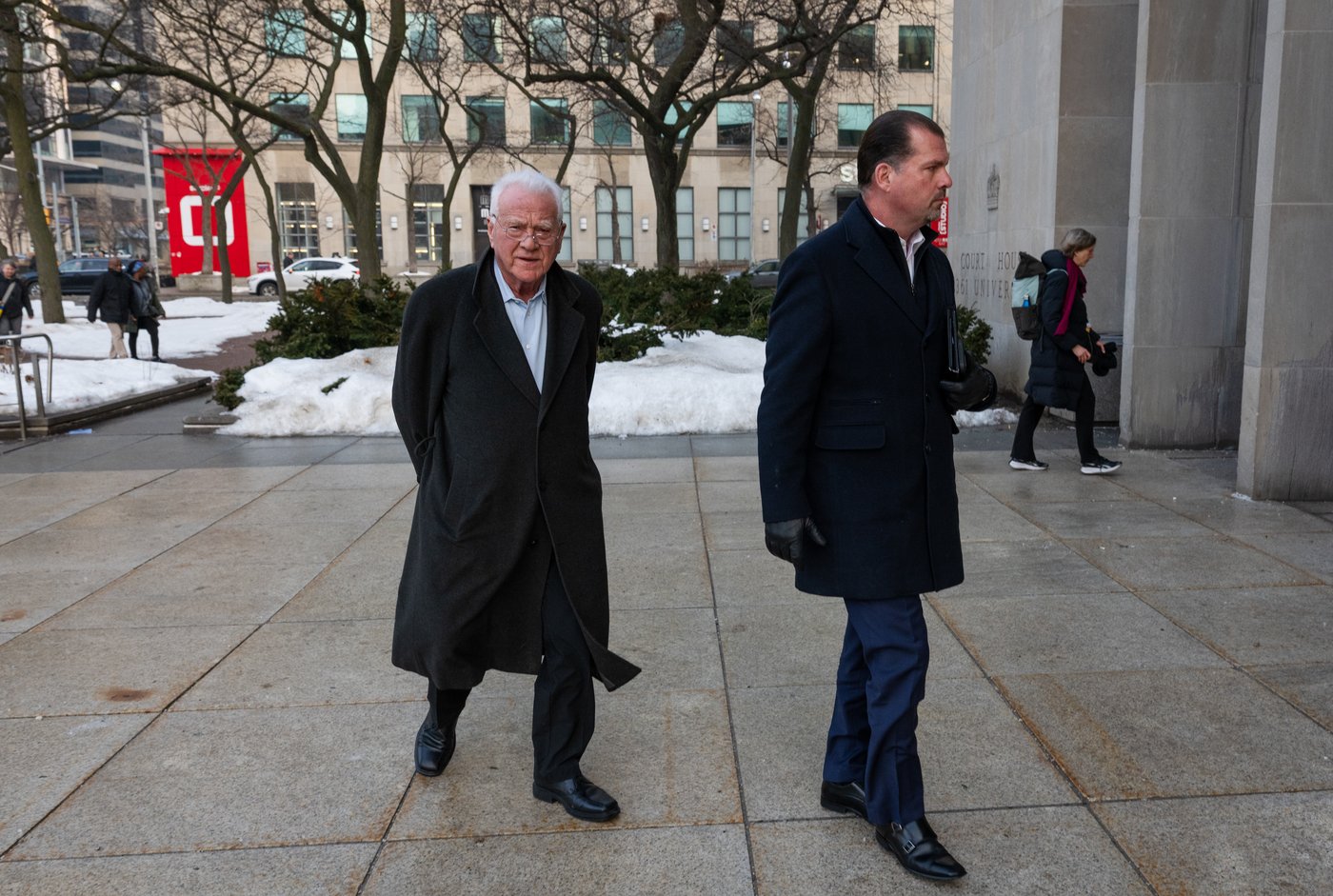
TORONTO — The women accusing Frank Stronach of sexual assault lied and in some cases fabricated their accounts, lawyers for the Canadian auto parts tycoon argued Tuesday as they urged the court to find him not guilty of all charges.
The four remaining complainants in the case “lied, manipulated and certainly attempted to deceive the court,” changing aspects of their narratives or adding details never before disclosed to police or prosecutors, defence lawyer Leora Shemesh argued in her final submissions.
Underlying that was the “tunnel vision” of Peel Regional Police, whose investigation into the decades-old allegations ultimately “tainted the evidence,” she argued.
“The overall case that has been presented before the court has been really plagued by a negligent and reckless investigation and by a case that has been built on fabricated, disingenuous, and unreliable evidence,” the defence lawyer argued.
Prosecutors, who also began but did not finish their closing submissions Tuesday, acknowledged there were challenges with each complainant’s evidence but argued any inconsistencies or changes were peripheral and did not affect the core of the allegations.
Stronach, who is 93, has pleaded not guilty to 12 charges related to alleged incidents dating back as far as the 1970s.
Over the course of the trial, prosecutors have dropped five charges related to three of the seven complainants, though the defence has argued Stronach should instead be found not guilty on those counts.
The founder and former CEO of Magna International still faces seven charges related to four complainants.
Shemesh zeroed in Tuesday on what she deemed inconsistencies and misrepresentations in the complainants’ testimony, arguing none of the women were credible or reliable in their accounts.
The first complainant to testify, a woman who said she first encountered Stronach when she worked at Woodbine racetrack in the early 1980s, “revealed something new” every time she spoke about the alleged incident, including details about her pantyhose being torn, Shemesh argued.
The defence lawyer called the woman a “really, really bad storyteller” whose narrative only grew more “unhinged” over time, and who repeatedly vacillated between 1980 and 1981 as the year she alleged Stronach raped her in his waterfront condo.
“This is not some minor detail or a blip in the memory,” Shemesh argued.
The allegations described by the second complainant — a former employee at Rooney’s, the dining and nightlife complex Stronach owned, who went on to work at Magna after she alleges he groped her in his condo — are “flimsy at best,” the defence lawyer argued.
The woman wasn’t truthful about her reason for going out to dinner with Stronach and then to his condo, Shemesh said, arguing it wasn’t about getting closure for her dismissal from Rooney’s but rather about getting a better job.
The woman “sold herself” for a job at Magna and then felt in over her head when things got “cosy” at the condo, Shemesh said. That’s when the woman told Stronach she wanted to leave, and he backed away, she said.
She suggested the woman was financially motivated to come forward.
The third complainant’s account that Stronach bent her over the arm of a chair and tried to rape her in a midtown apartment in the late 1970s is “completely unbelievable,” Shemesh argued.
The woman testified she stayed in that position for two to three minutes without turning around then freed herself by standing up and leaving, which Shemesh deemed “bizarre.” The defence argues the incident was fabricated, but barring that, the complainant’s evidence was that Stronach may have thought it was consensual.
Stronach was not associated with a midtown condo at the time, the defence lawyer added, and police made no effort to look into it.
As for the final complainant, Shemesh painted her as a fraud who tried to present herself as a successful businesswoman and who lied about whether she had spoken to a lawyer before coming forward to police.
The woman was “not honest” about her reason for accompanying Stronach to his waterfront condo, Shemesh argued.
The complainant, who worked as a secretary for an investment banking firm at the time, first testified she went to discuss business, then added she may have done it to be polite, but the defence suggested she was excited to spend time with the wealthy businessman.
She testified she rebuffed Stronach’s advances on the couch but he then led her to a den-like room and raped her on a cot.
Shemesh argued the woman accepted his invitation to go to a more private area without protesting, and suggested the woman was “simply unhappy with the manner of intimacy that they had engaged in.”
Prosecutor Jelena Vlacic disputed the characterization of the first complainant as a “storyteller,” arguing that if that were the case, the woman would have told a “better story” rather than the fragments of one.
Superior Court Justice Anne Molloy said what she found troubling was the woman’s “shifting story” for concluding it happened in 1980 or 1981.
“Whether she’s lying about it or it’s not reliable because she’s deliberately trying now to put together a different package that explains why it was that year, it causes me concern about the overall reliability of all of her evidence,” the judge said.
Later, the judge said she did not believe the woman made up her evidence “out of whole cloth” or was deliberately lying to the court to get money, but was concerned that “over the past 40 some odd years, she has added layers and layers and layers of things that she believes must have happened to the point where she now believes they did happen.”
Vlacic maintained that contradicting a person on a “thousand periphery details may not have a forceful effect to the core of their narrative.”
The second complainant, the prosecutor argued, was “almost painfully candid” and the details she introduced in her testimony about Stronach helping her put on her coat or giving her a “European kiss” also didn’t change the core of her allegations.
The fact that she went on to work for Magna is not detrimental to her credibility, Vlacic argued, noting the woman didn’t seem to view the groping incident as particularly traumatic. She also gave Stronach “the benefit of every doubt,” which she would not do if she was looking for a payout, the Crown attorney said.
At the same time, Stronach could not have had an honest but mistaken belief the woman consented, since it was clear the woman was on her way out and there is no evidence she did anything that could convey interest, Vlacic argued.
The third complainant “remained consistent on her core elements,” she continued.
The Crown is set to finish its submissions Wednesday.
In her arguments, the defence lawyer also criticized what she called “kernels of unfairness, injustice, and bias” in the justice system, including the police investigation into the case and the “politics … of a women’s movement that perhaps tainted the process.”
The two officers who led the investigation testified they considered taking certain steps, such as obtaining records, but opted against it.
The officers also said they generally assume complainants are telling the truth unless there is a reason to believe they’re lying, which there wasn’t in this case. They did not ask the complainants to swear to tell the truth before giving their statements, nor were the women cautioned about the possible consequences of lying, the officers said.
Those officers were called by the defence and finished their testimony earlier this month, closing out the evidence in the case.
Stronach’s lawyers have also indicated they will seek a stay of proceedings, alleging some of the complainants were coached by the Crown in preparation for trial.
This report by The Canadian Press was first published March 31, 2026.
News from © The Canadian Press, . All rights reserved.
This material may not be published, broadcast, rewritten or redistributed.

This site is protected by reCAPTCHA and the Google Privacy Policy and Terms of Service apply.
Want to share your thoughts, add context, or connect with others in your community?
You must be logged in to post a comment.