Elevate your local knowledge
Sign up for the iNFOnews newsletter today!

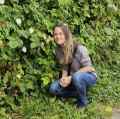
It was supposed to be a grand adventure, a birthday celebration and an exciting foray into a faraway country, but Shuswap resident Lisa Kenoras’ trip to the Middle East was far more than what she bargained for, and far, far worse.
Now safe at home on her reservation in Salmon Arm, the 32-year-old is still processing her experience getting stuck at a hotel in Dubai during missile alerts for a week after a war broke out between the US and Iran at the end of February.
“I slept for two days after I landed, then went to the river to pray and find my strength in prayer and the land,” she said. “I feel survivor guilt after seeing the escalation of war and people growing up in war.”
A family support worker with Adams Lake Indian Band, Kenoras is new to world travel.
She took her first international trip to the Dominican Republic with a friend last year and was excited to adventure abroad once again, this time for her birthday. After bouncing destination ideas around, the friends settled on an all-inclusive hotel and resort in Dubai in the United Arab Emirates.
Kenoras wasn’t aware she was heading to a war zone.
“My friend was doing the planning and navigating, I didn’t look into it much,” she said. “I was just this young rez girl seeing places my family hasn’t seen before. It was my very first paid vacation, I was proud of my job success and felt ready to see the world. I was so excited.”
Kenoras arrived at an all inclusive hotel in Dubai end of February after a layover at the Istanbul airport in Turkey. Upon arriving at the high-end destination, she and her friend grabbed their bathing suites and hit the pool, but the fun didn’t last very long.
That night Kenoras was on an outdoor patio enjoying drinks and entertainment when the hotel guests got a loud warning on their phones.
“We ended up receiving a text, it sounded like an amber alert, really loud and persistent. Everyone’s phones were beeping,” she said.
The text said: Due to the current situation, potential missile threats, immediately seek a safe place in the closest secure building, steer away from windows, doors, and open areas. Await further instruction.
“I was in shock, wondering what to do,” Kenoras said. “People were on the patio looking out over the edge. I’d never experienced anything like this before.”
She called her family, changed into comfortable clothes and packed her backpack including travel documents and went to the hotel lobby.
“Everyone said we’re fine, we’re not under attack, that it’s just debris from air missiles being intercepted,” she said. “I was looking at news online and saw the Fairmont Hotel in downtown Dubai had just been hit with debris. We were in a war zone. I was on edge, I’d never had air missile threats, I’d never had to run for shelter.”
Kenoras said she received a text from the Canadian consulate warning against all travel to the United Arab Emirates, to follow instructions of local authorities, and that the security situation could deteriorate rapidly.
Then flights were suspended.
“The consulate announced the Emirates air space was closed after a missile had been intercepted,” Kenoras said. “Suddenly, I felt stranded. Lost in a foreign country looking at where the exits were and where to hide if a missile strikes.”

Filled with anxiety and unable to sleep, she searched news outlets online for more information. She felt comforted by the loud prayers of locals in the city celebrating Ramadan, a worldwide Muslim tradition that involves fasting, prayer, charity and community connections every spring.
“It was surreal, people were praying throughout the day during missile threats,” she said. “I heard this guy praying really loudly and I wondered what he was praying for and if he was afraid. I pray as a Secwepemc woman but we don’t have anything like Ramadan where you can hear praying throughout the city. Being in those moments of prayer helped me step into my spirituality while all this was going on.”
On March 3, three days after arriving at the hotel and with the air space still compromised, Kenoras received another email update from the Canadian consulate indicating which land border crossings were safe to cross out of the UAE. Hotel guests were paying private drivers to get to a crossing at Oman, but she didn’t feel safe getting into a car with a stranger for the six hour drive.
When she turned 32 on March 4, she said all she wanted to do was go home, but it wasn’t clear when that would happen.
“Flights were suspended so future flights were pushed back,” she said. “We had to call the airline and Expedia. They were trying to push our flights to March 20 and I thought we’d be stuck there for weeks. That day I went to the beach and saw two Emirates flights go by and everyone on the beach stood up and we were clapping, relieved flights were leaving and people were getting out.”
Kenoras and her travelling partner were able to secure a flight for March 9. She was so relieved she put on a dress and went out to celebrate her birthday at an Italian restaurant at the resort. The waiters brought her a cake and sang Happy Birthday.
“I just cried,” she said. “I’ll never forget blowing out my candle thinking about how many people are dying in this war that will never see another birthday. People that don’t have the air defence that Dubai has, knowing it’s the dome keeping us alive. Knowing how lucky I was to even celebrate, wearing a beautiful dress.”
In the days that followed, Kenoras was on edge, phoning her family and crying, unable to sleep. She feared making social media posts for friends and family to follow her situation.
“I was afraid to post anything bad about the UAE, I was afraid to get targeted,” she said. “In a war things become lawless and anything can happen. You can be taken captive and they can find reasons to penalize you. I held so much in, afraid to say anything.”
Most of all, Kenoras prayed, and asked her family and community for prayers for her safety and way home.
“I was raised to not be fearful. I thought of the coyote stories and the teachings from my ancestors,” she said. “I phoned my grandma and she prayed for me. I let go of anything or anyone that ever hurt me. The problems at home are so small compared to this. I’ve learned the hard lesson of the darkest parts of the world. I’ve seen war news and heard about it in my political science courses but to be in the midst of it is surreal.”
The Canadian government arranged charters and secured commercial seats to evacuate Canadians from the UAE.
Kenoras was able to get on a chartered plane to Istanbul, Turkey that departed to the sounds of cell phones beeping with more alerts.
“Phones were buzzing the whole time. We were flying low and I could see the city lights below us. A green drone went by and I saw smoke in the far distance and thought, ‘that’s war, that’s war happening.’”
Kenoras’ travelling partner took a later chartered flight and after a few delays and extra cost, both arrived safely back to Canada.
Kenoras is a member of the Secwepemc & WSANEC First Nations.
“I have my Secwepmc community, I have a family that loves me, a community that prays for me and ancestors waiting, the power of that is immense,” she said. “Other people don’t have this, they have nowhere to go, they are growing up in war. I learned so much and I’m grateful from where I come from and grateful to never live a life in fear.”
News from © iNFOnews.ca, . All rights reserved.
This material may not be published, broadcast, rewritten or redistributed.

This site is protected by reCAPTCHA and the Google Privacy Policy and Terms of Service apply.
Want to share your thoughts, add context, or connect with others in your community?
You must be logged in to post a comment.