Elevate your local knowledge
Sign up for the iNFOnews newsletter today!
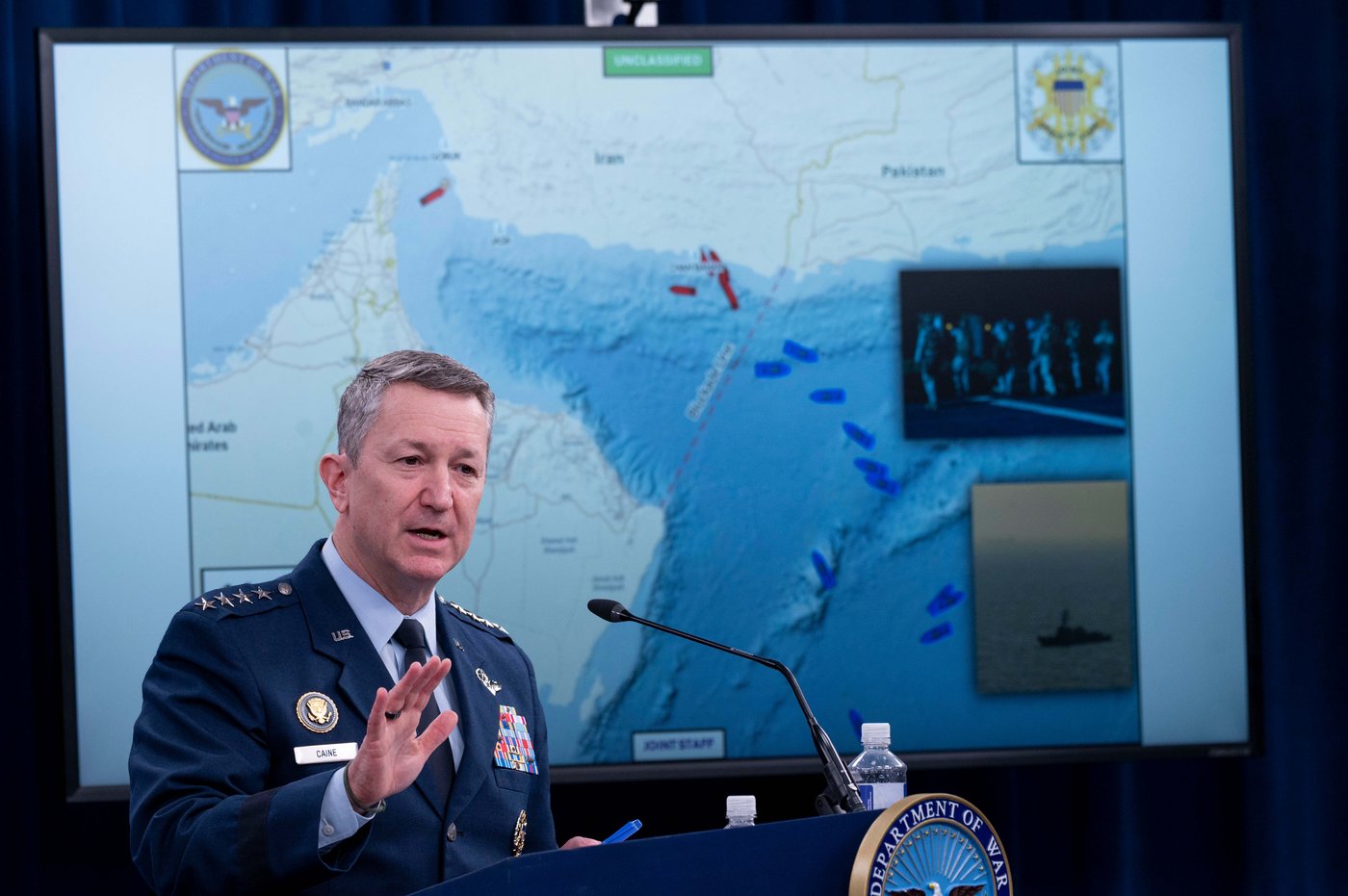
WASHINGTON (AP) — The U.S. military has widened its efforts beyond the blockade of Iran’s ports to allow its forces around the world to stop any ship tied to Tehran or those suspected of carrying supplies that could help its government, from weapons to oil, metals and electronics.
Gen. Dan Caine, chairman of the Joint Chiefs of Staff, specifically pointed to operations in the Pacific, saying the U.S. would be targeting vessels that left before the blockade began earlier this week outside the Strait of Hormuz, a crucial waterway for energy and other shipments.
U.S. forces in other areas of responsibility “will actively pursue any Iranian-flagged vessel or any vessel attempting to provide material support to Iran,” he told reporters at the Pentagon.
The military also detailed an expansive lists of goods that it considers contraband, declaring that it will board, search and seize them from merchant vessels “regardless of location.” A notice published Thursday says any “goods that are destined for an enemy and that may be susceptible to use in armed conflict” are “subject to capture at any place beyond neutral territory.”
The expansion of U.S. military efforts to target Iranian shipping is another pressure point for Tehran and comes as a ceasefire is set to expire in mere days. Mediators are pressing for an extension to a truce that has paused almost seven weeks of war between Israel, the U.S. and Iran.
US military details items that could be seized from Iran-linked ships
The military’s new list of banned materials includes products such as weapons, ammunition and military equipment that are classified as “absolute contraband.” However, it also lists items such as oil, iron, steel, aluminum and other goods as “conditional contraband” that it argues can be used both for civilian and military purposes.
Otherwise innocuous items like electronics, power generation equipment or heavy machinery can be seized if “circumstances indicate intended military end-use,” the notice says.
More than 10,000 American troops are helping enforce the blockade on Iranian ports. While no ships have yet been boarded, defense leaders say the military is warning Iran-linked ships that it could fire warning shots or escalate to other force if they try to outrun the Navy.
In the first three days of the military action, 14 ships have turned around rather than confront the naval blockade, according to U.S. Central Command, which oversees the Iran war.
Some Iran-linked or sanctioned vessels that left through the strait have appeared to halt their movements, turn off their radio transponders or head back toward Iran’s coast, shipping data firms say.
Ships near th
e blockade face US warnings
Vessels that approach the blockade, which is being enforced in Iran’s territorial seas and international waters and not in the Strait of Hormuz, get a warning, Caine said.
“Any ship that would cross the blockade would result in our sailors executing pre-planned tactics designed to bring the force to that ship — if need be, board the ship and take her over,” he said.
U.S. Central Command has released a recording of a radio broadcast sent to vessels in the region that said the military was ready to use force if needed to compel compliance.
“Vessels will be boarded for interdiction and seizure transiting to or from Iranian port,” the message said.
Defense Secretary Pete Hegseth told reporters that “less than 10% of America’s naval power” is being used to enforce the blockade. The Navy has 16 warships — 11 destroyers, three amphibious assault ships, an aircraft carrier and a littoral combat ship — in the Middle East out of a battle force of roughly 300 total warships.
Also supporting the blockade are a series of aircraft as well as surveillance, reconnaissance and intelligence operations designed to give the Navy the latest information on the vessels it is encountering.
The Navy is likely tracking ships linked to Iran through satellites, drones and other forms of surveillance as well as each commercial vessel’s past history, said Kevin Donegan, a retired vice admiral and former commander of the Navy’s Fifth Fleet, which is based in Bahrain.
“It’s a pretty complex operation to make work,” said Donegan, who spoke Thursday during a webinar hosted by the Middle East Institute. “Not just from the intelligence standpoint, but positioning all the ships in the right way to make the intercepts if you have to.”
Donegan stressed that the blockade is only one pressure point on Iran and that it won’t end the conflict on its own.
“For it to be most effective, this military tool is added to the other operational tasks that were being done and paired with — hopefully, diplomacy,” Donegan said. “And if those two are scripted together in the right way, we can potentially get the outcomes we want.”
US Central Command chief appears at the Pentagon
As Hegseth and Caine discussed the blockade, Adm. Brad Cooper, the head of U.S. Central Command, made a rare appearance in the Pentagon briefing room.
He said that before the ceasefire took hold, American service members and troops from allied countries in the Persian Gulf had “fought together side by side.”
“In creating the largest air defense umbrella in the world across the Middle East, we embedded specially trained U.S. military air defenders alongside our partner nation soldiers,” Cooper said, adding that Bahrain’s king and crown prince knew American soldiers by name.
News from © The Associated Press, . All rights reserved.
This material may not be published, broadcast, rewritten or redistributed.

This site is protected by reCAPTCHA and the Google Privacy Policy and Terms of Service apply.
Want to share your thoughts, add context, or connect with others in your community?
You must be logged in to post a comment.