Elevate your local knowledge
Sign up for the iNFOnews newsletter today!
Elevate your local knowledge
Sign up for the iNFOnews newsletter today!
Select Region
Selecting your primary region ensures you get the stories that matter to you first.
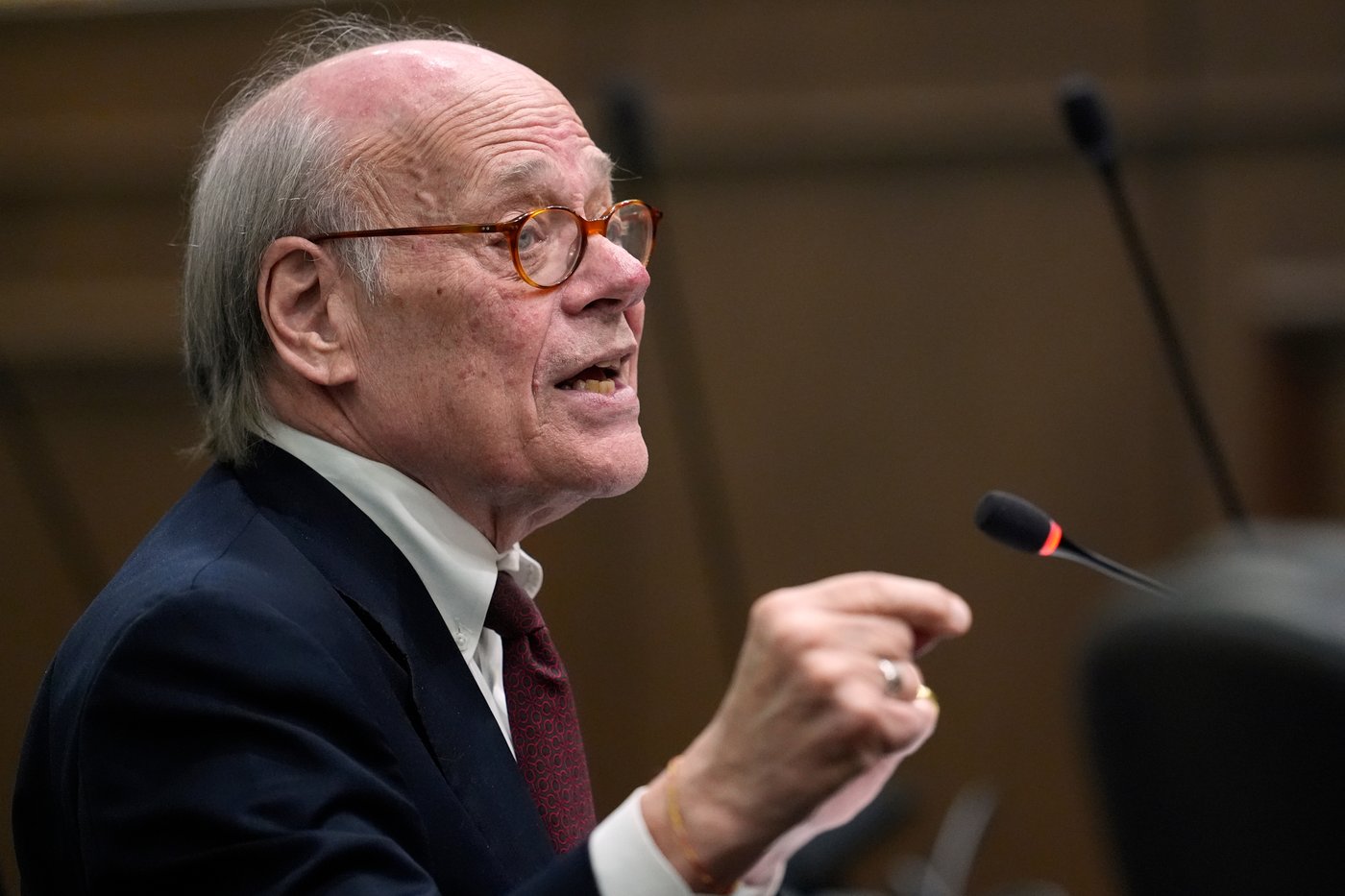
WASHINGTON (AP) — Democratic Rep. Steve Cohen of Tennessee announced Friday that he is ending his bid for reelection, his career upended by the redistricting battles that are sweeping the country after last month’s Supreme Court decision.
Republicans in Tennessee this month enacted a new U.S. House map that carves up a Cohen’s majority-Black district, reshaping it to the GOP’s advantage as part of President Donald Trump’s strategy to hold on to a slim majority in the November midterm elections.
“I don’t want to quit. I’m not a quitter. But these districts were drawn to beat me,” Cohen told reporters in his Washington, D.C., office.
Cohen is challenging the state’s redistricting effort in court and said he would reenter the race if that lawsuit succeeded in restoring his old congressional district.
He lamented that Tennessee would likely shift to an entirely Republican congressional delegation after the next election, warning that it could also leave the state out of the loop once Democrats are able to regain the White House.
Redistricting targeted Cohen’s district
Tennessee was the first state to pass new congressional districts after a U.S. Supreme Court ruling that significantly weakened federal Voting Rights Act protections for minorities. But more Southern states could follow. Republicans in Louisiana, Alabama and South Carolina also have taken steps toward redistricting.
Cohen has represented his Memphis-based district for about two decades, among the last of the white Democrats representing the South. He has been a longtime member of the House Judiciary Committee and has focused on strengthening voting access and civil rights.
“It’s unique in America that an African-American majority district has elected a white guy, and that we’ve got a great relationship, great amount of support,” said Cohen, who is also the first Jewish person to represent Tennessee in Congress.
He was facing a primary challenge from state lawmaker Justin Pearson, a Black progressive who represents much of Memphis in the state’s General Assembly.
“The status quo is failing us,” Pearson told The Associated Press Friday. “It’s time for new energy, new voices, and new ideas to meet this present moment, and that’s why I started to run in the first place.”
Pearson said he still intends to run in Tennessee’s redrawn 9th Congressional District, which now includes multiple rural counties that backed Trump by double-digit margins.
“We’re going to win. It’s going to be harder, but as an ancestor once said, if the mountain was smooth, you couldn’t climb it,” said Pearson. He said his message would not change, but argued his agenda had some appeal to rural, working-class, white conservatives.
But Cohen predicted it would be nearly impossible for Tennessee Democrats to win a seat in Congress with the new districts. He added there was a chance the redistricting effort could “backfire on the Republicans” but that would require an “unbelievable registration effort among Democrats” and a massive vote turnout.
Cohen vows to oppose Trump
Sitting in his congressional office with staff looking on, Cohen pointed to photos of Memphis and local projects that he had championed during his career and expressed worry that Memphis voters would no longer have a voice in Washington. He also recounted how he had worked with the state’s Republican leaders to win funding during the Biden administration for a larger bridge to cross the Mississippi River into Memphis.
House Democratic leader Hakeem Jeffries said in a statement that Cohen was “a powerful champion for civil rights” and that “the City of Memphis, the Congress and the nation are better because of Steve’s commitment to making a difference.”
Cohen said the Republican’s redistricting effort was being done “for Donald Trump to get one more vote, he thinks, to stop him from being impeached.”
Still, he vowed to use his remaining time in Congress to try to mount opposition to Trump, calling the president “the greatest threat to democracy and to decorum and grace that we’ve ever seen.”
Like many lawmakers, Cohen has often attracted attention with colorful outbursts during congressional debates and hearings. During Trump’s first term, in 2019, Cohen brought a bucket of fried chicken to a House Judiciary Committee hearing at which then-Attorney General William P. Barr was a no-show.
“The message is Attorney General Bill Barr is not brave enough to answer questions from a staff attorney and members of the Judiciary Committee,” he said in a statement at the time.
While Trump’s supporters stormed the Capitol on Jan. 6, 2021, as Congress tried to certify the results of the presidential election, Cohen screamed angrily at his Republican colleagues to “Call Trump. Call your friend. Tell him to do something.”
Cohen was among the first Democrats to join impeachment efforts for Trump in his first term, and he has signed on to articles of impeachment against Trump this year as well.
Memphis activists respond to new map
Meanwhile, Memphis activists grappled with the new political realities after the Republican-led legislature’s decision to divide the city’s longtime congressional district into three neighboring districts.
Advocates said they believed they could work with — and pressure — any lawmaker who will represent the city.
“Things are going to change. We’re aware of that,” said Tierney Macon, an activist with The Equity Alliance, a local civil rights group.
Macon, who protested at the Tennessee statehouse for days following the unveiling of the redrawn maps, said activists aimed to hold the city’s new representatives in Congress accountable no matter their party.
“We just have to be engaged,” Macon said.
Demonstrations in the statehouse included chants accusing lawmakers of resurrecting Jim Crow, a system of state and local laws that for decades enforced racial segregation and disenfranchisement across the South.
___
Associated Press writers Kevin Freking and Lisa Mascaro in Washington contributed to this report.
News from © The Associated Press, . All rights reserved.
This material may not be published, broadcast, rewritten or redistributed.

This site is protected by reCAPTCHA and the Google Privacy Policy and Terms of Service apply.
Want to share your thoughts, add context, or connect with others in your community?
You must be logged in to post a comment.