

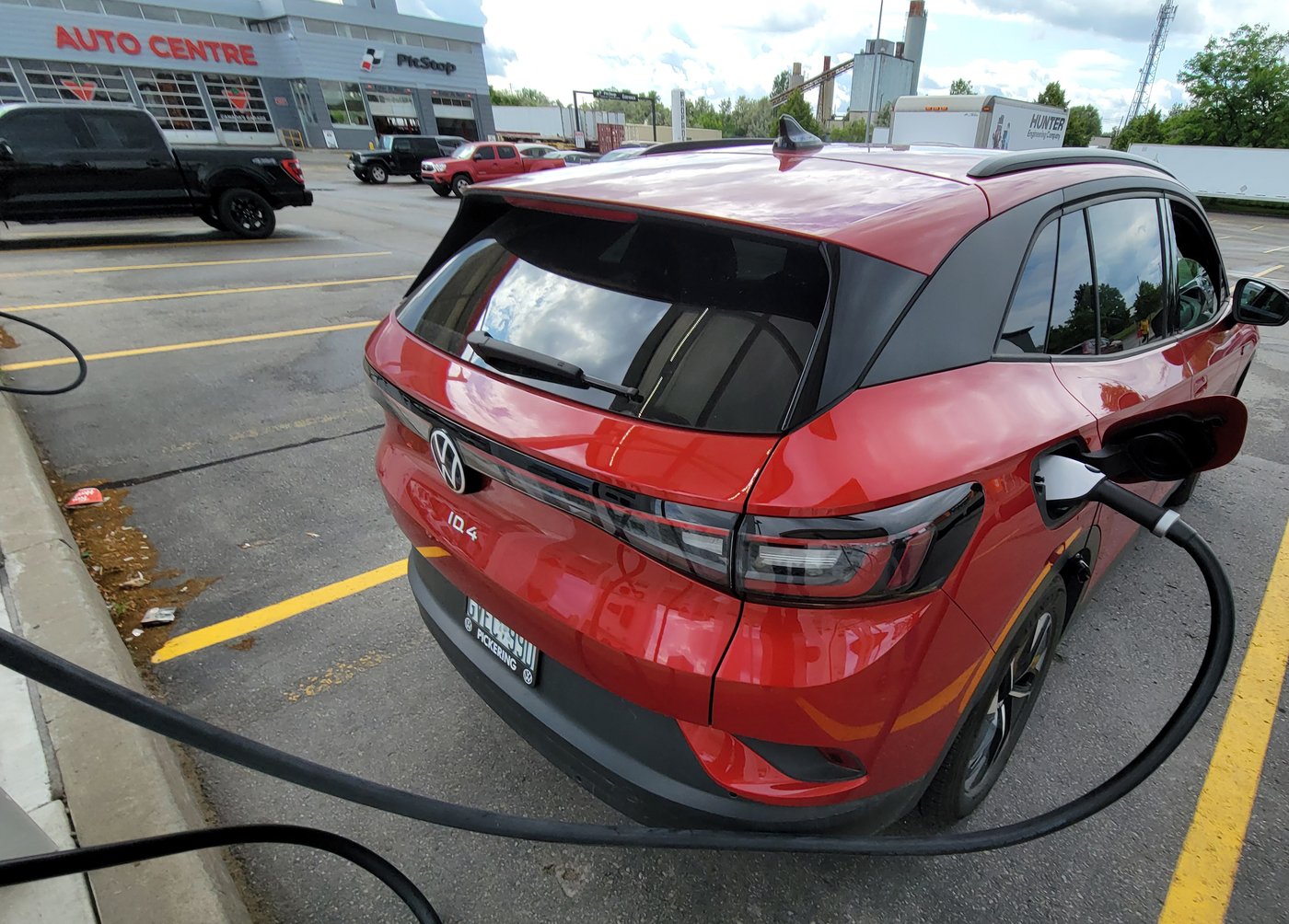
EV sales jump in March as federal rebates return, though market share up slightly

OTTAWA — Sales of new electric vehicles jumped in March as Canadians took advantage of the long-awaited return of federal government subsidies.
Data released by Statistics Canada on Thursday shows 21,547 new EVs were purchased in March, the highest since December 2024 — just before the government paused the rebate program.
Ottawa brought back subsidies for new EVs on Feb. 16, after pausing them in January 2025 when money from the previous program ran out.
March sales represented an 83 per cent jump from the month before, and 75 per cent from the same time a year ago.
“I think it’s not only that, of course anybody would want to get $5,000 off of a new car, but I think that there was a lot of pent up demand as well,” said Joanna Kyriazis, the director of policy and strategy at Clean Energy Canada.
“The average price of an electric vehicle right now is pretty close to the average price of all new cars. So we’re getting to that upfront price parity point, and that’s a real tipping point.”
But market share for EVs is still lagging at just more than 12 per cent of all new vehicles sold.
Prime Minister Mark Carney paused the electric vehicle sales mandate last fall, following pressure from provinces and automakers. The mandate, which was supposed to take effect this year, set a target of having EVs account for at least 20 per cent of new auto sales across Canada this year. The target was to increase to 100 per cent by 2035.
March also saw a jump for all vehicles, with sales overall jumping 42 per cent month-over-month.
It’s unclear though which EVs dominated the market in March, as Transport Canada has yet to publish its data on subsidies, despite dealerships having been able to submit claims for almost two months.
“Transport Canada is currently preparing and validating the data submitted through the portal,” Transport Canada spokesperson Flavio Nienow wrote in an email.
“The first set of monthly statistics will be published on the Open Government Portal in the coming weeks and will be updated regularly thereafter.”
Ottawa is offering $5,000 toward the cost of a new EV and $2,500 toward plug-in hybrids, but the rebates will decrease every year until they’re phased out after 2030 — or until the money for the program runs out.
The government earmarked $2.3 billion for the program over five years and has set a target of putting 840,000 new EVs on the road.
The rebates will only apply to vehicles that cost less than $50,000 and are imported from a country with a free-trade agreement with Canada — meaning the Chinese EVs Ottawa is allowing into the country won’t be eligible for the rebates.
Canadian-made EVs, which right now include only the Dodge Charger and the Chrysler Pacifica, are exempt from the $50,000 cap.
This report from The Canadian Press was first published May 17, 2026
News from © The Canadian Press, . All rights reserved.
This material may not be published, broadcast, rewritten or redistributed.

Join the Conversation!
Want to share your thoughts, add context, or connect with others in your community?
You must be logged in to post a comment.