Elevate your local knowledge
Sign up for the iNFOnews newsletter today!

Lewis’s woodpeckers are vibrantly coloured birds with unusual feeding habits and they make the Thompson-Okanagan region home in the warmer months, but their population is vulnerable.
Experienced South Okanagan wildlife photographer Kathy Green was able to photograph a pair of the birds on a blue sky day in Cawston earlier this month.
These little birds are unique looking with splashes of pink and green feathers, and red faces. Unlike most woodpeckers that drill holes into trees looking for insects, Lewis’s woodpeckers can be seen perched on treetops and flying in long circles catching bugs during the warm months, according to the BC Ministry of Environment.
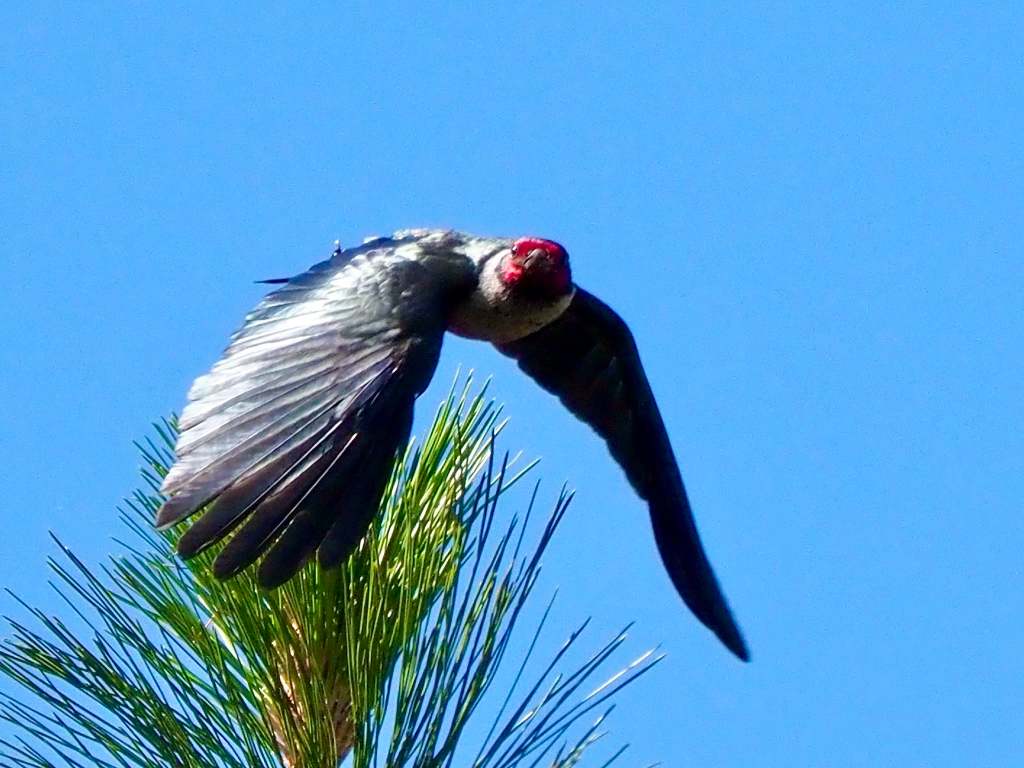
The woodpeckers spend the winter south of the border as far as Mexico and the warmer months in parts of southern BC from the Chilcotin River to the East Kootenays, including the Thompson Nicola region, and are most commonly found in the Okanagan.
Some individuals stay all year round and are known to store seeds in the cracks of decaying trees for the colder months.

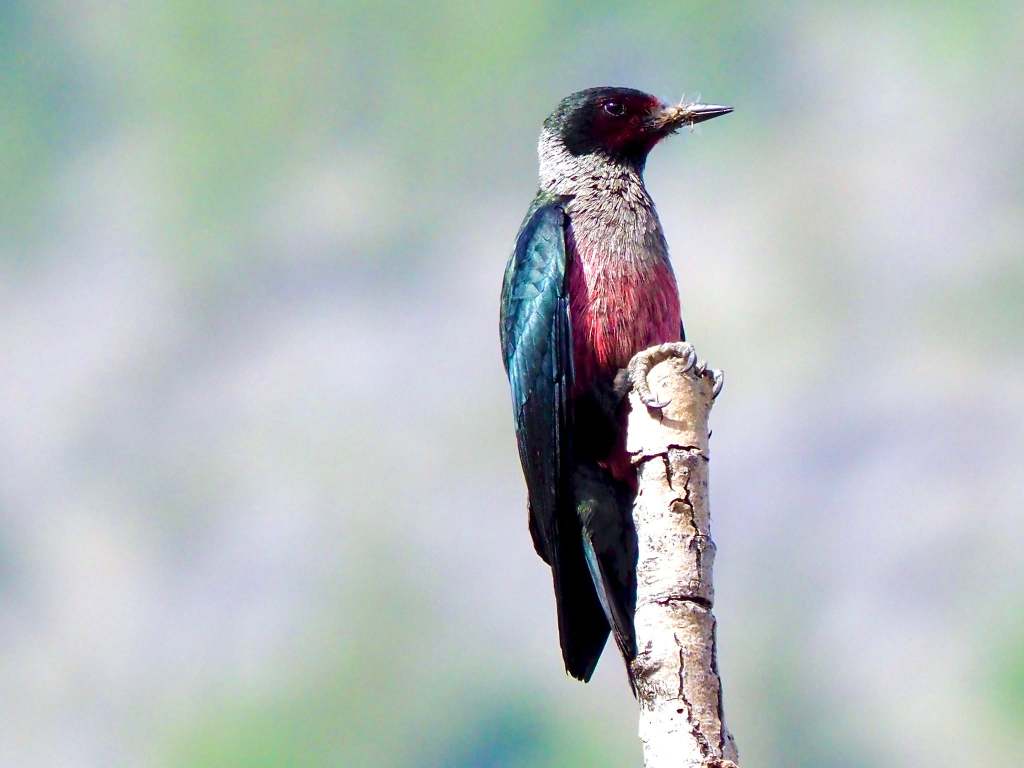
Their populations are under threat from habitat loss as the birds rely on ponderosa pine forests and cottonwoods in riparian zones for nesting and foraging, and undergrowth that supports insect populations and provides berries and seeds in late summer.
As their habitat is gradually being removed for urban development, the birds are becoming more vulnerable. They are blue listed in BC, meaning they are of special concern and require monitoring to ensure their populations are stable.
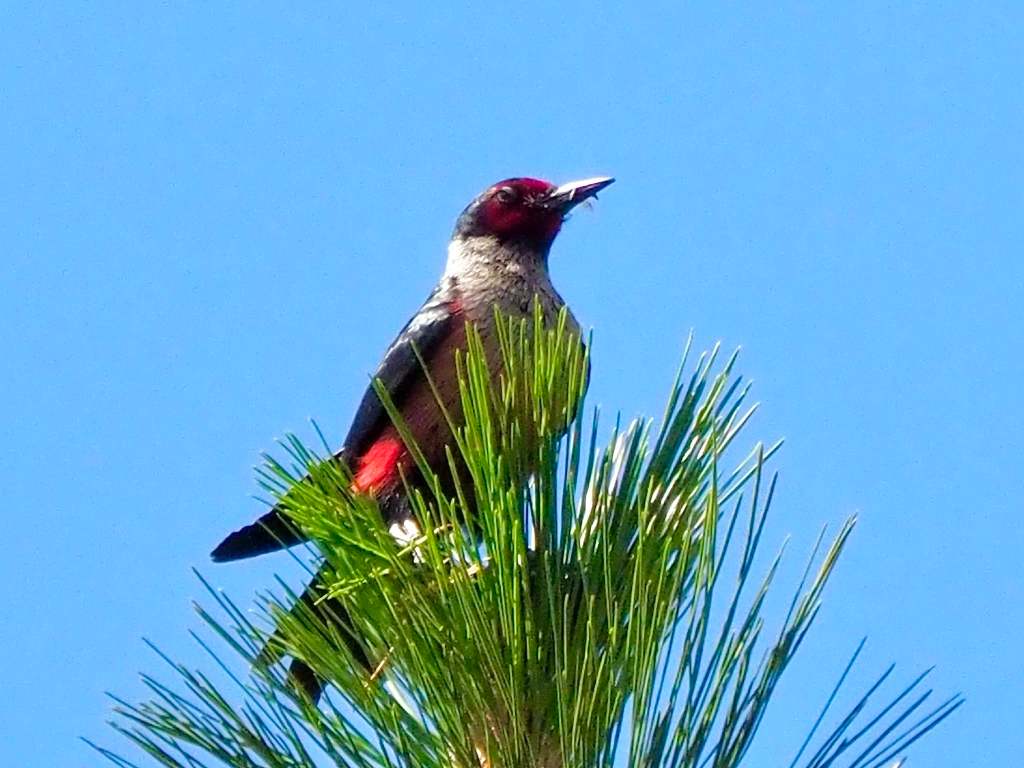
Several local conservation organizations have made efforts to protect the birds including The Trust of BC, which used donations from the public in 2021 to add 61 hectares of land to the White Lake Basin Biodiversity Ranch in the South Okanagan.
The Thompson-Nicola Conservation Collaborative describes the woodpeckers as ‘endangered’ and is working to protect the populations in the Thompson Nicola watershed with conservation initiatives that include habitat restoration, doing controlled burns and creating snags to enhance habitat diversity, and building artificial nest sites.
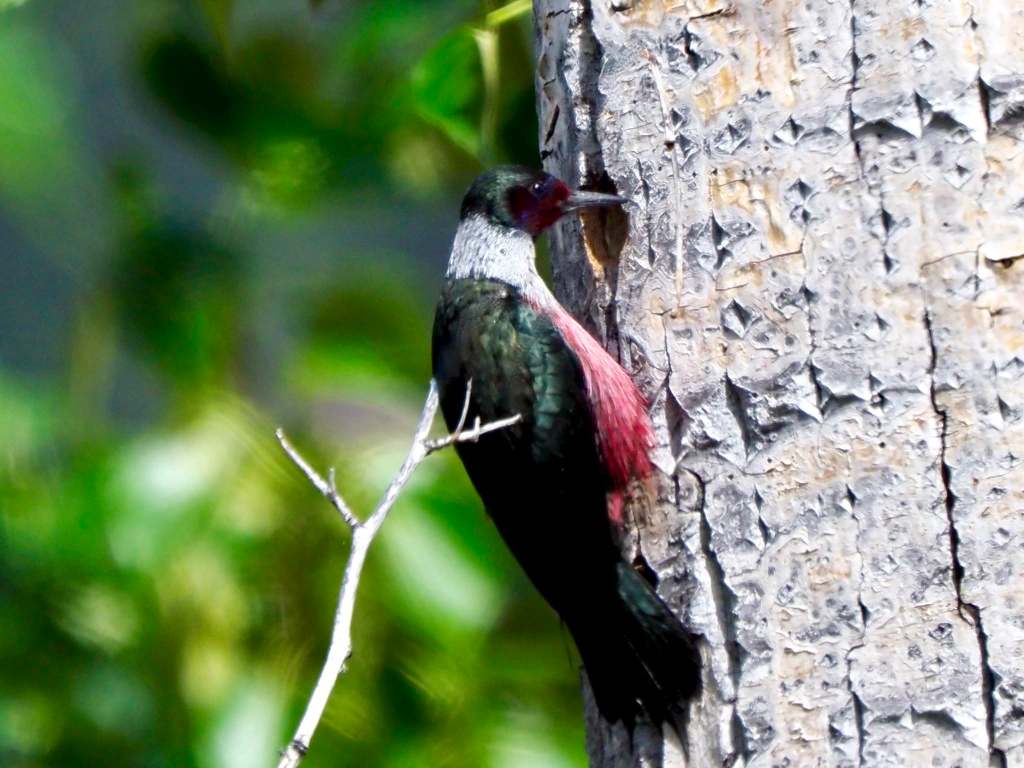
News from © iNFOnews.ca, . All rights reserved.
This material may not be published, broadcast, rewritten or redistributed.

This site is protected by reCAPTCHA and the Google Privacy Policy and Terms of Service apply.
Want to share your thoughts, add context, or connect with others in your community?
You must be logged in to post a comment.