Elevate your local knowledge
Sign up for the iNFOnews newsletter today!
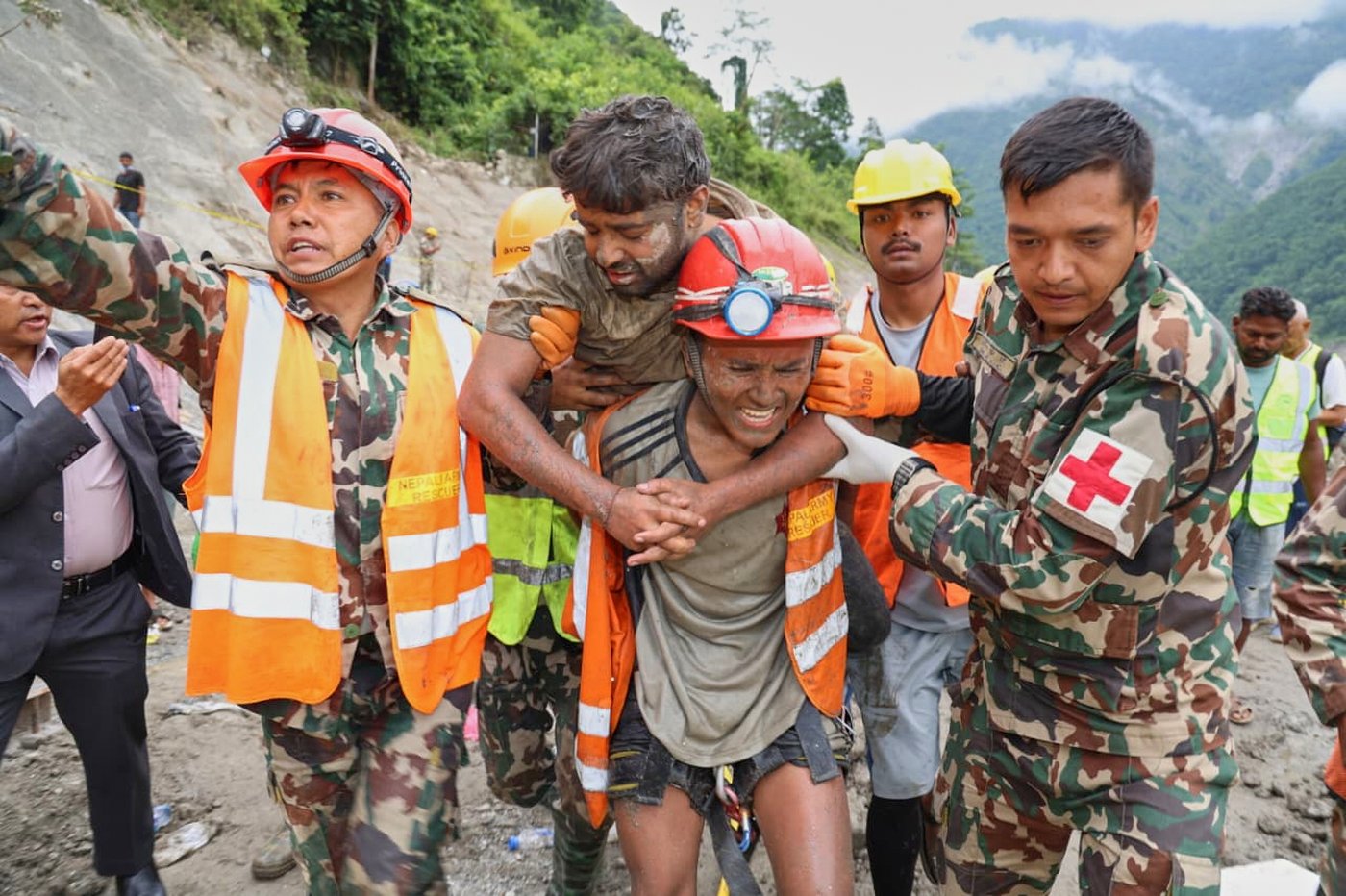
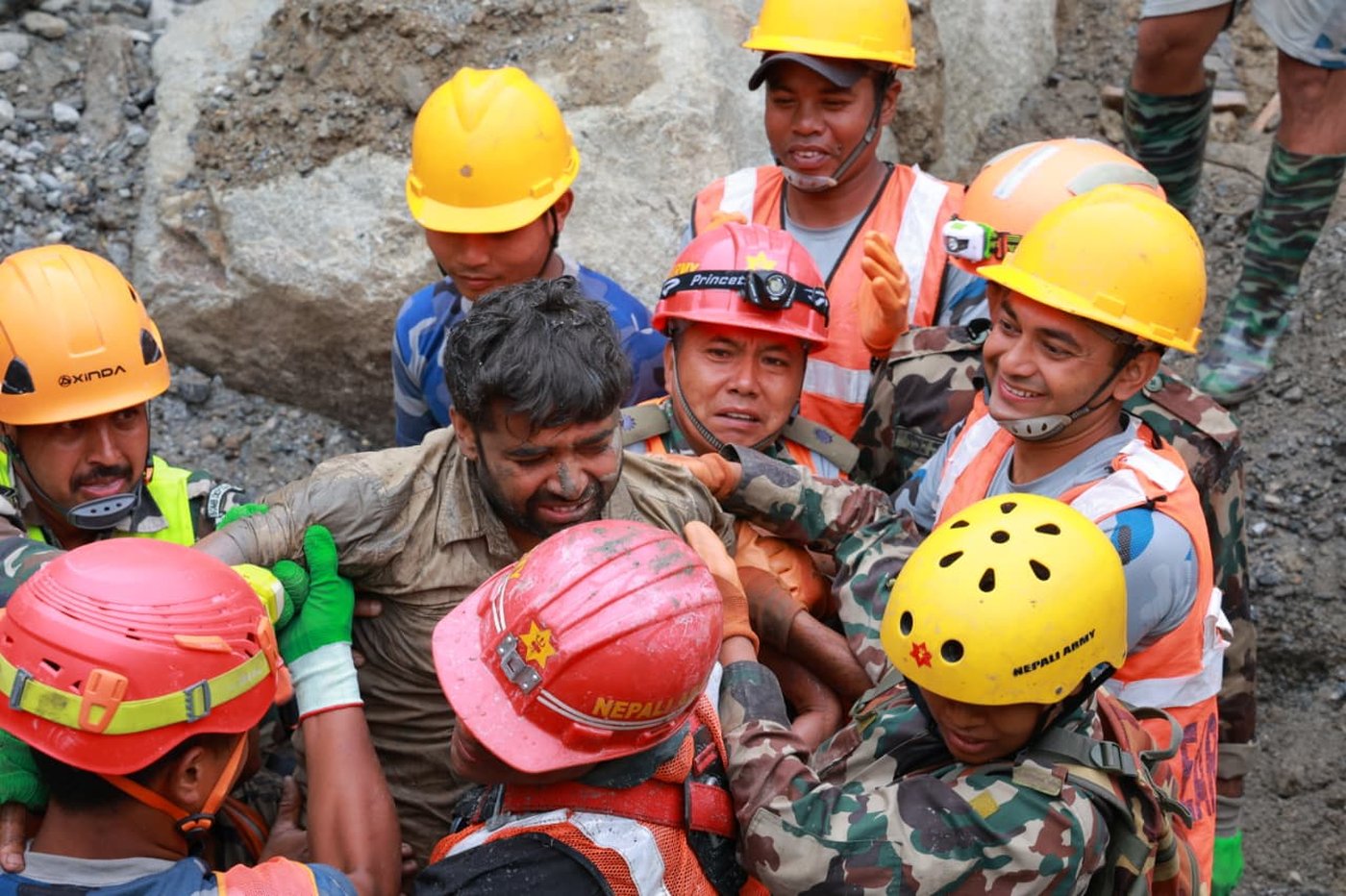
KATHMANDU, Nepal (AP) — Rescuers in Nepal pulled two workers alive from an underground tunnel at a hydropower plant Friday, raising hopes of reaching dozens of others believed to be trapped nine days after deadly floods swept away villages and submerged the Himalayan region in mud and debris.
Search teams first heard voices from inside the tunnel in the morning, allowing them to locate the two men, Nepalese lawmaker Shri Ram Neupane said. Images showed a rescuer carrying one of the workers, covered in mud, on his back, while soldiers on either side helped.
One of those rescued said more people are alive inside the tunnel, according to army spokesperson Brig. Gen. Raja Ram Basnet, and the search is ongoing.
“I can’t explain what we are feeling at the moment. We are just grateful to god,” Amir Maharjan, the brother of one of those rescued, told The Associated Press.
Basnet confirmed the first trapped worker’s rescue, and Neupane posted about the second on his Facebook page shortly after.
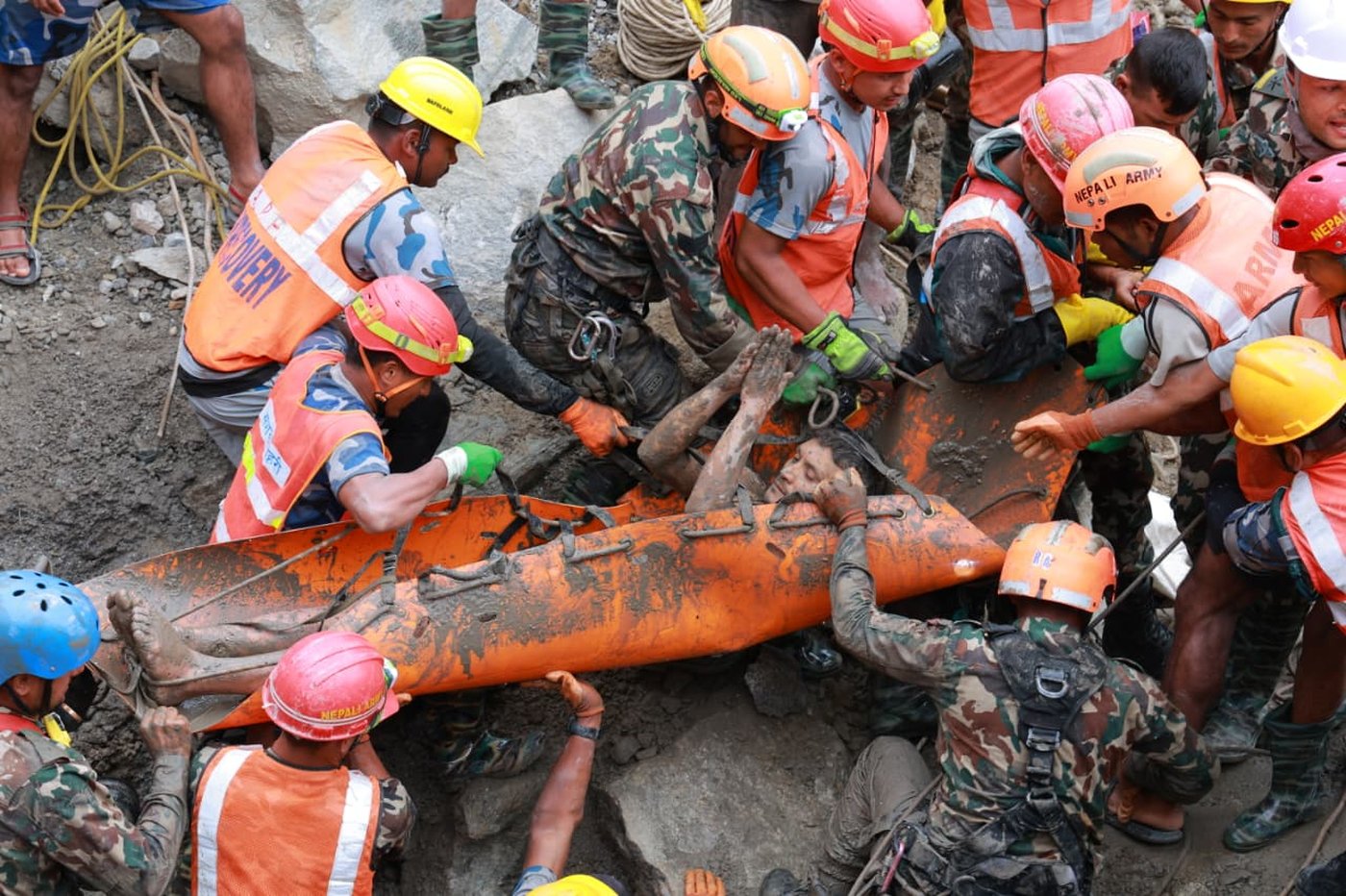
Both men were flown to a hospital in Kathmandu, and Maharjan said his family was on its way there. One of the survivors was in critical condition, according to a statement from the prime minister’s office.
Officials identified the men as a mechanical foreman and a mechanical supervisor. They were rescued from a tunnel at the Trishuli 3A plant.
About 900 workers are missing from 12 hydropower projects in Nepal, with roughly 500 believed to be trapped in various tunnels, according to authorities.
About 115 are believed trapped in the tunnel at Trishuli 3A alone, according to the Independent Power Producers Association of Nepal.
Nepal’s Communication Minister Bikram Timilsina wrote on his Facebook page that officials “are waiting for the rescue of more and more people.”
At least 1,287 people were killed in the Aug. 26 floods, likely caused by a glacier collapse, and more than 5,000 remain missing, according to Nepal’s disaster management agency. China said Friday 31 people were killed and 531 were missing on the Tibet side of the border, according to Chinese official news agency Xinhua.
Nepal’s disaster agency estimated Friday that flooding caused at least 387.5 billion Nepalese rupees ($2.5 billion) in damage to infrastructure and property.
___
This story has been updated to correct the characterization of the number of workers believed trapped in the tunnel at Trishuli 3A to dozens, not a dozen.
___
Saaliq reported from New Delhi. Associated Press journalist Kanis Leung in Hong Kong contributed to this report.
News from © The Associated Press, . All rights reserved.
This material may not be published, broadcast, rewritten or redistributed.

This site is protected by reCAPTCHA and the Google Privacy Policy and Terms of Service apply.
Want to share your thoughts, add context, or connect with others in your community?
You must be logged in to post a comment.