Elevate your local knowledge
Sign up for the iNFOnews newsletter today!
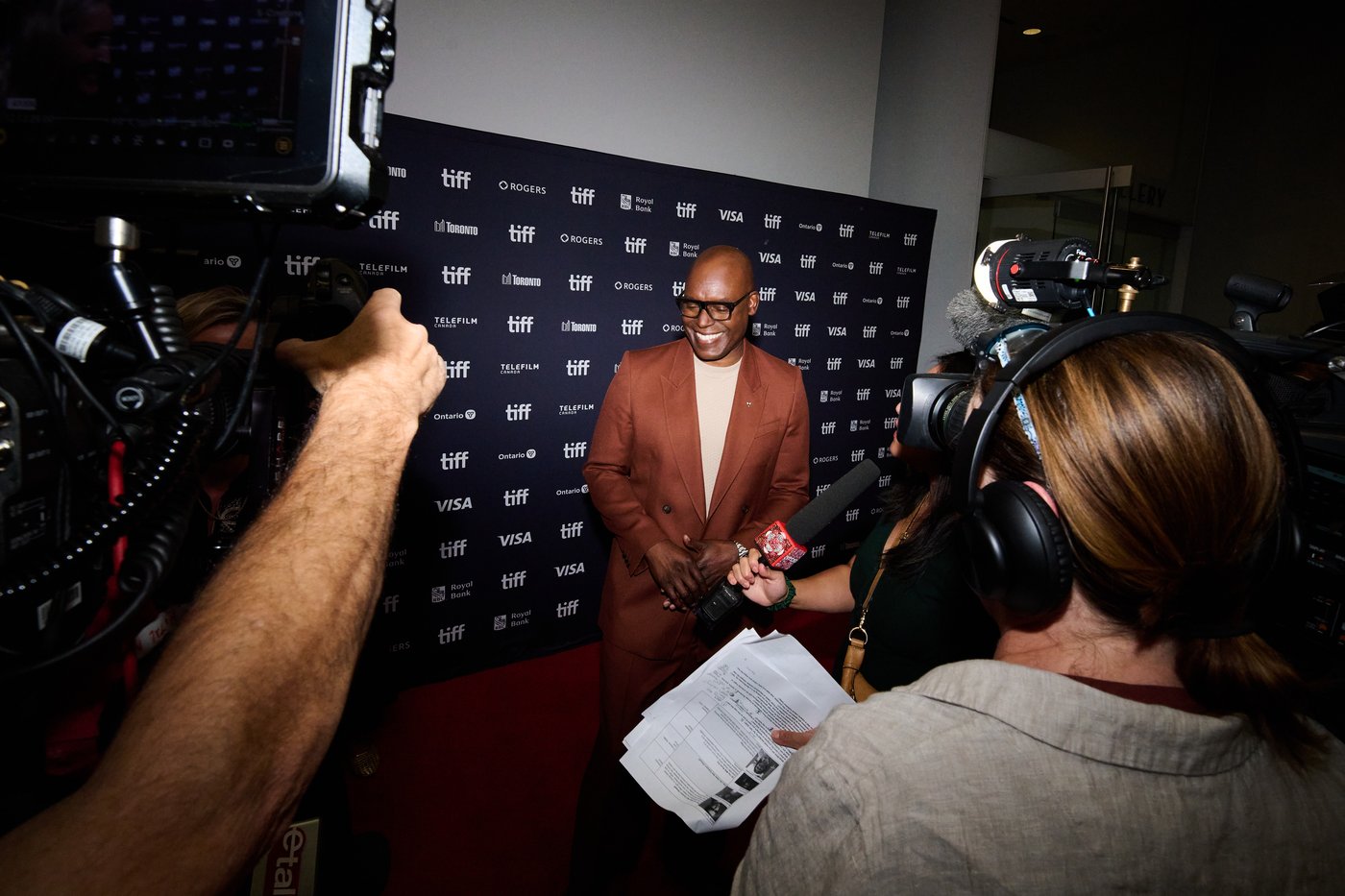
TORONTO — When Cameron Bailey was shopping around the idea for TIFF: The Market a few years ago, he didn’t make an argument about supporting the arts or enhancing high culture.
The Toronto International Film Festival CEO made an economic case — not just for TIFF, but for Canada as a whole.
The weeklong event that runs alongside the festival will be a meeting place for filmmakers and producers to shop around their projects to financiers and distributors from around the world, formalizing the sort of dealmaking that has long been done at TIFF.
“The trade argument is that Canada produces really remarkable artists, craftspeople and creative professionals, probably at an outsized level compared to our population and relative to other countries,” Bailey said on a recent video call.
“We’re going to give Canadian creative professionals more opportunities to meet their global counterparts, to establish relationships, which is where it all starts, and eventually to do deals with the world.”

That argument secured a $23-million investment from the federal government in 2024, which is now — if not bearing fruit — beginning to blossom. When TIFF gets underway this week, it will feature a robust film marketplace for the first time ever.
It’s a timely launch, to say the least.
The film industry has become a flashpoint in U.S. President Donald Trump’s protectionist agenda, and as the trade war with Canada ramps back up, he’s now supporting a federal film and TV tax incentive meant to stimulate domestic production.
“We will bring this once great industry BACK TO AMERICA,” Trump wrote on Truth Social last week.
That could spell bad news for Canada, where a myriad of American films and TV shows are shot.
Bailey is positioning TIFF: The Market as a potential countermeasure, a place where international connections can be forged and tended.
“I understand the impulse to secure a domestic industry in the U.S., absolutely. That makes sense for every country that has a screen industry,” said Bailey, adding that the American film industry is at its best when tapping into global connections.
If Trump indeed makes partnering with Canada unpalatable for American producers, Bailey said TIFF: The Market could be a place where Canadians find other dance partners, because it will feature a much larger contingent of international collaborators than have come to the festival in the past.
Deals have always been done at TIFF, even before the market. Typically, they happened in coffee shops or hotel lobbies, said Charles Tremblay, who joined TIFF last year to head up the market after decades in the film business.
Those deals happen at every stage of a film’s development, Tremblay said, from an “IP exchange” where producers buy the rights to books and articles, to finding partners before the film is made, to distributing it once it’s done.
For companies that have a film in the official TIFF selection, it would make good sense to bring their slate of in-development projects to the festival to show would-be partners.
But in previous years, those who wanted to make deals but didn’t have a film in the TIFF program may not have found it worthwhile to attend, Bailey said.
That includes national film promotion agencies — international counterparts to Telefilm.
“They would have either small presences or not even a regular presence every year. And so that meant that their country’s industries weren’t supported in the way that they will be now,” Bailey said.
The presence of a market could also make Toronto more appealing to studios in a crowded fall festival lineup. The Venice Film Festival and Telluride Film Festival take place in the days before TIFF, and not all films play all three events.
Other festivals featuring marketplaces include the Marché du Film at Cannes in May and the European Film Market at Berlinale in February.
Tremblay said some companies find themselves rushing to put their packages together in time for Cannes. Saving them for Toronto in September might make sense, he said.
“I’ve experienced as a distributor going into Cannes that some projects that were pitched to me were not ready,” he said.
“So you get a lot of people in Cannes that rush things into the market because there’s not really an alternative ‘until eight months later for some of them.”
Some have expressed trepidation at the timing. In industry publications such as Deadline and the Hollywood Reporter, studio executives have said pulling together a whole new slate of pitches in the four months after Cannes may not be feasible.
While TIFF executives are quick to note that no other North American festival is linked to a market, that doesn’t mean there are no other markets in North America.
The American Film Market takes place in Los Angeles every November, and last year drew about 6,000 attendees from 35 countries.
Bailey said TIFF isn’t coming for their business: “We’re building our own business.”
So how does TIFF make money off the market?
The festival doesn’t get a cut of the deals it helps facilitate — “That’s not how this business works,” Bailey laughed.
The money comes from participation. Take the exhibition booths: a nine-by-nine metre pavilion at the market runs for just under $60,000, while a stand or pod a quarter of the size — which TIFF advertises as ideal for “boutique sales and independent production companies” — costs $17,000.
TIFF also sells the chance to host “partner-led sessions and programming” at the Market HQ, the Toronto Metro Convention Centre, with price tags between $18,000 and $25,000, depending on the room’s capacity.
Telefilm will have the largest pavilion at the market. Other confirmed exhibitors include the Paris-based production and distribution company Goodfellas, American production company AGC Studios, and talent agencies CAA, WME and UTA.
Hosting a two-hour cocktail event at one of TIFF’s venues could cost between $15,000 and $31,000, while a three-hour late-night party costs $42,000.
Screening a film for prospective partners, meanwhile, costs exhibitors between $2,200 and $2,700. Those without an exhibition booth can still screen films there, with prices ranging from $4,400 to $5,400. Companies can choose to open their screenings to everyone with a market pass, or keep them invitation-only.
Among those screening their films will be Robert Vince, the creator of “Air Bud.” He’s bringing his reboot of the franchise about a basketball-wielding golden retriever — “Air Bud Returns” — to the market to shop it around to international distributors. (The film is being distributed in Canada by Elevation Pictures and in the United States by Cineverse Entertainment.)
This is the first time an “Air Bud” movie will be available for international buyers. Disney swooped in before the first film was even complete and handled global distribution of the franchise, which spans 14 films including the talking-dog “Air Buddies” spinoff series.
Vince has already taken the film to a couple of conventions — first CinemaCon, where movie theatre companies gather, and then Comic-Con, where the fans converge.
Both times, he brought the new dog playing Buddy, and both times people clamoured to meet with them, he said.
The Vancouver-born Vince, whose career dates back to the 1980s, has always thought TIFF should have an official market attached to it.
“It sits in a perfect position in the marketplace to connect international and domestic together,” Vince said on a video call from Malibu.
As for the American Film Market, he thinks there’s enough room for both. AFM tends to attract streaming services and has had an increased focus on TV in recent years, he said.
“We have a new world where theatrical movies are reasserting themselves as the dominant platform, right? And TIFF does a great job of launching theatrical movies,” Vince said.
TIFF expects roughly 6,000 people from 49 countries to attend the inaugural edition of its market, which runs during the first week of the festival, from Sept. 10 to 16.
This report by The Canadian Press was first published Sept. 9, 2026.
News from © The Canadian Press, . All rights reserved.
This material may not be published, broadcast, rewritten or redistributed.

This site is protected by reCAPTCHA and the Google Privacy Policy and Terms of Service apply.
Want to share your thoughts, add context, or connect with others in your community?
You must be logged in to post a comment.