Elevate your local knowledge
Sign up for the iNFOnews newsletter today!
Vernon resident Michelle Gregoire is an avid nature lover and volunteer at the Interior Wildlife Rehabilitation Society in the Summerland, where she has helped countless species of animals over the years.
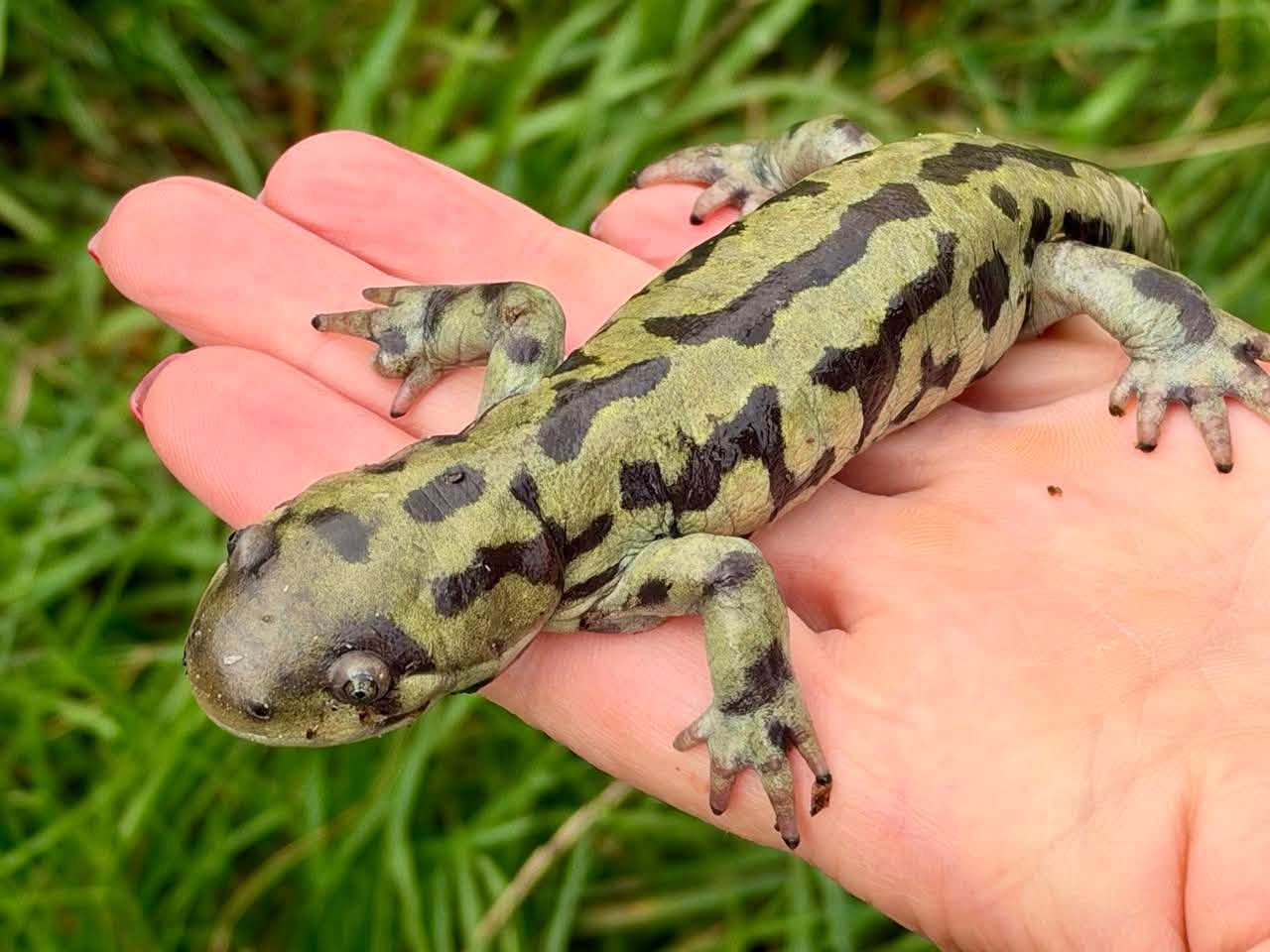
Last week, while attending a volunteer appreciation function on a rural property in the Central Okanagan, she discovered a rare, red-listed western tiger salamander in an artificial pond with a black pool lining.
“He was stuck in the bottom trying to get up the sides but couldn’t,” she said. “I’d never encourage the handling of wildlife but in this case his only hope was for me to reach down and pick him up.”
Gregoire gently placed the amphibian in a nearby, muddy riparian area. The longtime wildlife lover had never come across the species before.
“Oh my goodness, it made my day,” she said. “I thought I’d better get a photo of it. He was gorgeous and huge, probably 10 inches long.”
It isn’t common to find western tiger salamanders in BC, as their range is very small, limited to the Okanagan and Similkameen Valleys, and they spend most of their lives underground.
Adult western tiger salamanders live close to ponds and small lakes where they hide in small animal burrows or under woody debris during the warmer months, and burrow under the frostline during winter.
The species is listed as endangered federally and provincially due to their restricted range, vulnerability to introduced fish and habitat loss, according to BC Reptiles and Amphibians.
In BC, habitat loss is the biggest threat to the amphibian, which is disappearing at high rates in the mountain valleys as developments replace wetlands.
“They need wetlands to breed, and grasslands and forests to live the rest of the year,” Gregoire said. “Unfortunately, wetlands are being filled in due to development. They’re losing both aspects of their environment.”
Salamander populations are threatened by cattle grazing and off-road vehicle activity that muck up breeding ponds and compact surrounding soils the amphibians use for burrowing. Getting run over by vehicles and harmed by pollution are other threats.
Not only are the amphibians fascinating in appearance, with patterns and colours that vary, they help control insects, small animals and invertebrates, and their presence or absence indicates the general health of an aquatic habitat.
When kept safe from human activity, western tiger salamanders can live to more than 25 years of age.
“I’m hoping the little guy I found moved along and found himself a new home,” Gregoire said. “They are interesting creatures.”
News from © iNFOnews.ca, . All rights reserved.
This material may not be published, broadcast, rewritten or redistributed.

This site is protected by reCAPTCHA and the Google Privacy Policy and Terms of Service apply.
Want to share your thoughts, add context, or connect with others in your community?
You must be logged in to post a comment.