Elevate your local knowledge
Sign up for the iNFOnews newsletter today!
OTTAWA — Canada’s financial intelligence watchdog has moved at a snail’s pace on providing law enforcement with information to support criminal investigations, says a new report released Thursday by the federal auditor general.
The Financial Transactions and Reports Analysis Centre, or Fintrac, plays a key role in Canada’s anti-money laundering and anti-terrorist financing regime.
Auditor General Karen Hogan said Fintrac typically takes about four months to pass on information to investigators, partially because of its IT systems.
Half the time, the information arrives too late to be useful to investigators, found a survey by Hogan’s office of Fintrac’s intelligence recipients.
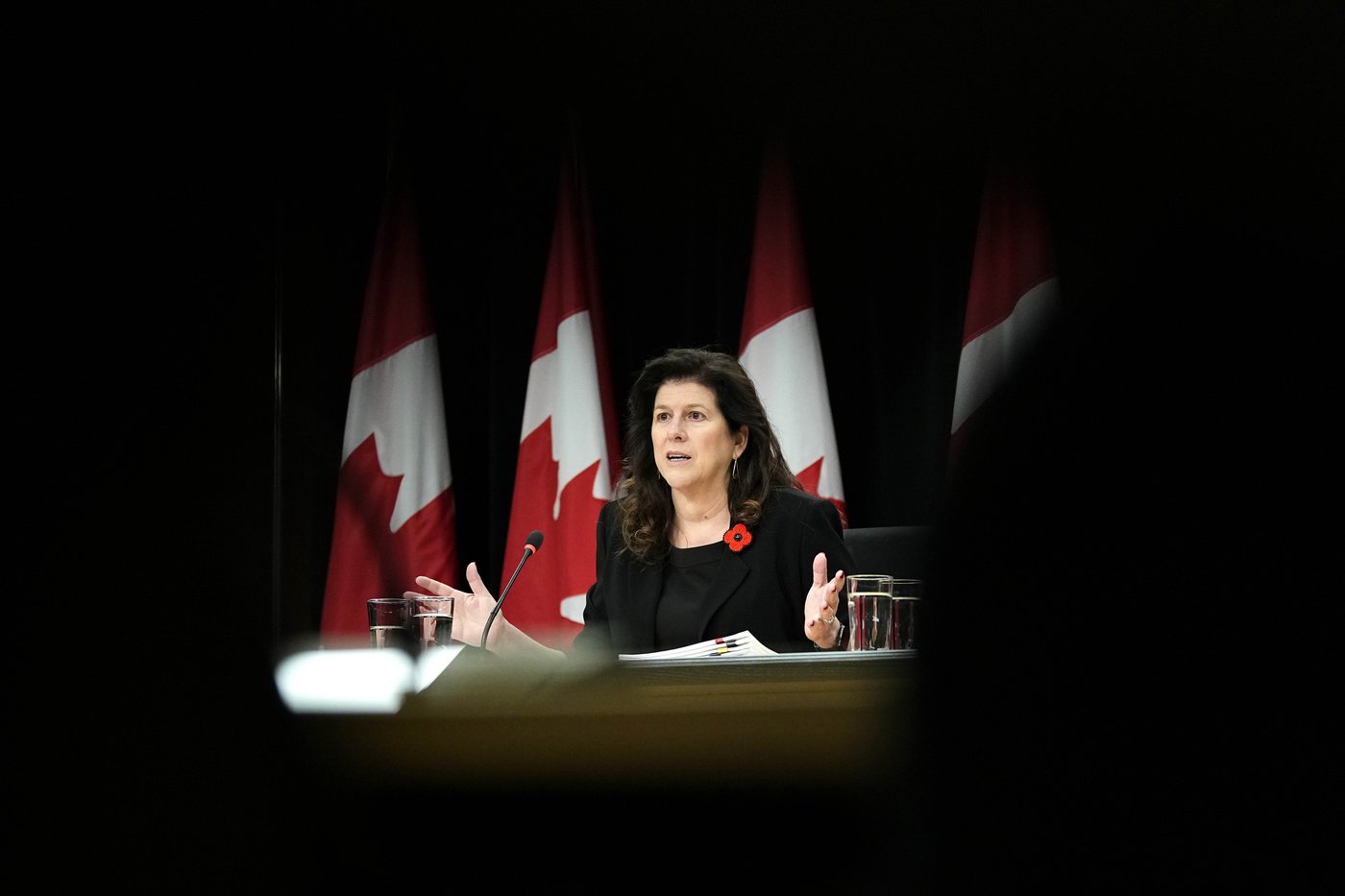
“They were very slow to produce financial intelligence and in today’s world, where a financial transaction happens within seconds, being able to support law enforcement in investigating crime should also be timely,” Hogan told a Thursday news conference.
The audit said Fintrac “did not effectively carry out its role in overseeing compliance with Canada’s anti-money laundering laws” and that it is constrained in its ability to “help detect, prevent and deter money laundering and the financing of terrorist activities.”
In its defence, Fintrac points to a recent evaluation by the Financial Action Task Force, an international standards body, that praised the Canadian agency for supplying law enforcement with valuable financial intelligence used in investigations of money laundering.
Fintrac spokesperson Darren Gibb emphasized in an email that the organization prioritizes its information disclosures based on urgency.
“This can be done in less than an hour when it is urgent. In other cases, when investigations have been going on for months or even years and our financial intelligence has not been prioritized by law enforcement, it is considered less urgent and we act accordingly,” he said.
Gibb also pointed to a low response rate of 36 per cent in the auditor general’s survey of recipients of Fintrac intel as being not statistically representative.
Hogan’s office tabled nine reports in Parliament on Thursday. Many of them flag issues with poor planning and budgeting in various federal departments that erupted in the House of Commons’ daily question period.
One audit reveals the federal government stopped work years ago on banning thermal coal exports without telling the public or revising its public commitments.
In 2021, Canada committed to banning thermal coal exports by 2030 because of how damaging the resulting pollution is to the environment.
Environment Canada worked for three years to find ways to enforce that ban — until November 2024, when that work ceased altogether following lobbying by the coal industry, the audit said.
The Liberals put up five ministers and one parliamentary secretary on Thursday to answer reporters’ questions on the report. But nobody could say who made the decision to stop the work on the export ban, instead emphasizing the decision was made by “the previous government.”
And although two of the ministers taking questions Thursday — Justice Minister Sean Fraser and Public Safety Minister Gary Anandasangaree — were part of the federal cabinet when the government stopped its work, Fraser said he wasn’t up to speed on the details of that specific report, and had come prepared to speak to the Fintrac report.
“Look I was here at the time. I think there were a number of measures that were put in place across a range of portfolios where the work continues,” Fraser said.
“But it’s also very clear that there is a new government who has established a different set of priorities. And there’s no decision across our portfolios where we automatically accept, because things were once done one way that they’re going to continue to be done that way.”
In response to the report, the department committed to telling the public why it stopped its work on implementing the ban.
Another report examining Health Canada’s implementation of the new Canadian Dental Plan found it went $1.1 billion over budget in its early years because more payments for dental benefits were issued than expected. The department managed that by moving funding between fiscal years.
The audit said the program was efficiently managed but questioned how program funding will be adjusted to account for financial pressures driven by high demand.
“Projected payments for dental benefits to oral health providers between 2026-27 and 2031-32 are expected to exceed the funding Health Canada had secured for the plan by $2.4 billion,” it said.
The audit also said the department has been limited in its efforts to track whether the program was improving oral health.
An environmental audit warned that Canada is moving further away from its 2030 greenhouse gas emissions reduction target.
Ottawa has pledged to reduce emissions by at least 40 per cent below 2005 levels, but it is currently only projecting to reach 28 per cent — much lower than bureaucrats expected than in 2023, when Canada was already expected to fall short of the goal.
This report by The Canadian Press was first published Oct. 29, 2026.
News from © The Canadian Press, . All rights reserved.
This material may not be published, broadcast, rewritten or redistributed.

This site is protected by reCAPTCHA and the Google Privacy Policy and Terms of Service apply.
Want to share your thoughts, add context, or connect with others in your community?
You must be logged in to post a comment.