Elevate your local knowledge
Sign up for the iNFOnews newsletter today!
MIAMI (AP) — A helicopter that crashed earlier this month in Biscayne Bay, killing one person and critically injuring two others, had been flying so low that it hit the water on a turn, the National Transportation Safety Board said Wednesday.
The Robinson R44 II helicopter went down Nov. 4 near Bill Baggs State Park off Key Biscayne while on a trip to film a powerboating event offshore, the Miami-Dade Sheriff’s Office said. The pilot died, and a photographer and videographer on board were injured.
The helicopter was making low-altitude turns “extremely” close to the surface of the water, according to the safety board’s preliminary report. Some of the helicopter’s doors had been removed to facilitate photography and videography. On one turn, the rotor blades hit the water and brought down the aircraft.

The photographer told investigators the helicopter flew low and parallel to a boat’s right side, then turned and got ahead of it for a “good shot” as the boat passed underneath, according to the report. Then the videographer observed the rotor blades strike the water.
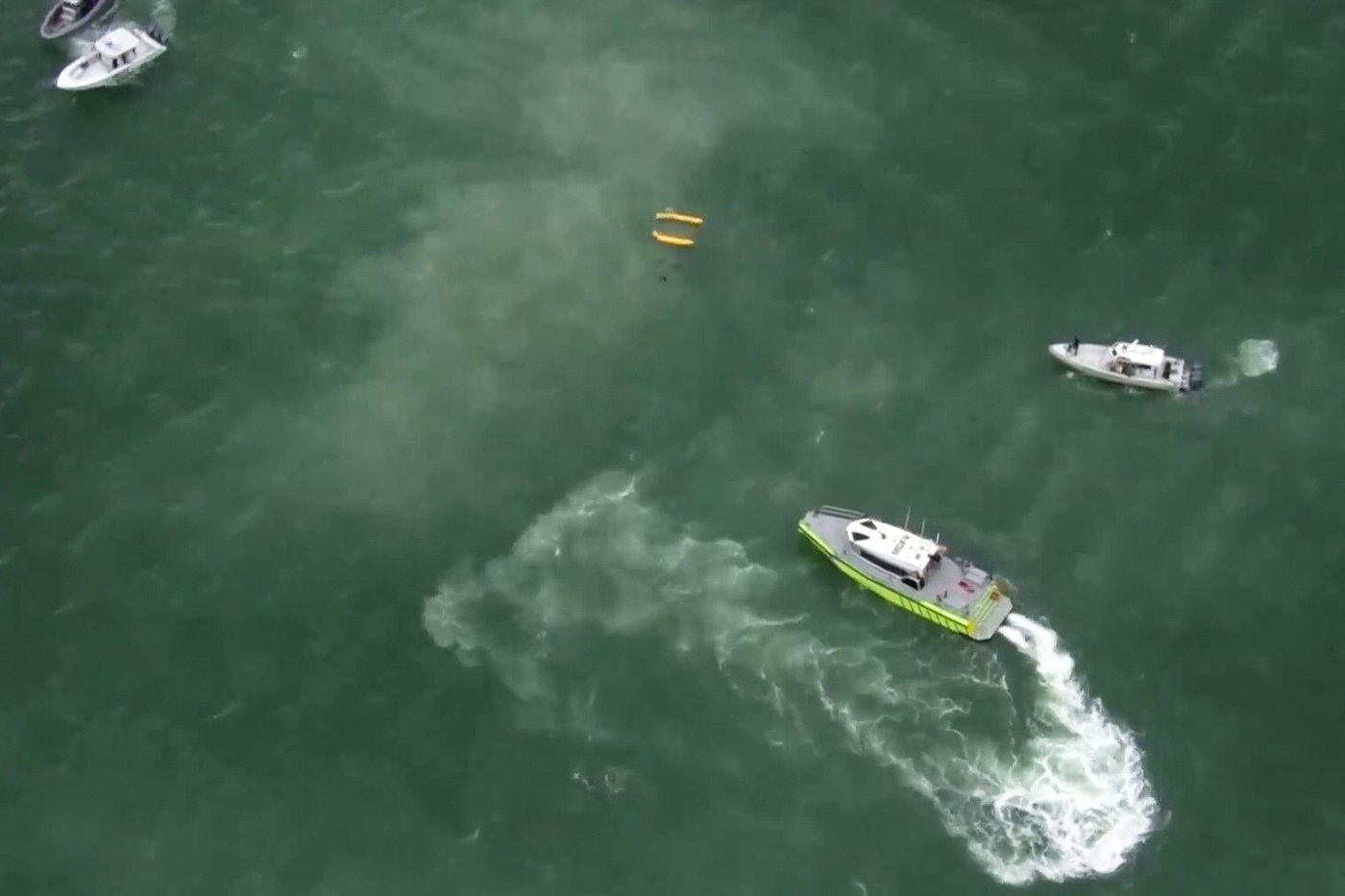
Television news video of the crash showed the helicopter upside down underwater with two yellow floats attached to the bottom of its landing skids. Those emergency floats are designed to help keep a helicopter afloat in a water landing.
Witnesses in nearby boats made distress calls, and a good Samaritan tried to help one of the victims, Sheriff Rosie Cordero-Stutz said. Rescue workers from several local agencies, as well as the U.S. Coast Guard and U.S. Customs and Border Protection, responded to the crash.
News from © The Associated Press, . All rights reserved.
This material may not be published, broadcast, rewritten or redistributed.

This site is protected by reCAPTCHA and the Google Privacy Policy and Terms of Service apply.
Want to share your thoughts, add context, or connect with others in your community?
You must be logged in to post a comment.