Elevate your local knowledge
Sign up for the iNFOnews newsletter today!

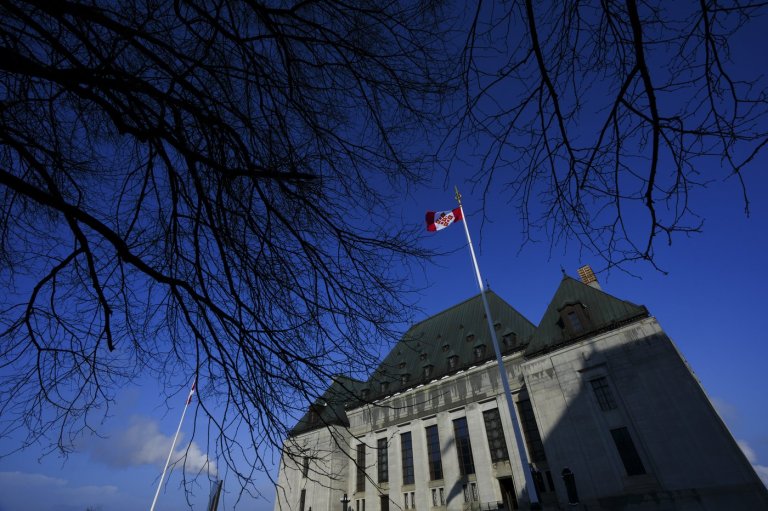
MONTREAL — In a landmark 520-page decision, the Supreme Court upheld most of Quebec’s secularism law known as Bill 21.
The law prohibits public officials in positions of authority from wearing religious symbols. The law invokes a section of the Constitution that allows legislatures to override Charter rights and shield the legislation from legal challenges.
The Supreme Court’s historic decision provides more clarity on how governments can use the so-called notwithstanding clause of the Constitution.
Here are five things to know about the historic decision.
1. Provinces can use the override clause pre-emptively to shield legislation from legal challenges.
The notwithstanding clause of the Constitution allows legislators to override certain Charter rights for up to five years.
The country’s top court confirmed that governments can invoke the clause pre-emptively, before a court has determined whether a law violates the Canadian Charter of Rights and Freedoms. The top court also said legislatures can use the notwithstanding clause to override multiple rights at once.
Alberta Premier Danielle Smith and Bloc Québécois leader Yves-François Blanchet have celebrated the Supreme Court’s decision.
The ruling may also set a precedent for a similar case out of Saskatchewan in which the province invoked the override clause in legislation restricting the rights of transgender people.
2. The ruling may quell some tensions between Quebec City and Ottawa.
Quebec Conservative Leader Éric Duhaime has said that had the Supreme Court struck down Bill 21, it would have fuelled Quebec’s separatist movement.
Premier Paul St-Pierre Plamondon had denounced the federal government’s involvement in the legal proceedings as it acted as an intervener.

Following Friday’s ruling, St-Pierre Plamondon said it was a win for secularism in Quebec and for the autonomy of provinces. However, he took issue with a portion of the ruling allowing court justices to give their opinion on laws they can’t strike down due to the use of the override clause.
3. The Supreme Court deemed one section of Bill 21 to be unconstitutional.
Bill 21 covers a range of public officials in positions of authority, including members of the province’s national assembly, prohibiting them from wearing religious symbols or face coverings. The seven Supreme Court justices overseeing the case unanimously declared the ban targeting elected officials was violating democratic rights. As a result, this section of the law is overturned.
4. The ruling showed dissent between justices.
While the seven Supreme Court justices agreed that Quebec was within its rights to invoke the override clause pre-emptively, they disagreed on aspects of Bill 21’s constitutionality.
Three justices — Michelle O’Bonsawin, Andromache Karakatsanis and Sheilah L. Martin — said the court had the power to strike down Bill 21, despite the use of the notwithstanding clause. They argued the law violates gender equality, which falls under a section of the Charter that governments are not allowed to override.
The three justices also wrote that the law disproportionately targeted Muslim women, keeping them out of the public workforce.
In addition, the seven justices also disagreed on whether to make a declaratory statement about whether Bill 21 violates Charter rights.
5. Civil liberties groups have condemned the Supreme Court’s decision.
Groups representing Canadian Muslims, workers, English-speaking Quebecers, English language school boards, South Asian communities and anti-hate groups have all come out against the Supreme Court’s decision.
They say it is worrying that Canada’s top court upheld a law that discriminates against religious and racialized minorities.
This report by The Canadian Press was first published Nov. 27, 2026.
News from © The Canadian Press, . All rights reserved.
This material may not be published, broadcast, rewritten or redistributed.

This site is protected by reCAPTCHA and the Google Privacy Policy and Terms of Service apply.
Want to share your thoughts, add context, or connect with others in your community?
You must be logged in to post a comment.