
B.C. lakeside community in ruins as chief says 230 homes destroyed by wildfire

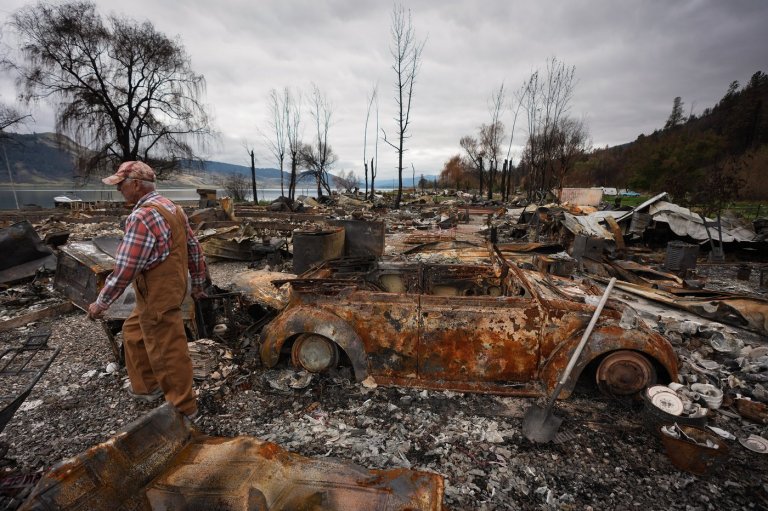
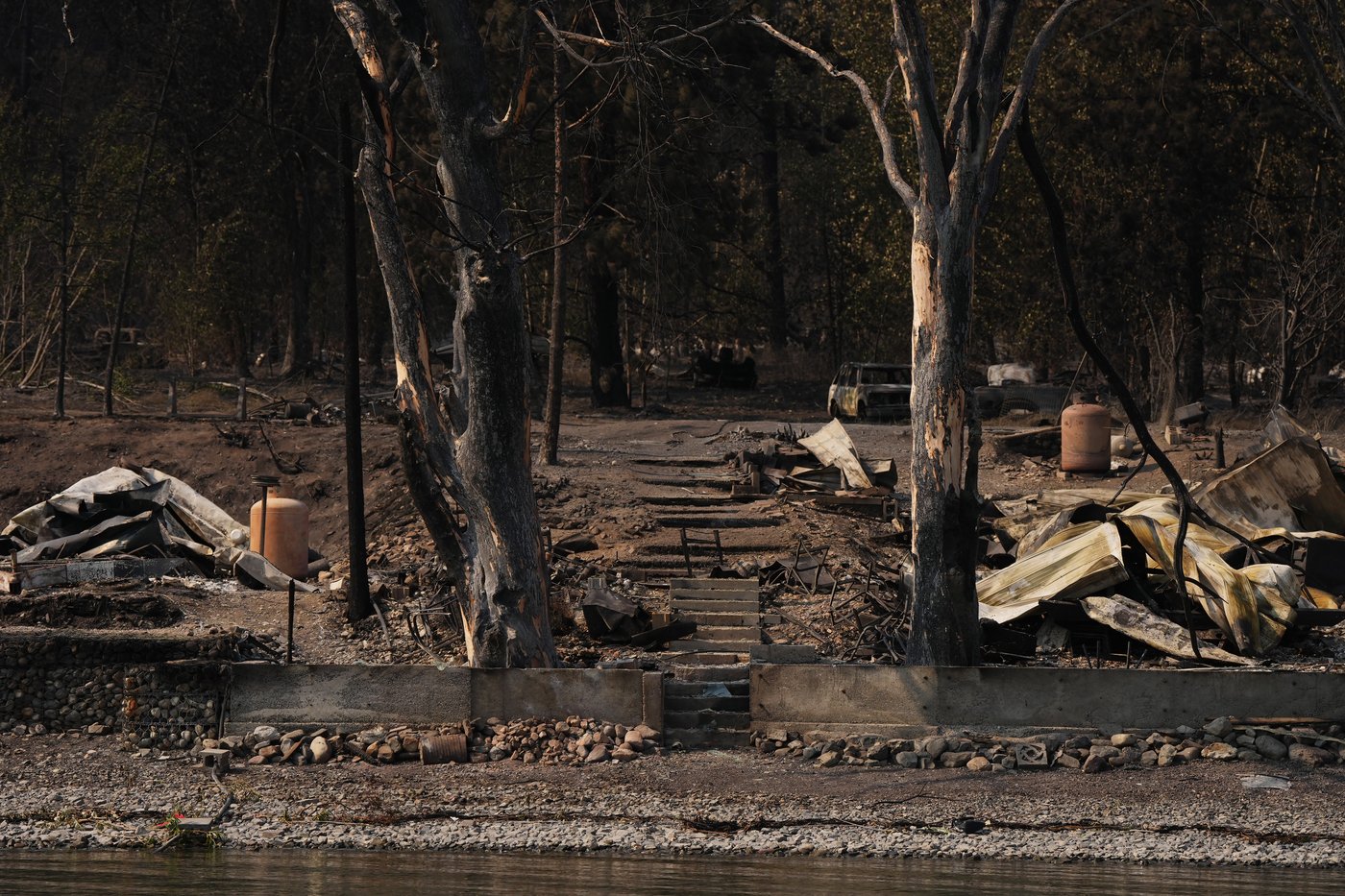
VERNON — The devastation stretches for more than a kilometre along the northwest shore of British Columbia’s Okanagan Lake, house after house reduced to scorched and twisted metal and grey dust.
The apocalyptic scenes — burned-out cars, still-smouldering ground and homes levelled to their foundations — stand in contrast to the postcard views previously enjoyed by this once-pretty waterfront community on the Okanagan Indian Band’s reserve.
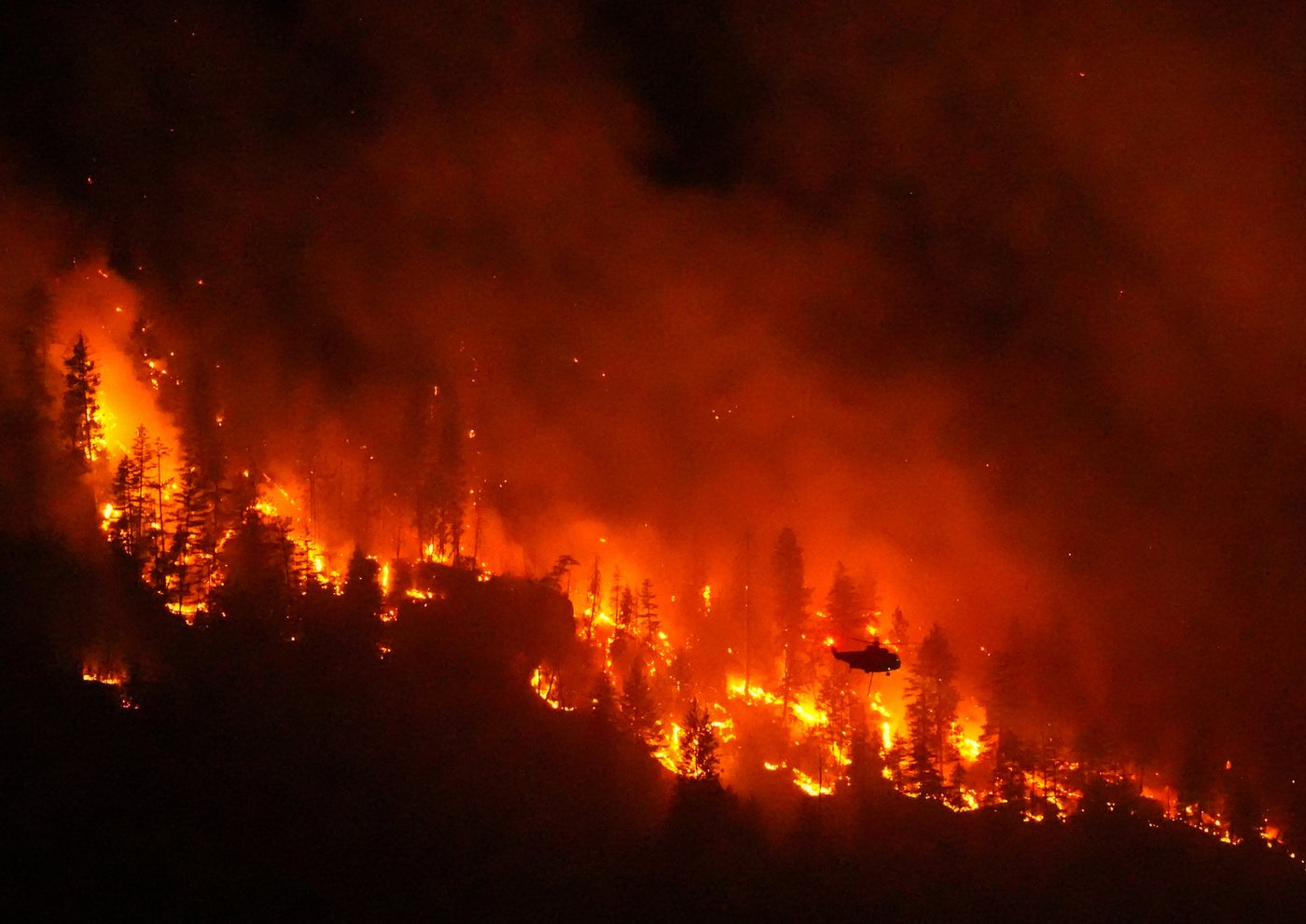
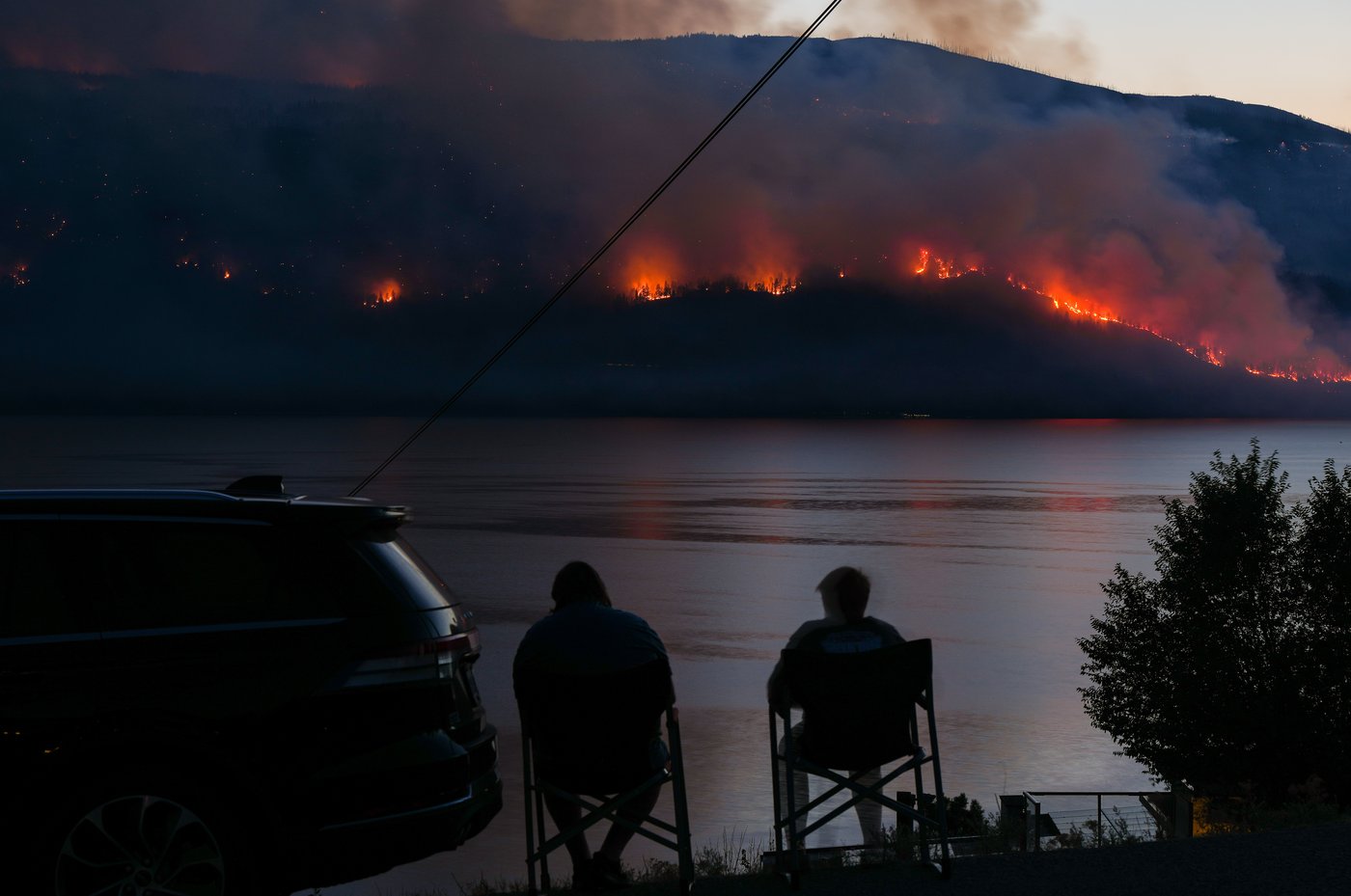
But the aftermath of the Bradley Creek wildfire, that was fanned by howling winds as it tore through the area on Saturday, extends far beyond the shoreline, and smoke still billows from behind the community, on a steep, forest-covered ridge.
The depths of the destruction go deep into the reserve, where Chief Dan Wilson said on Tuesday that about 230 homes had been destroyed in one of the worst wildfire losses in recent Canadian history.
Wilson said 30 homes of band members and 200 non-band homes had burned.
Wilson said during a news conference on Tuesday that the reserve “looked like a war zone” when he took a helicopter tour above the area, at the northern end of Okanagan Lake in the B.C. Interior.
“It was hard to recognize my community from the air with all the structures and the forest gone.”
The wildfire has been one of the most devastating events in the band’s history, he said.
Wilson described the event as “surreal,” saying the scope of destruction was just sinking in.
The fire started late Friday and was fanned by winds gusting up to 115 kilometres per hour.
“The point that I really want to make to everyone is that the fire spread so fast that some of our members only had five minutes to evacuate,” Wilson said.
Wilson said his flyover showed just how close the nation came to losing key infrastructure, like the powwow arbour, a daycare centre and the new school, all of which were saved by aircraft saturating the area with water.
“But that was crossing my mind because we’re so proud of our Cultural Immersion School. We just opened it up and it’s not only our band members that go to that school. It’s the local residents at Killiney and West Shores and the surrounding areas.”
Reserve resident Louis Fred and his wife Shorty said they barely made it out on Saturday, with the wind-driven flames on their heels.
“I’ve been living here all my life, and I’ve really never seen anything like this one here, this weekend here,” Louis Fred said. “Even 2021 was bad. It was huge. But the wind wasn’t nothing like (that) compared to this one.”
A 2024 wildfire in Jasper, Alta., razed about 350 homes, while the 2023 McDougall Creek wildfire destroyed about 200 homes, also around Okanagan Lake.
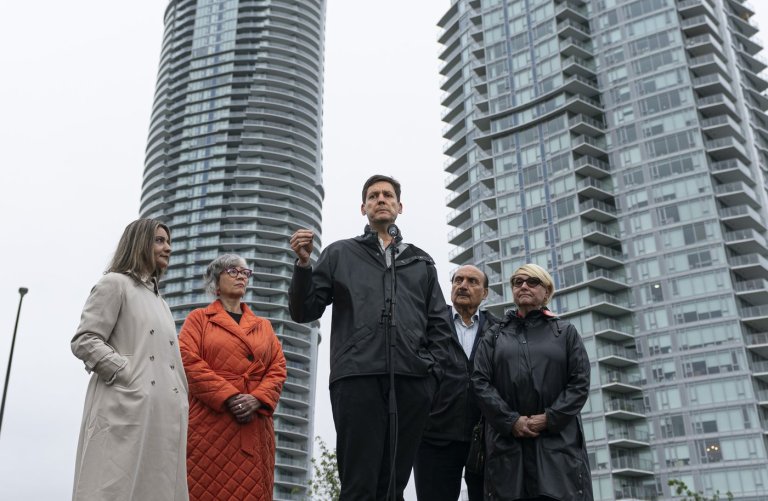
The Freds are among about 8,000 people who have been forced from their homes across B.C., according to Emergency Management Minister Kelly Greene.
She told a separate briefing on Tuesday that there are 37 evacuation orders across the province, although she added that orders and alerts were changing hourly.
The orders triggered by the Bradley Creek fire expanded on Tuesday, as the Regional District of North Okanagan added more than 40 properties as the fire blocked some road escape routes.
The EmergencyBC system said on social media that residents affected by the expanded order will be escorted out in a convoy.
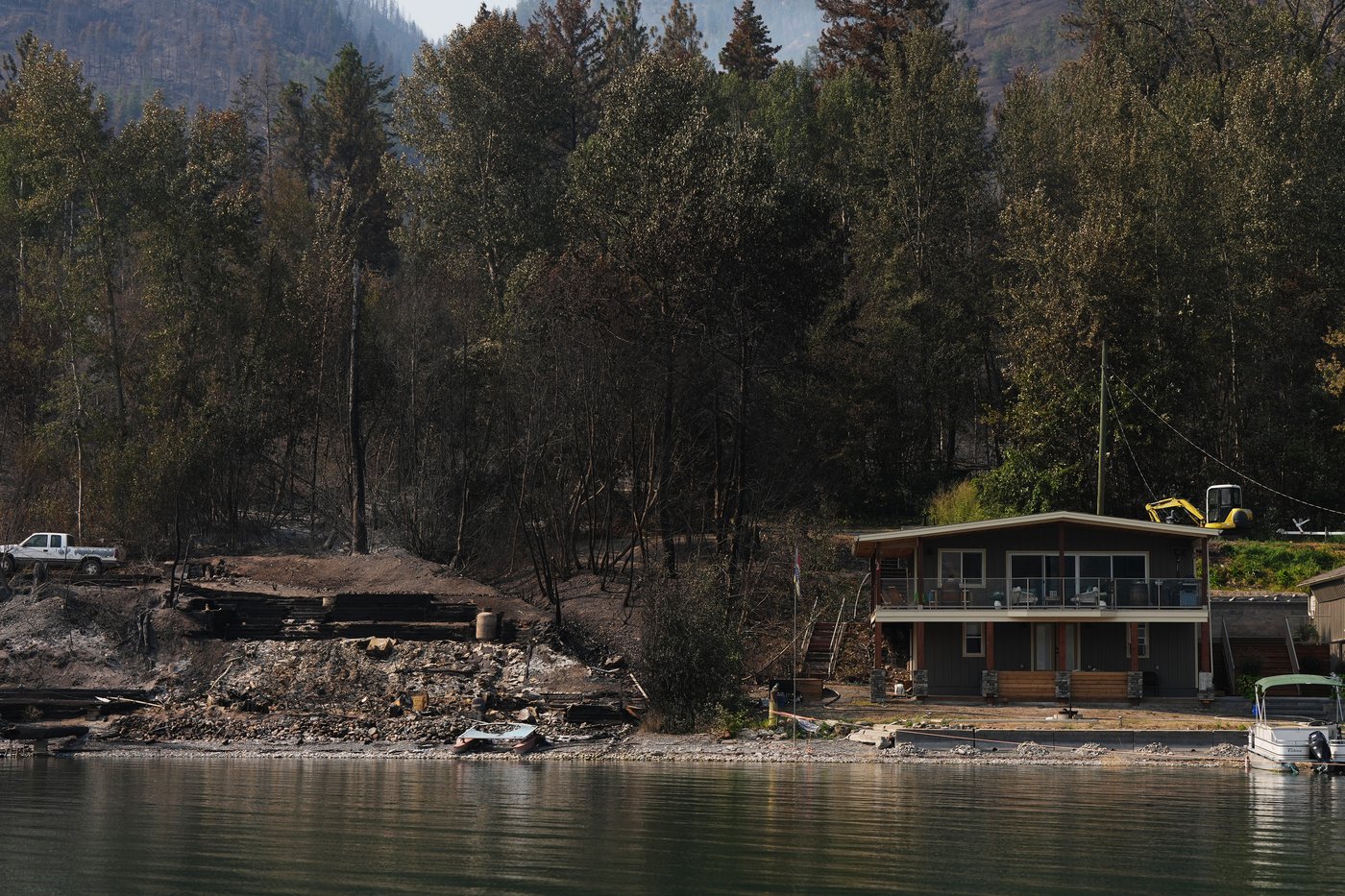
A tour of the edge of Okanagan Lake, conducted by boat on Tuesday afternoon, gave a glimpse of the Bradley Creek fire’s wrath.
Clusters of homes in the destruction zone along Westside Road around the Newport Beach Marina survived. But videos shared on social media that showed a roaring wind-driven firestorm make it difficult to understand how.
On some properties the destruction is so complete that it is hard to tell where the houses once stood, with brickwork and concrete stairs sometimes offering clues.
In addition to Bradley Creek, major fires are burning in the Fraser Canyon, Thompson-Nicola and East Kootenay regions near communities, including Boston Bar, Clinton and Kimberley.
The BC Wildfire Service said Tuesday that fire activity is expected to increase this week “as hot and dry conditions return for the majority” of B.C., although winds are forecasted to remain light.
It said there were about 120 active wildfires across the province, with roughly 50 of them burning out-of-control.
When asked why the government hasn’t yet declared a state of emergency, Greene said it was unnecessary, as every jurisdiction that was fighting a wildfire already had a local state of emergency, enabling firefighters to take the action needed to protect communities and lives.
The designation would allow the government to restrict travel in the province or ration supplies, such as fuel or accommodations, but Greene said those options weren’t immediately needed.
Jeff Dunn, the fire centre manager in the Kamloops region, said winds fanned the Bradley Creek fire to reach 26 square kilometres very quickly, but it had not grown much since the cold front moved through.
He said they were quickly trying to get control lines around the fire in order try to hold it when the weather shifts again over the next few days.
“Kind of bringing in additional resources to make sure that we have everything locked in place and are able to control any additional spread.”
When the fire bore down on the Freds home on the Okanagan Indian Band reserve on Saturday, the couple and friends and family members initially tried to fight the flames.
Louis Fred tried to carve a break with his tractor by knocking the grass down before the fire spread too far, but he had to give up and get out, and the “doggone flames are right on my butt.”
“They’re licking his heels basically,” Shorty Fred said.
“And then he got lost in that dust, the smoke, the fire, and I was worried for him and our son.”
The winds came with such extreme ferocity that embers were singeing hair on their son, who Louis Fred said “had to drag our cousin George outta there: ‘go, gotta go, gotta go!'”
Shorty Fred said the winds were intense, whipping up dust and smoke, with “grasshoppers coming at me and all kinds of things coming at you with the wind.”
Louis Fred said they were driving slowly down the road as they fled, running over downed power lines and going around poles lying across the road, while others were burned and dangling from the lines.
Their home off Westside and Skookum Mine Road in Vernon is now lost, and they were fortunate to have a friend offer up a place to stay while they were out of province.
They said they lost years of pictures and beadwork and other heirlooms going back generations, and insurance on band lands wasn’t an option.
“We’re in a grey area. We’re on reserve and people won’t touch us with a 10-foot pole with insurance,” Shorty Fred said.
Greene said work to assess the scale of the “tragic losses” would take place over the weeks to come.
Wilson said the fire divided the reserve when it crossed the road, and their emergency operations centre lost power and internet, while the road to the north was shut briefly and cell service was spotty.
“So, our (emergency operations centre) was trapped right in the middle of our community,” he said.
They set up a generator and began using satellite service, while residents had to escape to both north and the south.
“We were basically operating kind of in the dark there for a brief moment in time. There was so much chaos.”
This report by The Canadian Press was first published Aug. 4, 2026.
News from © The Canadian Press, . All rights reserved.
This material may not be published, broadcast, rewritten or redistributed.

Join the Conversation!
Want to share your thoughts, add context, or connect with others in your community?
You must be logged in to post a comment.