Elevate your local knowledge
Sign up for the iNFOnews newsletter today!
Sign up for the iNFOnews newsletter today!
Selecting your primary region ensures you get the stories that matter to you first.
WASHINGTON – Move over sweet and salty: Researchers say we have a distinct and basic taste for fat, too.
But it's nowhere near as delicious as it sounds.
They propose expanding our taste palate to include fat along with sweet, salty, bitter, sour and relative newcomer umami.
A research team at Purdue University tested look-alike mixtures with different tastes. More than half of the 28 special tasters could distinguish fatty acids from the other tastes, according to a study published in the journal Chemical Senses.
Past research showed fat had a distinct feel in the mouth, but scientists removed texture and smell clues and people could still tell the difference.
"The fatty acid part of taste is very unpleasant," said study author Richard Mattes, a Purdue nutrition science professor. "I haven't met anybody who likes it alone. You usually get a gag reflex."
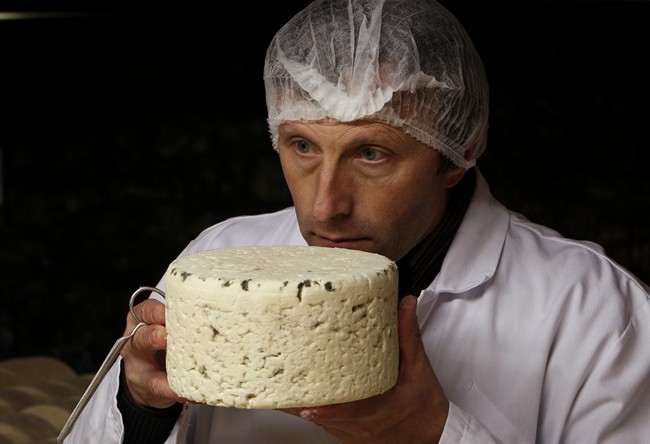
Stinky cheese has high levels of the fat taste and so does food that goes rancid, Mattes said. Yet we like it because it mixes well and brings out the best of other flavours, just like the bitter in coffee or chocolate, he added.
To qualify as a basic taste, a flavour has to have unique chemical signature, have specific receptors in our bodies for the taste, and people have to distinguish it from other tastes. Scientists had found the chemical signature and two specific receptors for fat, but showing that people could distinguish it was the sticky point.
Initially Mattes found that people couldn't quite tell fat tastes when given a broad array of flavours. But when just given yucky tastes — bitter, umami, sour — they could find the fat.
The team started out with 54 people, but concentrated on the results from 28 who were better tasters in general.
Mattes and colleagues proposed calling the taste "oleogustus" (Oh-leo-GUS'-tus) after Latin for fat taste. There is no single scientific authority that names senses.
Robin Dando, a Cornell University food scientist who wasn't part of the research, praised the study as "a pretty strong piece of evidence" for a basic fat taste, but didn't like the suggested name — preferring to just call it fat.
News from © iNFOnews.ca, . All rights reserved.
This material may not be published, broadcast, rewritten or redistributed.

This site is protected by reCAPTCHA and the Google Privacy Policy and Terms of Service apply.
Want to share your thoughts, add context, or connect with others in your community?
You must be logged in to post a comment.