Elevate your local knowledge
Sign up for the iNFOnews newsletter today!
Sign up for the iNFOnews newsletter today!
Selecting your primary region ensures you get the stories that matter to you first.
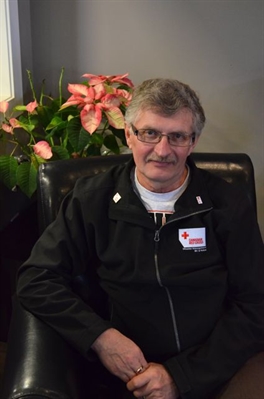
By Charlotte Helston
Imagine you're holed up in a hotel room because your house just burned to the ground. It's been three days, and emergency support services are cutting you off. You're lying in bed wondering what you're going to do and where you're going to go. Someone knocks on the door, and when you open it, you see a Canadian Red Cross volunteer.
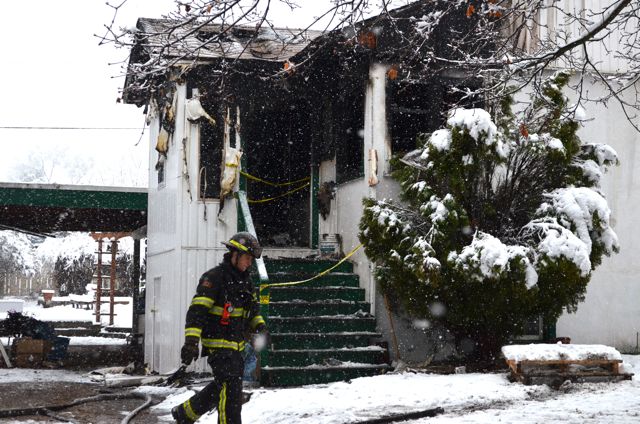
Last week, this very scenario unfolded with a group of Vernon residents forced from their East Hill home by a fire. The blaze was started by candles left unattended in a bathroom, and the flames resulted in the evacuation of two couples—one living upstairs, the other downstairs—and a woman living in an RV parked on the property. Two dogs and four cats also fled the flames. A fifth cat was consumed by the fire.
The victims were handed a Red Cross card, but still steeped in the stress and confusion of the disaster, they'd forgotten to call. Volunteer of 13 years Cor Zandbergen says that's a common reaction.
"Our experience has been that people who are suddenly and violently removed from homes are in a state of survival, and the only focus is on immediate needs: where can I stay, where can I get meals, where can I get my health looked after," Zandbergen says. "Their mind filters out all the other stuff thrown at them, so we work hard to do outreach rather than wait for them to come to us."
The provincial government's emergency social services provide assistance for 72 hours—after that, you're on you're own. Red Cross comes in to stretch that assistance out longer.
"We offer the same basic needs—food, shelter, health—and then we work with them on a recovery plan," Zandbergen says. "It can be as simple as getting a notebook and jotting down their requirements, what they need to do today, what can wait until tomorrow. The threat of survival is removed so they can focus on other things."
Assisting individuals with occupational needs is a big part of getting them back on track. "They may have lost the tools of their trade, or their textbooks if they're students," Zandbergen says. "We network with local businesses and agencies to get them what they need."
The Salvation Army offers up many items, but other Vernon groups step forward as well. "Vernon's a very supportive community," Zandbergen, whose range is the Okanagan, Kootenays, Columbia Shuswap and Similkameen, says.
While Red Cross' services are always uniquely tailored to the needs of the victims, there are some aspects of disaster that are universal—loss, panic, overwhelming stress.
"It doesn't matter who they are or where they are in society, disaster impacts eveyrone in many of the same ways," Zandbergen says.
The Canadian Red Cross is always seeking donations to fortify and expand its services. Zandbergen also encourages people to volunteer their skills and encourages them to contact Red Cross to see what's available.
"You always hear about overhead, how much goes to staffing and how much actually goes to the cause," Zandbergen says. "But if people want to know, they can ask us, or go online, and find out. It's all public information, and we're very proud of it."
To contact the reporter for this story, email Charlotte Helston at chelston@infotelnews.ca or call (250)309-5230.
News from © iNFOnews.ca, . All rights reserved.
This material may not be published, broadcast, rewritten or redistributed.

This site is protected by reCAPTCHA and the Google Privacy Policy and Terms of Service apply.
Want to share your thoughts, add context, or connect with others in your community?
You must be logged in to post a comment.