Elevate your local knowledge
Sign up for the iNFOnews newsletter today!
Sign up for the iNFOnews newsletter today!
Selecting your primary region ensures you get the stories that matter to you first.
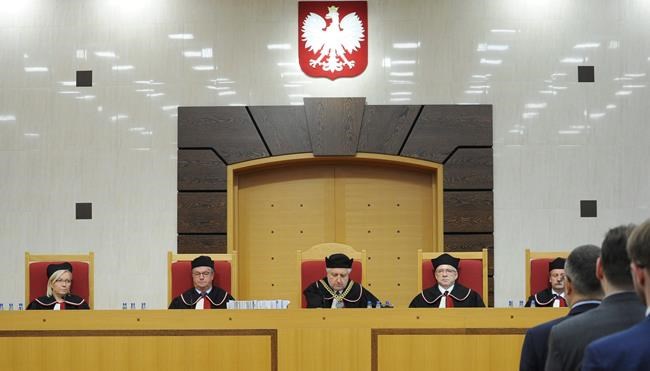
WARSAW, Poland – A top legislative court at the heart of Poland’s political turmoil and Europe’s concern about the nation’s rule of law ceremoniously marked its 30-year anniversary on Monday.
Poland’s beleaguered constitutional Tribunal also received support from some European Union leaders during the observances in the northern city of Gdansk, the birthplace of the pro-democracy Solidarity freedom movement in 1980.
Solidarity laid the groundwork for the constitutional court’s creation, but the tribunal was established under communist-imposed martial law and was initially unable to act with complete independence. Its first verdict came in 1986.
Defying the government on Monday, Gdansk Mayor Pawel Adamowicz invited the tribunal’s judges to observe the anniversary after Poland’s parliament cut the court’s budget.
The agenda included a conference on the role of the tribunal, which is charged with examining legislation for its constitutionality and can block provisions it finds illegal.
“Every public servant, and I am one of them, stands up in the defence of a democratic rule of law,” Adamowicz said.
“If a government is failing in its mission and is not functioning correctly, then its other part, the local government, assumes its functions,” he said.
The ruling conservative Law and Justice party has passed legislation giving the government more control over the court and preventing judges from blocking government-proposed legislation.
Alarmed, European Union leaders have expressed concern about Poland’s adherence to democratic principles.
A European human rights watchdog, the Venice Commission, has repeatedly criticized changes that the ruling party has made to the laws regulating the tribunal.
Thousands of Poles have marched in protests against the 1-year-old government’s actions.
The president of the European Court of Justice, Koen Lenaerts, and Venice Commission President Gianni Buquicchio were among the 300 people attending the Gdansk meeting at the 14th century Artus Hall.
Buquicchio said the tribunal has earned a reputation for independence and the government actions were an “attempt to make its work harder … as a guardian of democracy, rule of law and human rights,”
None of Poland’s ruling politicians accepted the invitation, Adamowicz said.
News from © The Associated Press, . All rights reserved.
This material may not be published, broadcast, rewritten or redistributed.

This site is protected by reCAPTCHA and the Google Privacy Policy and Terms of Service apply.
Want to share your thoughts, add context, or connect with others in your community?
You must be logged in to post a comment.