Elevate your local knowledge
Sign up for the iNFOnews newsletter today!
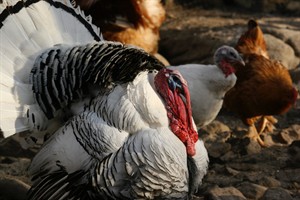
Many traditional livestock and poultry breeds are disappearing, victims of an emphasis on higher production.
Preservationists say today’s farmers are concentrating too much on developing larger eggs, more milk and leaner meat, and bringing them to market as quickly as possible.
The new emphasis “reduces the life expectancy and quality of life for the animal, and introduces a whole host of complications that must be combated with antibiotics, artificial insemination and questionable husbandry methods,” said Ryan Walker, a spokesman for The Livestock Conservancy in Pittsboro, North Carolina.
Safeguarding “heritage breeds” protects genetic qualities that are important to our food system, he said. Traits forever lost would include culinary quality, structural integrity, parasite resistance, the ability to forage or free range, and easier birthing, among others.
The Livestock Conservancy conducts a census of American livestock breeds every 10 years, and of all breeds on its Conservation Priority List each year. The most endangered breeds on its list include livestock with fewer than 200 animals registered per year in the United States.
“While this is the threshold for this category, some breeds, like the Choctaw hog, have only around 100 animals left in the entire world,” Walker said. “Many of our heritage breed farm animals are far more endangered than the giant panda, Siberian tiger and black rhino.”
Animals and birds on the conservation priority list include breeds of donkeys, cattle, goats, horses, pigs, rabbits, sheep, chickens, ducks, turkeys and geese.
They include the Morgan riding horse, a compact breed known for its versatility; Clydesdales — the familiar draft horses in Budweiser beer commercials; and Texas longhorn cattle, of Western movie fame. The Texas longhorn are being lost to crossbreeding with other cattle.
“Most of our draft horse breeds, including Clydesdales, have lost their jobs as a source of horsepower for farmers pulling implements and equipment around the farm,” Walker said.
Cathy and Jon Payne raise American Guinea Hogs, Gulf Coast Native sheep, American and Silver Fox rabbits and a poultry assortment on their Broad River Pastures farm near Elberton, Georgia. All are on the Livestock Conservancy endangered list.
Cathy Payne said some of those breeds “came over in the 1500s on Spanish ships. I have a lot more interest in breeds that have been here for a while and have adapted to the area. They bring a genetic diversity that’s resistant to disease.”
You don’t have to be a large landowner to help. Even city dwellers can get involved by buying heritage breed products at farmer’s markets, sharing information about heritage breeds, or working to get local laws enacted that allow these birds and animals to be raised in the community, Walker said.
“We have members in New York City who raise rooftop chickens, yet we have other members who live in rural suburbs who can’t legally keep a few hens to provide fresh eggs to feed their family,” he said.
___
Online:
The Livestock Conservancy: http://www.livestockconservancy.org/index.php/heritage
You can contact Dean Fosdick at deanfosdick@netscape.net
News from © The Associated Press, . All rights reserved.
This material may not be published, broadcast, rewritten or redistributed.

This site is protected by reCAPTCHA and the Google Privacy Policy and Terms of Service apply.
Want to share your thoughts, add context, or connect with others in your community?
You must be logged in to post a comment.