Elevate your local knowledge
Sign up for the iNFOnews newsletter today!
Sign up for the iNFOnews newsletter today!
Selecting your primary region ensures you get the stories that matter to you first.
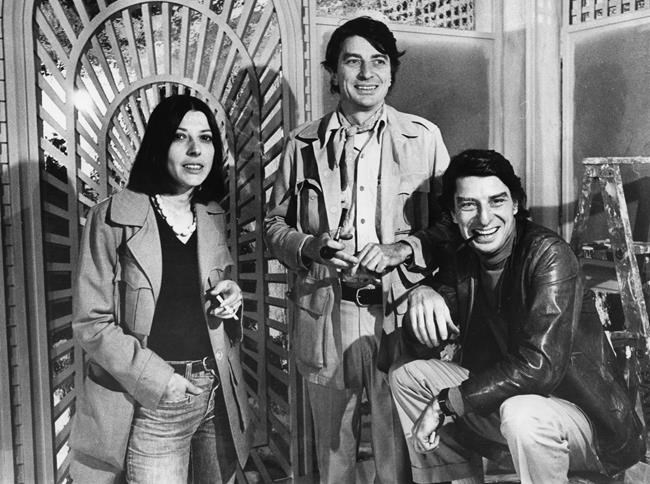
LOS ANGELES – Paul Sylbert, a prolific production designer who won an Oscar for his work on Warren Beatty’s “Heaven Can Wait,” died Saturday at age 88 outside of Philadelphia, producer Hawk Koch said Wednesday.
A Brooklyn native and Korean War veteran, Sylbert and his late twin brother Richard Sylbert became some of the most sought-after production designers in the business following arts school, working together on Elia Kazan’s “A Face in the Crowd” and “Baby Doll.” Richard Sylbert, who won Oscars for “Who’s Afraid of Virginia Woolf” and “Dick Tracy” in addition to working on “Chinatown” and “Shampoo” died in 2002 of cancer.
Paul Sylbert’s career would span over four decades, during which he worked on films like “One Flew Over the Cuckoo’s Nest,” ”Kramer vs Kramer,” ”Blow Out,” and “The Prince of Tides,” for which he scored another Oscar nomination.
He also designed for the New York City Opera Company, wrote and directed the 1971 film “The Steagle” and penned a book about his experiences in Hollywood called “Final Cut.” Recently, he was on the faculty of the Film & Media Arts Department of his alma mater Temple University in Philadelphia.
Koch, who worked with Sylbert on five films, said “Paul was one of a kind. He was as smart and well-read as anyone I have ever come in contact with, and he was respected by all that knew him. Aside from the work, he loved music, literature, opera, and friends.”
Sylbert is survived by his wife Jenny and his two children.
News from © The Associated Press, . All rights reserved.
This material may not be published, broadcast, rewritten or redistributed.

This site is protected by reCAPTCHA and the Google Privacy Policy and Terms of Service apply.
Want to share your thoughts, add context, or connect with others in your community?
You must be logged in to post a comment.