Elevate your local knowledge
Sign up for the iNFOnews newsletter today!
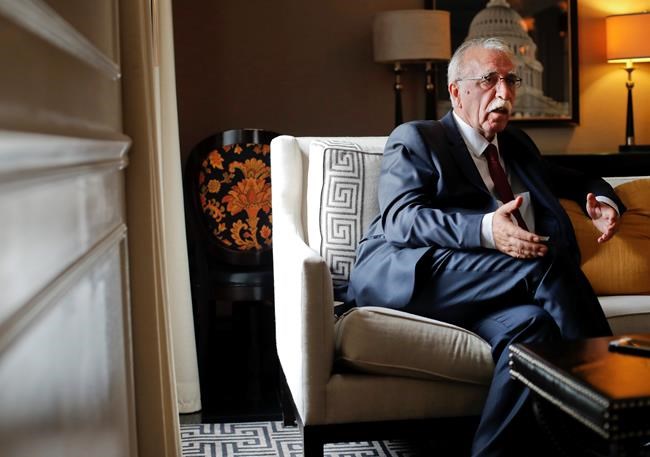
WASHINGTON – A senior Greek official on Tuesday urged the international community to do more to manage the flow of refugees to Europe — and criticized some European Union countries for refusing to welcome migrants.
In an interview with The Associated Press, Deputy Defence Minister Dimitris Vitsas, who heads a task force on migrants, urged the EU and the United Nations to help his country accommodate refugees coming from the Middle East.
More than 60,000 refugees and migrants are currently in Greece, stranded by measures designed by the EU to stop more from travelling to the continent. Only 4,500 people — less than 10 per cent of the total — have been placed so far in EU countries, where anti-immigrant sentiment is on the rise.
“The migration problem… is too big, it’s not only in Syria, it’s in Africa, it’s in Asia. It’s a problem that the United Nations must consider,” Vitsas said. “We need to move from words to actions.”
Vitsas urged Eastern European countries, such as Hungary, the Czech Republic and Poland, which have been reluctant to accept refugees, not to shut their doors on migrants.
He said many citizens of those countries themselves came to Greece as migrants after the fall of Communism in the late 1980’s and stressed that they should now follow Europe’s core principles of helping those in need.
“They are raising the idea of Europe as a fortress with smaller fortresses within the European Union. That’s not a union. Europe was created on the basis of common policies, but also common values,” he said. “We must face the refugee crisis together.”
Vitsas also criticized recent remarks by Turkish President Recep Tayyip Erdogan, who questioned a historic treaty that defined Turkey’s current-day borders with Greece.
Erdogan suggested last week that the 1923 Treaty of Lausanne, which Turkish nationalists negotiated with the Allies, cannot be considered a “victory” because Turkey had lost to Greece several islands near its coast that were part of the Ottoman Empire.
Vitsas said that treaty must be observed and accused Turkey of seeking to revisit its obligations.
“Turkey finds a way to push things, to negotiate things that … (do) not exist, like the situation in the islands … We call it oriental bazaar, oriental bargaining,” Vitsas said. “But in our days, this must be forgotten.”
News from © The Associated Press, . All rights reserved.
This material may not be published, broadcast, rewritten or redistributed.

This site is protected by reCAPTCHA and the Google Privacy Policy and Terms of Service apply.
Want to share your thoughts, add context, or connect with others in your community?
You must be logged in to post a comment.