Elevate your local knowledge
Sign up for the iNFOnews newsletter today!
Sign up for the iNFOnews newsletter today!
Selecting your primary region ensures you get the stories that matter to you first.
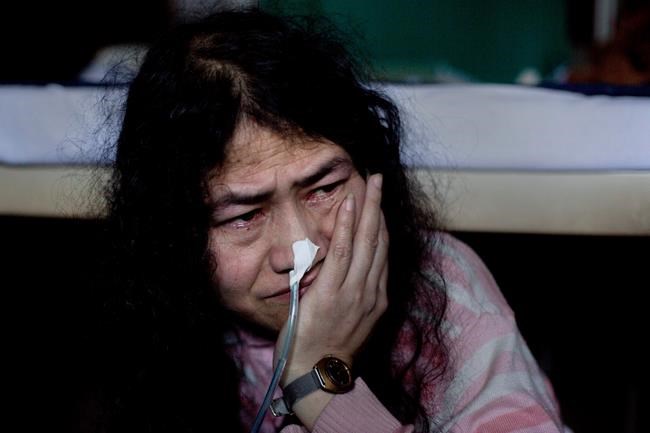
NEW DELHI – A 44-year-old activist who has been on a hunger strike for nearly 16 years to protest alleged brutality by India’s military said Tuesday that she will end her fast and run in state elections.
Irom Sharmila told a court in the northeastern state of Manipur that she’ll give up her fast on Aug. 9 and stand as an independent candidate in elections early next year.
Sharmila has not eaten any food voluntarily since Nov. 5, 2000, when she began her protest against an Indian law that suspends many human rights protections in areas of conflict. Three days earlier, 10 civilians were killed by paramilitary troops in Malom, a small town on the outskirts of Imphal, the Manipur state capital.
Three days after she started her hunger strike, she was arrested on charges of attempting suicide — a crime in India — and prison officials at a government hospital in Manipur have since force fed her through a tube in her nose.
“The only way to bring change is electoral process. I will stand as an independent candidate from Malom constituency,” Sharmila told reporters outside the court on Tuesday, according to a statement from Amnesty International.
She said the single issue on her agenda would be the removal of the law that allows the military to act with impunity.
The Armed Forces Special Powers Act is in effect in Indian-ruled Kashmir and northeastern areas wracked by separatist insurgencies. The law says troops have the right to shoot to kill suspected rebels without fear of possible prosecution and to arrest suspected militants without a warrant. It also gives police wide-ranging powers of search and seizure.
It prohibits soldiers from being prosecuted for alleged rights violations unless granted express permission from the federal government. Such prosecutions are rare.
Sharmila has spent most of her detention in the hospital, where doctors make sure her condition is stable. She also is required to report to a local court every 15 days.
Her long hunger strike has garnered her support from across the world, and Amnesty International has called her a prisoner of conscience.
News from © The Associated Press, . All rights reserved.
This material may not be published, broadcast, rewritten or redistributed.

This site is protected by reCAPTCHA and the Google Privacy Policy and Terms of Service apply.
Want to share your thoughts, add context, or connect with others in your community?
You must be logged in to post a comment.