Elevate your local knowledge
Sign up for the iNFOnews newsletter today!
Sign up for the iNFOnews newsletter today!
Selecting your primary region ensures you get the stories that matter to you first.
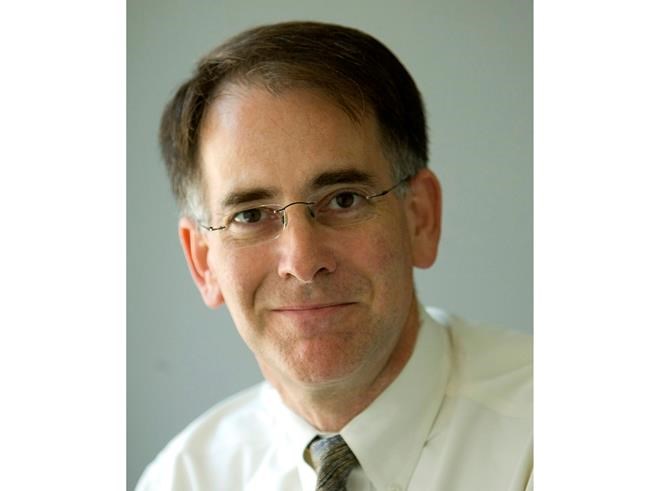
WASHINGTON – Steven Komarow, CQ Roll Call’s executive editor and a longtime Associated Press and USA Today journalist steeped in the ways of Washington and war, has died at 61.
Komarow died in a hospital Sunday after a long illness complicated by a recent accident, his employer said.
The famously unflappable Komarow spent nearly 20 years with the AP — 1978 to 1993 and 2006 to 2010 — and rose to become deputy chief of the AP’s Washington bureau before leaving for Bloomberg News to steer defence, justice and White House coverage. In 2015, he joined CQ Roll Call as vice-president and news director before his elevation a year later to executive editor and senior vice-president. Komarow also worked for a dozen years for USA Today, covering wars in Afghanistan and Iraq before returning to the AP as assistant and then deputy international editor.
For all of Komarow’s accomplishments in journalism, one of the most indelible episodes of his career came when he served as an impromptu hostage negotiator in December 1982. That tested his imperturbable nature.
Then an AP reporter, Komarow was assigned to “swing by” the Washington Monument, where “I learned that a wacko in a dark blue jumpsuit and full-face motorcycle helmet had driven a white-panel truck up the path to the monument doorway,” he recounted in now-defunct George magazine. “The truck was full of dynamite, the man claimed. There was no reason to doubt him.”
Norman D. Mayer, a nuclear disarmament activist, had monument visitors trapped inside and demanded to speak face to face with a reporter who was single with no kids. Komarow, who then fit the bill, volunteered and visited him five times during the hourslong standoff, “trying to get him to relax and chat” and to turn the monument lights on at twilight. Mayer let the hostages go.
Mayer eventually tried to flee in his truck. Police snipers killed him. No explosives were found.
“Mayer seems less like a terrorist than a Don Quixote,” Komarow wrote in the 2007 piece. “Even in bluff, he avoided harm to anyone but himself.”
Retired AP journalist Mike Feinsilber said the only time he saw Komarow rattled was when he returned to the bureau after the episode and was asked to write a first-person account. “Steve sat down to write, but his hand shook so much he ended up dictating the story to me,” Feinsilber said.
AP Executive Editor Sally Buzbee, who was Middle East regional editor for the news service during four years of the Iraq War, said Komarow was “one of the smartest and nicest people I ever worked with at AP. He talked me through many a crisis when I was in Cairo, and I deeply appreciated his calm wisdom and his generosity. He will be missed by many, many people.”
“Almost everyone mentions his calmness,” said John Daniszewski, AP vice-president and editor at large for standards. “He was calm, but with a gentle, ironic sense of humour and sharp intellect. So many AP journalists today think of him as their mentor.”
“Generous, good-natured, talented and — with that one exception — calm,” Feinsilber added. “Born to journalism.”
Paul McHale, CQ Roll Call’s president, said that from the outset of Komarow’s work at the organization in 2015, “his intellect and encyclopedic knowledge of Washington was an enormous asset to our coverage and the development of new products. But that intellect never got in the way of what I will remember most about Steve, his humanity.”
Komarow is survived by his wife, Stephanie, and daughters Cayla and Sasha.
News from © iNFOnews.ca, . All rights reserved.
This material may not be published, broadcast, rewritten or redistributed.

This site is protected by reCAPTCHA and the Google Privacy Policy and Terms of Service apply.
Want to share your thoughts, add context, or connect with others in your community?
You must be logged in to post a comment.