Elevate your local knowledge
Sign up for the iNFOnews newsletter today!
Sign up for the iNFOnews newsletter today!
Selecting your primary region ensures you get the stories that matter to you first.
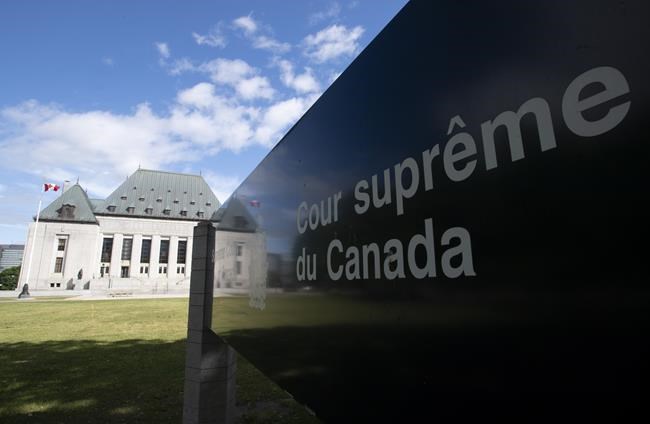
OTTAWA – Only people, not corporations, benefit from the charter protection against cruel or unusual punishment, the Supreme Court of Canada has ruled.
The unanimous decision came Thursday in a case involving a numbered company that faced a fine under the Quebec Building Act for construction work done as a contractor without a licence.
The corporation was fined $30,843, the minimum penalty for corporations, upon being found guilty.
The corporation challenged the constitutionality of the fine, arguing it violated the guarantee of protection against “any cruel and unusual treatment or punishment” in Section 12 of the Charter of Rights and Freedoms.
The province’s Superior Court ruled that corporations are not protected under the constitutional provision.
However, in a split decision the Quebec Court of Appeal overturned the finding and said the section can in fact apply, sending the matter back to trial court to rule on the issue of the fine.
That prompted Quebec’s attorney general and director of prosecutions to appeal to the Supreme Court.
Though its ruling Thursday was unanimous, the nine-member court provided three sets of reasons for setting aside the Quebec Court of Appeal ruling.
In writing for a majority of the court, justices Russell Brown and Malcolm Rowe said the protective scope of Section 12 is limited to human beings.
The top court’s jurisprudence on the section has been marked by the concept of human dignity, and the fact that human beings are “behind the corporate veil” is not enough to ground the corporation’s claim of protection, they wrote.
The dissenting judge from the Quebec Court of Appeal rightly emphasized that the ordinary meaning of the word “cruel” does not allow its application to inanimate objects or legal entities such as corporations, they added.
Brown and Rowe also pointed out that the Supreme Court had previously concluded that a corporation could not avail itself of protection under Section 7 of the charter, concerning “life, liberty or security of the person.”
Excessive fines alone are not unconstitutional, a majority of the court concluded.
The judges said that a fine, to be unconstitutional, must be so excessive as to outrage standards of decency and abhorrent or intolerable to society.
This threshold, in accordance with the purpose of the protection against cruel punishment, is anchored in human dignity, the ruling said.
“It is a constitutional standard that cannot apply to treatments or punishments imposed on corporations.”
This report by The Canadian Press was first published Nov. 5, 2020.
News from © iNFOnews.ca, . All rights reserved.
This material may not be published, broadcast, rewritten or redistributed.

This site is protected by reCAPTCHA and the Google Privacy Policy and Terms of Service apply.
Want to share your thoughts, add context, or connect with others in your community?
You must be logged in to post a comment.