Elevate your local knowledge
Sign up for the iNFOnews newsletter today!
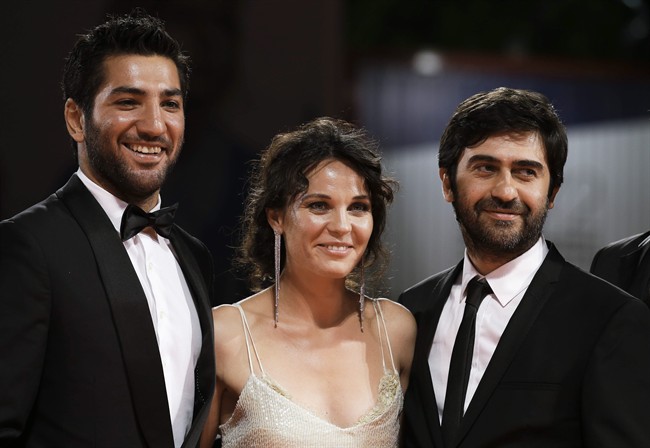
VENICE, Italy – Five words sum up this year’s Venice Film Festival: “Based on a true story.”
Inside, movie screens exploded with the forces roiling our world: war, terrorism and the vast migration bringing hundreds of thousands of people to the shores of Europe.
Outside, hundreds of demonstrators — many of them barefoot — marched Friday to the festival’s Palace of Cinema to show support for those fleeing war and poverty in the Middle East and Africa.
Throughout the 11-day festival, as beachgoers lounged on the sands of Venice’s lush Lido island, filmmakers and actors expressed dismay at the migrants’ plight and their mixed reception in Europe.
Displaced people were onscreen in “A Bigger Splash,” where refugees plucked from the Mediterranean were background players to the story of a rock star (Tilda Swinton) and her emotional entanglements.
Luca Guadagnino’s film drew boos at its press screenings from some who found the juxtaposition crass. But Swinton said the Italian director was simply showing reality.
“The idea that it’s possible to not be aware of this reality — which, by the way, has been a reality for decades — is becoming less and less tenable,” Swinton said.
“The more people’s tendency to want to edit this out and not be aware gets squeezed, squeezed, squeezed, that’s got to be a good thing,” she added. “Everybody has got to grow up about this and take proper, human responsibility.”
Reality was hard to avoid at the festival, which ends Saturday with the presentation of the Golden Lion prize. Many of the movies told stories that seemed to come straight from the news.
There were African child soldiers drafted into a brutal civil war in Cary Fukunaga’s “Beasts of No Nation,” Afghan civilians caught between the Taliban and Danish troops in Tobias Lindholm’s “A War” and Turkish brothers trapped in escalating political violence in Emin Alper’s “Frenzy.”
Several films depicted real-life criminals and the social forces that made them: The assassin of Israeli Prime Minister Yitzhak Rabin, incited by extremist rabbis in Amos Gitai’s “Rabin: The Last Day”; Johnny Depp’s Boston gangster in league with corrupt cops in Scott Cooper’s “Black Mass”; kidnappers protected by a military dictatorship in Pablo Trapero’s Argentine thriller “El Clan.”
Festival director Alberto Barbera said the lineup reflected a feeling among filmmakers that “we seem to have lost control of our world.”
“They feel that they need to face reality, to reflect on reality,” he said.
Many didn’t like what they saw.
“The political atmosphere in the Middle East is horrible,” said “Frenzy” director Alper, whose film premiered amid rising violence between Turkish troops and Kurdish militants.
“It’s getting more and more horrible these days. Of course Turkey is (affected) because it has a border with Syria,” he said. “Now you can see in every city there are refugees coming from Syria and they’re begging on the streets and some of them are trying to go to Europe and you see these horrible, terrible pictures.”
Those pictures — a drowned boy on a beach, a distraught father with his baby in his arms — have moved and troubled people around the world.
Canadian director Atom Egoyan attended the festival with “Remember,” a thriller about the Holocaust. He said images of migrants getting a hostile reception in a European nation like Hungary were chilling.
“Did you think that you would find in Europe that people would still be pushed into a train and taken to a place where there would be police waiting for them?” Egoyan said. “That just seems horrifying and shockingly insensitive. How can that happen again?”
___
Follow Jill Lawless on Twitter at http://Twitter.com/JillLawless
News from © The Associated Press, . All rights reserved.
This material may not be published, broadcast, rewritten or redistributed.

This site is protected by reCAPTCHA and the Google Privacy Policy and Terms of Service apply.
Want to share your thoughts, add context, or connect with others in your community?
You must be logged in to post a comment.