Elevate your local knowledge
Sign up for the iNFOnews newsletter today!
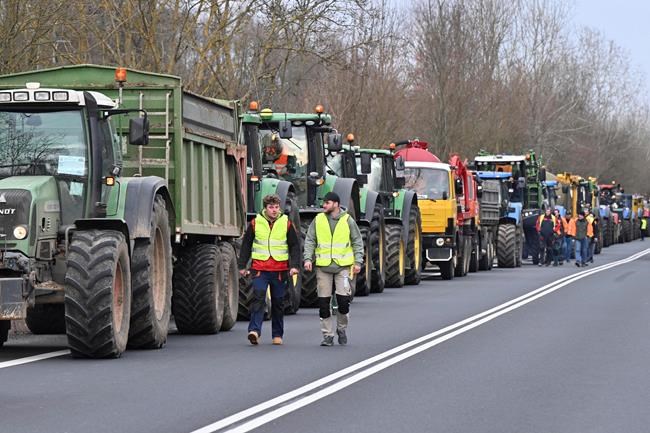
PRAGUE (AP) — Czech farmers were driving their tractors and other vehicles to several border crossings on Thursday to meet their colleagues from neighboring countries and join forces in their protests against European Union agriculture policies, bureaucracy and overall conditions for their business.
Farmers complain that the 27-nation EU’s environmental policies, such as the Green Deal, which calls for limits on the use of chemicals and on greenhouse gas emissions, limit their business and make their products more expensive than non-EU imports.
The farmers also complain about low prices for their products and say grain and other agriculture products coming from Ukraine and Latin America negatively affect the market.
The farmers met their colleagues from neighboring Germany, Poland and Slovakia at a number of border crossings. Farmers from 10 EU countries, ranging from Central Europe to the Baltics and the Balkans, were participating in the protest, organizers said.
The farmers invited Czech Agriculture Minister Marek Vyborny, his Slovak counterpart Richard Takac, and the representatives of farmers from Poland and Hungary to rally at a Czech-Slovak border crossing known as Hodonin-Holic, which was blocked by hundreds of tractors.
“We don’t protest against the EU, we protest against the wrong decisions by the European Commission,” said Andrej Gajdos from the Slovak Chamber of Agriculture and Food.
News from © The Associated Press, . All rights reserved.
This material may not be published, broadcast, rewritten or redistributed.

This site is protected by reCAPTCHA and the Google Privacy Policy and Terms of Service apply.
Want to share your thoughts, add context, or connect with others in your community?
You must be logged in to post a comment.