Elevate your local knowledge
Sign up for the iNFOnews newsletter today!
Elevate your local knowledge
Sign up for the iNFOnews newsletter today!
Select Region
Selecting your primary region ensures you get the stories that matter to you first.
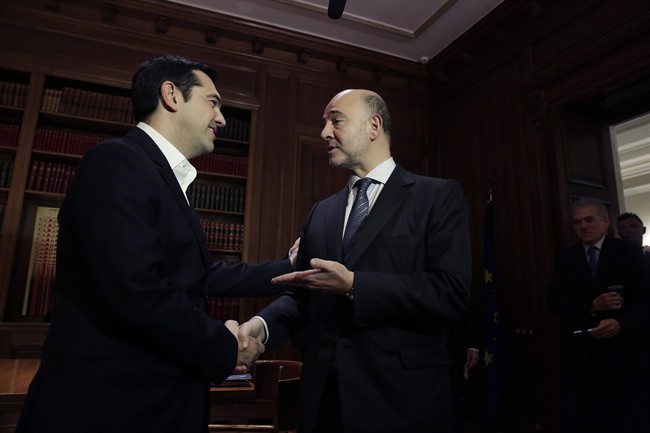
BRUSSELS – The European Union on Thursday predicted the region’s economy will grow at “a modest pace” next year thanks to cheap energy and central bank stimulus, but remains hampered by low investment and high debt.
In an official forecast, European Commissioner Pierre Moscovici warned of uneven improvements across the 28 member states but said that for 2016, the EU economies will “see growth rising and unemployment and fiscal deficits falling.”
The recovery is being supported by several temporary factors, including low oil prices, the euro’s drop in currency markets — which helps exporters — and monetary stimulus from the European Central Bank.
Moscovici noted the global economic outlook remains uncertain, meaning EU nations should not to let up in their efforts to reform their economies.
The 19-nation eurozone is expected to see its economy grow by 1.6 per cent this year, 1.8 per cent next year and 1.9 per cent in 2017. In its spring forecast, those estimations still stood at 1.5 per cent for this year and 1.9 per cent for next year.
The 28-nation bloc, which includes non-euro nations like Britain, is expected to see growth of 1.9 per cent, 2.0 per cent and 2.1 per cent over the same periods.
The economy of Greece, which received a new three-year bailout program, is forecast to shrink by 1.4 per cent this year and 1.3 per cent in 2016, before growing 2.7 per cent the following year.
In contrast, Ireland, which also needed a bailout during the financial crisis, is expected to see growth of 6 per cent this year, the highest rate in the EU. Its economy is expected to grow 4.5 per cent and 3.5 per cent in the two coming years.
Greece is predicted to have the highest unemployment rates, with 25.7 per cent this year easing only slightly to 24.4 per cent by 2017.
Overall in the EU, “unemployment will continue to fall while remaining too high,” Moscovici said. Eurozone unemployment is forecast to ease from 11 per cent this year to 10.3 per cent in 2017. For the EU, joblessness is predicted to fall from 9.5 per cent this year to 8.9 per cent in 2017.
News from © The Associated Press, . All rights reserved.
This material may not be published, broadcast, rewritten or redistributed.

This site is protected by reCAPTCHA and the Google Privacy Policy and Terms of Service apply.
Want to share your thoughts, add context, or connect with others in your community?
You must be logged in to post a comment.