Elevate your local knowledge
Sign up for the iNFOnews newsletter today!
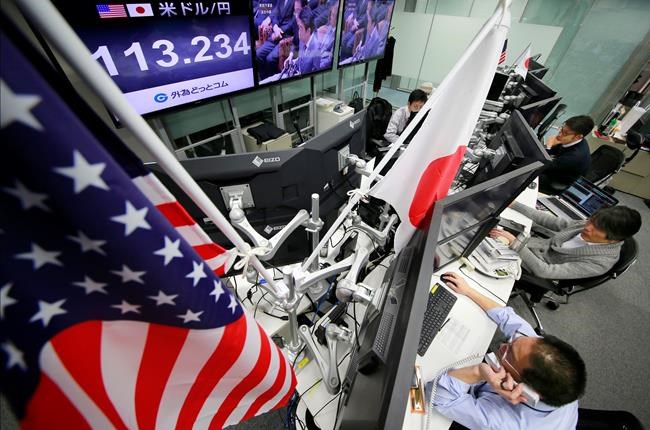
TOKYO – Japan is not deliberately weakening the yen to boost its exports, Prime Minister Shinzo Abe said Wednesday when asked in parliament about President Donald Trump’s accusations of currency manipulation.
Abe is expected to meet with Trump in Washington on Feb. 10. He said Japan would again explain to the U.S. side its unprecedented monetary easing policies, which have pulled the yen lower against the dollar in recent years.
“The criticism that our policies are intended to direct the yen lower is undeserved,” Abe told fellow lawmakers. Instead they are aimed at spurring inflation, he said.
During a meeting with pharmaceutical executives on Tuesday, Trump complained about drug makers shifting production overseas and said his trade policies would end unfair “global freeloading,” according to a transcript of the meeting.
He blamed regulations and devaluation by other countries.
“Every other country lives on devaluation,” he said. “You look at what China’s doing, you look at what Japan has done over the years. … They play the money market, they play the devaluation market and we sit there like a bunch of dummies.”
Trump occasionally has railed against Japan’s trade surplus with the U.S., which fell 4.6 per cent last year from a year earlier to $60.2 billion, according to preliminary Japanese trade figures.
The yen’s value fell steadily after Japan’s central bank implemented massive monetary easing four years ago, hoping to counter deflation and get people and businesses to spend more money. Injecting massive amounts of cash into the economy caused the yen’s value to fall from about 80 yen to the dollar to a low of about 125 yen to the dollar in mid-2015.
Trump is not the only critic of that trend toward a weaker yen. But Japan generally has won grudging acceptance of its unorthodox monetary policies from its major trading partners.
The dollar was trading near 100 yen in August but has surged recently, partly because the Federal Reserve is gradually raising interest rates and partly because investors are betting on bigger returns from investments under Trump’s administration.
After Trump’s comments, the dollar briefly weakened against the yen. But by late Wednesday in Asia, it was at 113.45 yen, above its previous close of 112.94 yen.
Trump also singled out China’s currency. For many years, U.S. officials complained that Beijing was keeping the yuan artificially low to make its products more competitive in overseas markets. But more recently, Chinese regulators have been striving to prevent the currency from weakening too quickly.
There was no immediate reaction to Trump’s comments from Beijing, where financial markets and government offices are closed this week for lunar new year holidays.
___
Associated Press writer Mari Yamaguchi contributed to this report.
News from © The Associated Press, . All rights reserved.
This material may not be published, broadcast, rewritten or redistributed.

This site is protected by reCAPTCHA and the Google Privacy Policy and Terms of Service apply.
Want to share your thoughts, add context, or connect with others in your community?
You must be logged in to post a comment.