Elevate your local knowledge
Sign up for the iNFOnews newsletter today!
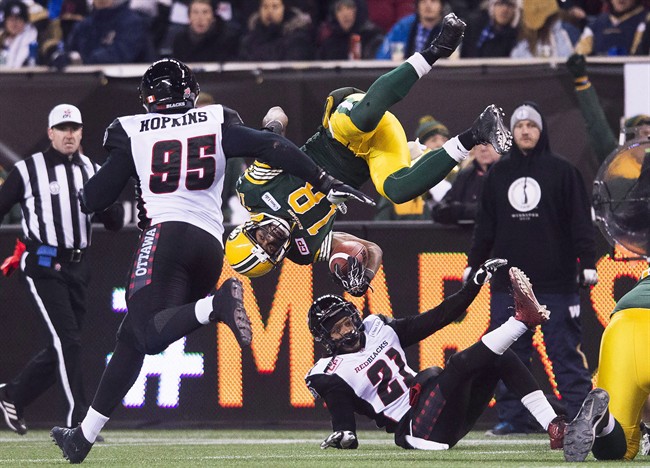
November’s 103rd Grey Cup game drew over four million viewers on TSN. Some viewers, however, never saw the winning Edmonton Eskimos run a single play. That’s because an average-minute audience of 25,000 people — many visually impaired —followed the game with audible descriptions provided by Accessible Media, Inc.
AMI is a Toronto-based, not-for-profit multimedia organization servicing more than five million Canadians who are blind, partially sighted, deaf, hard-of-hearing, have limited mobility or are print restricted. They operate three broadcast services: AMI-tv, a must-carry service found on cable and satellite services across Canada; AMI-audio in English, which has been in operation for 25 years; and, for the past year, AMI-tele in French.
Described video narration that AMI adds to its broadcasts provides further context and descriptions that the visually impaired audience would otherwise miss out on.
Live broadcasts have been big draws in recent years, according to Brian Perdue, director of programming for AMI.
A handful of Toronto Blue Jays’ broadcasts in 2015 drew in the ballpark of 20,000 viewers and AMI hired veteran sports announcers such as Jim Van Horne and Sam Cosentino to do commentary.
“They understand the games they describe,” says Perdue, adding they sit next to Descriptive Video producers who carry the AMI playbook.
AMI plans to cover the Paralympics in 2016 in Rio and has been carrying live events since the royal wedding in 2011. The Santa Claus Parade was a recent pick up.
The Super Bowl, Oscars or other big award show draws are not on AMI’s list for now. Live TV is pricey, says Perdue, and AMI, which does not carry commercials and relies on carriage fees for revenue, has to be selective with their content buys.
Besides, some of AMI’s most popular shows are anything but live. Reruns of the old Andy Griffith law series “Matlock,” for example, are the service’s top overall draw, sometimes pulling as many as 50,000 viewers across Canada.
“It’s very easy to follow,” says Perdue.
AMI also carries described versions of CBC shows such as “Murdoch Mysteries,” British import “Coronation Street” and reruns of “House.” A deal was recently struck with CTV to carry “Saving Hope.”
Original content is another key. AMI produces several homegrown programs out of studios in Toronto. The nightly newsmagazine “AMI This Week” features correspondents across Canada covering issues such as crosswalk improvements and tactile Halloween costumes.
Vice president of marketing Peter Burke has a special interest in the series: his daughter Molly is co-host.
“She actually became my motivation to join AMI,” says Burke, in his sixth year at the service. Molly was diagnosed at age four with a rare retina disease and by 13 had lost her vision. She’s a braille user as well as a guide dog owner.
She’s also now a motivational speaker and wings her “This Week” broadcasts, memorizing scripts the night before.
Another original is “Four Senses,” a cooking series returning with new episodes Jan. 14. It’s hosted by Christine Ha, a blind contestant who won “Masterchef USA” in 2012, as well as Carl Heinrich, voted Top Chef Canada in 2012. Descriptions are built right into the host’s scripts.
Sometimes descriptions can get a little raunchy, especially weeknights at 11 p.m., when AMI offers “The Trailer Park Boys” uncensored.
Perdue agrees the Boys bring new meaning to the term, “impairment.”
— Bill Brioux is a freelance TV columnist based in Brampton, Ont.
News from © The Canadian Press, . All rights reserved.
This material may not be published, broadcast, rewritten or redistributed.

This site is protected by reCAPTCHA and the Google Privacy Policy and Terms of Service apply.
Want to share your thoughts, add context, or connect with others in your community?
You must be logged in to post a comment.