Elevate your local knowledge
Sign up for the iNFOnews newsletter today!
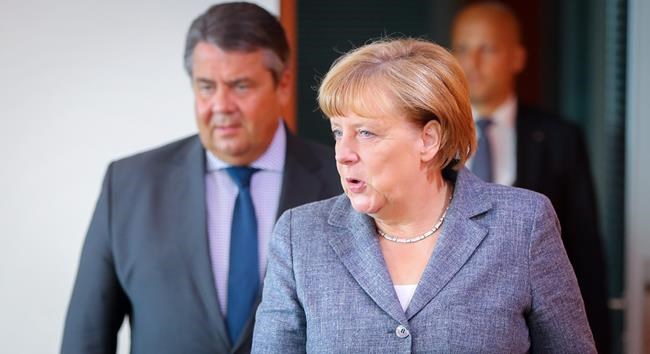
BERLIN – Chancellor Angela Merkel has dismissed suggestions that the influx of refugees over the past year brought Islamic extremism to Germany.
Merkel said late Wednesday that “the phenomenon of Islamist terrorism by IS isn’t a phenomenon that came to us with the refugees, it’s one that we had before too.”
She conceded, however, “it can be seen that there are attempts to win over refugees (for terrorism), or we had the case of Paris, where refugees were deliberately smuggled in by IS.”
Merkel was speaking at a campaign event in the northeastern state of Mecklenburg-Western Pomerania, where her Christian Democrats face strong competition from the nationalist, anti-immigration Alternative for Germany party in state elections on Sept. 4.
The country was shaken by a string of attacks in July, two of which were the first in Germany claimed by the Islamic State group. In those, only the attackers — both asylum-seekers — were killed. In an unrelated attack, a German teenager killed nine people in Munich.
Last week, Germany’s interior minister unveiled proposals to boost security — among them creating several thousand jobs with federal security services, making it easier to deport foreigners deemed dangerous and stripping dual nationals who fight for extremist groups of their German citizenship.
“I can understand that security has very, very high significance for people at the moment, that’s completely clear,” Merkel said in a video released Thursday by her party. “We are doing everything humanly possible to ensure security … and wherever gaps arise, we must readjust and consider new variations of security.”
Merkel said it’s important to prevent people-smuggling and ensure that refugees can live in “humane conditions” near their homelands — for example, through arrangements such as the European Union’s deal with Turkey to cut migrant flows.
“There won’t be another way if we want to reduce the number of people coming to us and if we consider the fate of people who can often live better near their homeland, their cultural homeland, than if they come over 1,000 kilometres (620 miles) to us,” she said.
News from © The Associated Press, . All rights reserved.
This material may not be published, broadcast, rewritten or redistributed.

This site is protected by reCAPTCHA and the Google Privacy Policy and Terms of Service apply.
Want to share your thoughts, add context, or connect with others in your community?
You must be logged in to post a comment.