Elevate your local knowledge
Sign up for the iNFOnews newsletter today!
Sign up for the iNFOnews newsletter today!
Selecting your primary region ensures you get the stories that matter to you first.
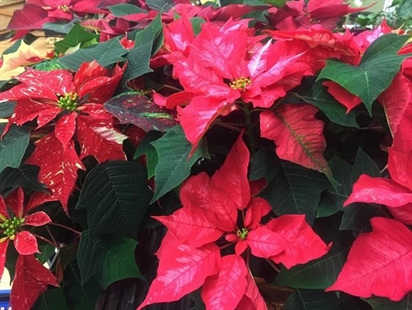
Poinsettias have become the bestselling potted plants in the United States, and are second in popularity only to Christmas trees during the holiday season. Unfortunately, they also are among the least understood.
They are not annuals. Poinsettias don't have to be tossed to the curb with the trees and tinsel once the celebrating is over. They can be restored to provide cheer for many more holidays, although it takes some work to make them colour up again.
"Poinsettias can be re-flowered for years," said Thomas Ford, a commercial horticulture instructor with Penn State Extension. "One former client I worked with in Maryland flowered his one poinsettia for over 10 years. It grew so large that he used his dining room as the display area for it."
Whether that kind of dedication is worth it, though, is an altogether different thing.
"I would say that the average consumer does not see any merit in keeping it for several years," Ford said. "Overall, it is too time-consuming."
Poinsettias were introduced into the United States from Mexico roughly 200 years ago. They are grown in several Central America nations as perennial shrubs reaching 10 to 15 feet in height.
That doesn't mean they can be propagated even in the hottest parts of the U.S., however, said Peter Warren, a horticulture agent with University of Arizona Cooperative Extension.
"Poinsettias cannot tolerate frost or freezing temperatures, so places in southern Arizona and other parts of the South that occasionally experience cooler temperatures are not good places to grow them outside," Warren said.
Poinsettia's colored leaves, or bracts, have been hybridized over the years into more than 100 varieties, from the traditional red to pink, white, cream, burgundy and variegated. The plant's flowers are small, yellowish green and positioned deep within the bract clusters.
Here's a generally accepted seasonal time line for re-coloring poinsettias:
— Keep temperatures between 60 and 70 degrees from December to February. Let the plants get as much sunlight as possible. Water them regularly.
— In March or April, as the bracts age and turn a muddy green, cut the stems back to about 8 inches high. "Around July 4th, cut branches back again about half their length to encourage bushy plants," Warren said.
— From mid- to late October, the plants must be kept in complete darkness for 14 continuous hours each night. "This can be done by moving the plant to a dark room or placing a box over it," Warren said. "During this period, the plant requires six to eight hours of bright sunlight and night temperatures between 60 and 70 degrees. This regimen must continue for eight to 10 weeks in order for the plant to develop colorful bracts for the holiday season."
— The bracts should be developing some colour by mid-November.
— In early December, bract coloration should be almost complete and the plant can be restored to everyday light.
News from © iNFOnews.ca, . All rights reserved.
This material may not be published, broadcast, rewritten or redistributed.

This site is protected by reCAPTCHA and the Google Privacy Policy and Terms of Service apply.
Want to share your thoughts, add context, or connect with others in your community?
You must be logged in to post a comment.