Elevate your local knowledge
Sign up for the iNFOnews newsletter today!
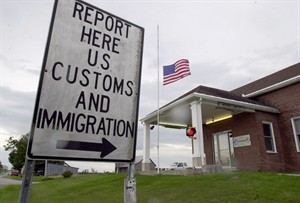
WASHINGTON – Canadian manufacturers fear even more fees may be looming on the horizon as the U.S. Department of Agriculture suggests revenue-generating measures that could result in higher costs at the Canada-U.S. border.
In a presentation to stakeholders in the U.S. capital this week, the department suggested new border fees since some federal agencies, including U.S. Customs and Border Protection, are currently providing free services at America’s borders.
CPB works in collaboration with the USDA’s agriculture quarantine and inspection program, which provides checks of imported agricultural goods and commercial aircraft, rail cars, ships and even passenger baggage to prevent harmful pests, diseases and materials from entering the United States.
“Approximately $191 million in CPB costs are associated with services for which no fee is currently charged,” the department’s presentation stated.
U.S. federal agencies “need to recover all costs associated with fee services and have fee revenue from each fee service cover the associated costs.”
In conclusion, it said: “Consider establishing new fees.”
The spectre of increased costs at the border comes as the much-ballyhooed Canada-U.S. Beyond the Border initiatives are supposed to be resulting in precisely the opposite state of affairs.
The 2014 budget from the Department of Homeland Security also proposes a border crossing fee for every vehicle or pedestrian entering the United States.
Janet Napolitano, homeland security secretary, recently noted that the processing fees of upwards of 350 million travellers a year have not been adjusted, in many cases, for more than a decade.
The Canadian government said it would lobby against such a fee, but a New York congressman has said it’s unlikely the border crossing levy will ever come to pass given opposition to the idea by both Republicans and Democrats in Congress.
“I’m telling you it’s not going to happen,” Democratic lawmaker Brian Higgins said over the weekend, adding his colleague in the U.S. Senate, Chuck Schumer, is onside.
“The early indications are that both Democrats and Republicans oppose it and any new fee would have to get by both the House of Representatives, of which I am a member, and also the United States Senate, which Sen. Schumer is a member. I’m going to fight this very, very aggressively and I have a lot of allies.”
New USDA fees would not, however, require a congressional green light, says Birgit Matthiesen, the D.C.-based point person for Canadian Manufacturers and Exporters organization.
“The border crossing fee would need authority from Congress because Homeland Security is actually proposing lifting exemptions that currently cover passengers and pedestrations,” she said.
“But there is no talk of lifting exemptions with the USDA proposals, according to the initial information we’re getting.”
That means they’d be easier to establish.
Trade officials on both sides of the border point to so-called sequestration, massive cuts to a host of American federal agencies, as the sudden villain in Canada-U.S. relations.
The cuts, aimed at slashing the mammoth $16.8 trillion U.S. national debt, have left federal departments strapped for cash and resources and looking for ways to raise revenues.
“In both instances, it’s clear that the driving force is sequestration and that it will continue to have an impact on border agency resources,” Matthiesen said.
“And neither fee proposal at this point makes any mention of assessing fees based on risk or distinctions for our best corporate citizens.”
In an email to members, the CME raised the alarm about the notion of USDA fee increases, which would be charged to carriers— trucking and shipping companies, airlines and railways.
“Given the volume, nature and immediacy of our cross-border trade, this new fee analysis is troubling,” the email read.
It pointed out that the USDA recommendations made no distinction for country of origin, meaning Canada once again could get lumped in with myriad other nations despite the integration of the U.S. and Canadian economies.
The next step will involve the USDA submitting its proposals to the Office of Management and Budget, and then to move forward with formal recommendations in the weeks to come.
News from © The Canadian Press, . All rights reserved.
This material may not be published, broadcast, rewritten or redistributed.

This site is protected by reCAPTCHA and the Google Privacy Policy and Terms of Service apply.
Want to share your thoughts, add context, or connect with others in your community?
You must be logged in to post a comment.